




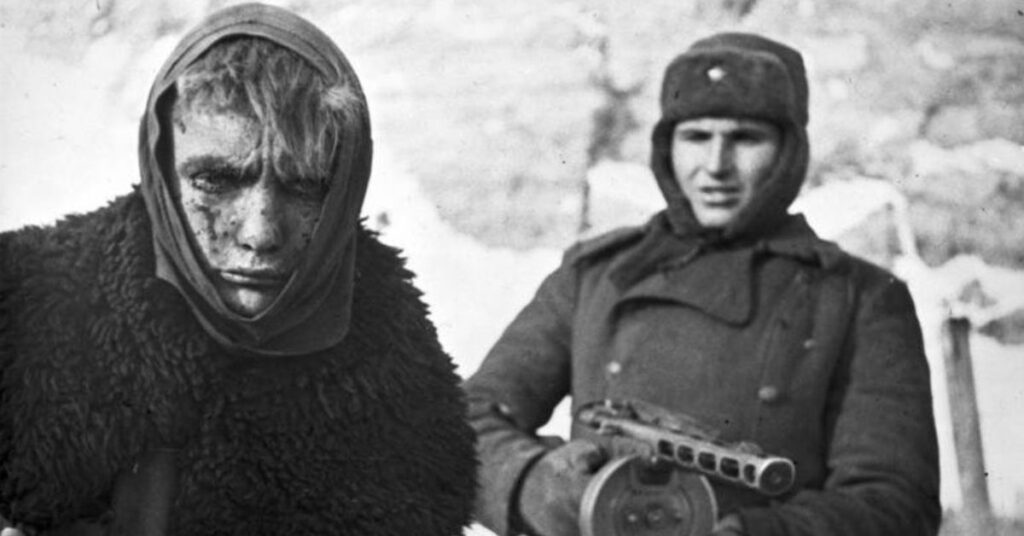
A half-starved Nazi army of 90,000 men officially surrendered at Stalingrad on February 2, 1943, marking the end of the bloodiest urban battle in history. These were the remnants of Adolf Hitler’s Sixth Army, which had initially been 330,000 soldiers strong when it launched its assault on the Russian city during World War II in August 1942.
Stalingrad, now known as Volgograd, was a strategically crucial city in Hitler’s campaign to capture southern Russia and seize control of vital oil fields. The city also held symbolic significance, bearing the name of Soviet leader Joseph Stalin. Expecting a swift victory, the confident German forces found themselves mired in brutal house-to-house combat against determined Russian defenders.
The Turning Tide: Soviet Counterattack and Encirclement
In November 1942, as the harsh Russian winter loomed, Stalin ordered a massive counterattack. Five Soviet army groups encircled the German forces in Stalingrad, cutting them off from external support. Historians estimate that nearly four million soldiers were involved in the battle, making it one of the largest engagements of the war.
Despite being resupplied by the Nazi air force, the German Sixth Army faced overwhelming odds. As advancing Soviet troops overran airfields, supplies of food, ammunition, fuel, and medical necessities dwindled. The soldiers also had to endure freezing temperatures as low as -30 degrees Celsius.
As many Germans died from frostbite, illness, and starvation as from combat.
Desperation and Surrender
Survivors of the battle described a hellish environment, with sentries found frozen to death. The besieged troops became so desperate that they resorted to eating vermin, such as rats. Conditions were even more dire for Russian prisoners captured by the Nazis, who were held in camps where some resorted to cannibalism when food supplies ran out.
Facing an untenable situation, German commander Field-Marshal Friedrich Paulus defied Hitler’s orders to fight to the last man and chose to surrender. The Nazi defeat at Stalingrad resulted in up to two million casualties on both sides, including civilians, and became a pivotal moment in World War II.
Implications of the Soviet Victory
The massive Soviet victory shattered the myth of Nazi invincibility and initiated a relentless Russian advance towards Berlin, culminating in the end of the war in 1945. This turning point not only boosted Soviet morale but also shifted the balance of power in favor of the Allies.
Historians and military experts often cite the Battle of Stalingrad as a critical juncture in the war. According to military historian Antony Beevor, “Stalingrad was the most ferocious battle in history. It was the first major defeat of the Nazi regime and marked the beginning of the end for Hitler’s ambitions.”
“Stalingrad was the most ferocious battle in history. It was the first major defeat of the Nazi regime and marked the beginning of the end for Hitler’s ambitions.” — Antony Beevor, Military Historian
Looking Forward: Lessons from Stalingrad
The legacy of Stalingrad continues to resonate in military strategy and historical discourse. The battle demonstrated the importance of logistics, the impact of environmental conditions on warfare, and the psychological effects of prolonged combat on soldiers.
As we reflect on this pivotal moment in history, it serves as a reminder of the resilience and sacrifice of those who fought and the profound consequences of global conflict. The lessons of Stalingrad remain relevant today as nations strive to prevent such devastation from recurring.
Stay informed with breaking news and exclusive stories by following us across all platforms. Download the 9NEWS App via Apple and Google Play, and make 9News your preferred source on Google by ticking the box here. Sign up for our breaking newsletter here.