




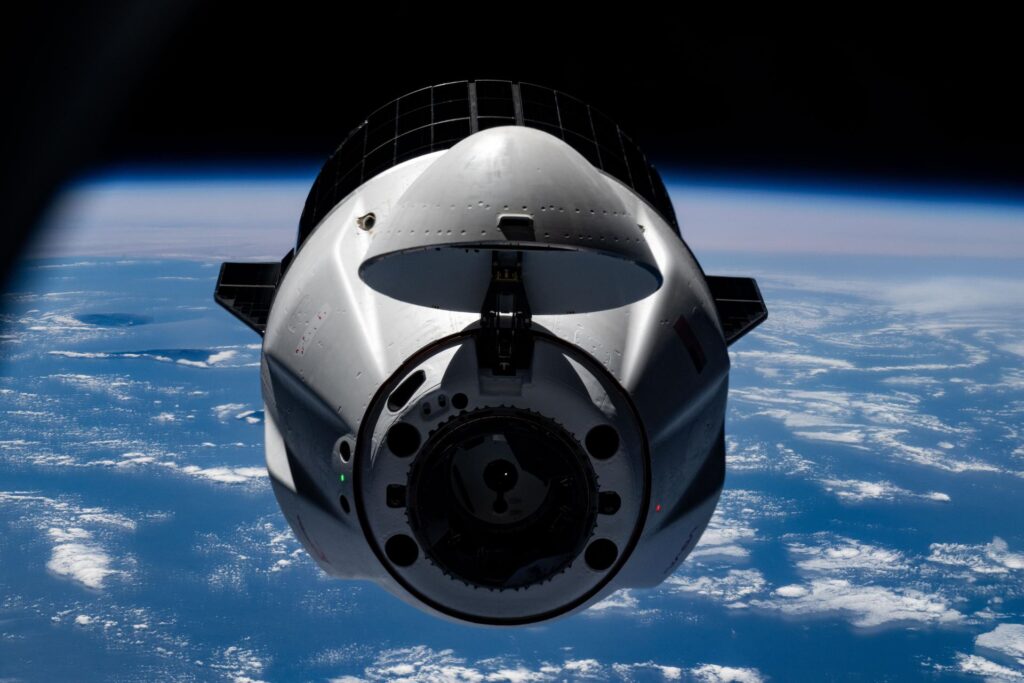
NASA and its international partners are poised to receive a wealth of scientific research samples and hardware as a SpaceX Dragon spacecraft departs the International Space Station (ISS) on Thursday, February 26. The spacecraft’s return marks the culmination of NASA’s 33rd SpaceX Commercial Resupply Services mission, a significant event in the ongoing collaboration between NASA and private space companies.
Live coverage of the undocking and departure will begin at 11:45 a.m. EST, available on NASA+, Amazon Prime, and the agency’s YouTube channel. The Dragon spacecraft is scheduled to autonomously undock from the Harmony module’s forward-facing port at 12:05 p.m., after which it will fire its thrusters to safely distance itself from the ISS. The anticipated splashdown is set for later that evening at approximately 11:44 p.m. PST off the California coast. While NASA will not stream the splashdown, updates will be posted on its space station blog.
Scientific Discoveries on Board
The Dragon spacecraft is returning with several groundbreaking scientific investigations that promise to enhance our understanding of space and improve life on Earth. Among these is the Euro Material Ageing study, which exposed 141 samples to the harsh conditions of space for a year. This research aims to determine how coatings, insulation, and 3D-printed materials degrade in space, potentially leading to stronger spacecraft and improved materials for future missions.
Another significant experiment is Thailand’s Liquid Crystals study, which examined the stability of films used in electronics under microgravity conditions. The findings could lead to advancements in display technology and optical devices. Additionally, the Stellar Stem Cells Mission 2 is returning frozen samples that will help scientists understand how microgravity affects brain and heart stem cell growth, potentially leading to improved treatments for diseases such as ALS and Parkinson’s disease.
“The insights gained from these experiments could pave the way for new technologies and medical treatments that benefit both space exploration and life on Earth,” said a NASA spokesperson.
Technological Innovations and Reboost Capabilities
The Dragon spacecraft supporting this mission also introduced a new capability to reboost the space station, a critical function for maintaining the ISS’s altitude and countering atmospheric drag. During its time docked to the station, Dragon performed six reboosts, five in 2025 and a final maneuver on January 23, before preparations for its departure began.
The SpaceDuino project, which is also returning aboard Dragon, demonstrates the potential for low-cost instruments in space exploration. By successfully measuring vibrations using a commercially available single-board computer and open-source software, SpaceDuino is paving the way for more affordable space technology.
Moreover, the Moon Microscope experiment successfully tested a portable diagnostic kit for blood analysis in space, which could support future missions to the Moon and Mars. Such innovations are crucial as NASA prepares for deep space missions under the Artemis campaign.
Historical Context and Future Implications
Since its launch on August 25, 2025, the Dragon spacecraft has been an integral part of the ISS’s operations, delivering thousands of pounds of crew supplies, science experiments, and equipment. This mission is a testament to the enduring partnership between NASA and commercial space companies, which continues to drive advancements in space technology and exploration.
For over 25 years, the ISS has served as a vital platform for scientific research and technological development, enabling breakthroughs that are not possible on Earth. As commercial companies increasingly focus on providing human space transportation services and developing destinations in low Earth orbit, NASA is channeling its resources towards deep space exploration.
“The International Space Station remains a critical testbed for understanding and overcoming the challenges of long-duration spaceflight,” noted a senior NASA official. “Our collaboration with commercial partners is essential as we look towards future missions to the Moon and Mars.”
The return of the Dragon spacecraft not only brings valuable scientific data back to Earth but also reinforces the importance of international and commercial partnerships in the continued exploration of space. As NASA and its partners look to the future, the knowledge gained from this mission will undoubtedly inform and inspire the next generation of space exploration.