


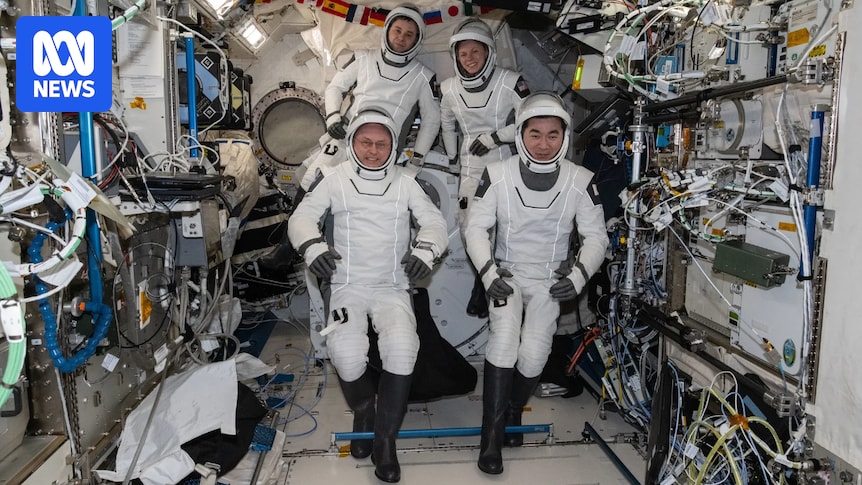
A SpaceX capsule has successfully returned four astronauts to Earth after an unexpected medical issue prompted an early evacuation from the International Space Station (ISS). The Dragon spacecraft made a safe splashdown in the Pacific Ocean, off the coast of San Diego, marking a significant moment in space travel history.
This event represents the first instance where NASA has had to curtail an ISS mission due to a health emergency. The capsule undocked from the space station and began its descent around 9:20 AM AEDT (2220 GMT), completing the journey back to Earth in under 11 hours.
Details of the Mission and Crew
The crew aboard the Dragon capsule included U.S. astronauts Zena Cardman and Mike Fincke, Japanese astronaut Kimiya Yui, and Russian cosmonaut Oleg Platonov. The team initially launched from Florida in August, embarking on what was supposed to be a longer mission to the ISS.
NASA has not disclosed which astronaut required medical attention or the specific nature of the health issue, citing privacy concerns. However, the agency assured that the affected astronaut was stable while in orbit. The decision to return to Earth was made to ensure the astronaut could receive comprehensive medical care and diagnostic testing.
Implications for Future Space Missions
While NASA emphasized that this was not an emergency situation, the incident underscores the potential challenges of long-duration space missions. The health of astronauts in space is a critical concern, and this situation highlights the importance of having robust contingency plans in place.
Space medicine expert Dr. Laura Forrester commented on the situation, stating,
“This event is a reminder of the unpredictable nature of space travel and the need for constant vigilance and preparedness. It also showcases the capabilities of current space technology to respond swiftly to unexpected situations.”
Historical Context and Future Prospects
This development follows a series of successful missions to the ISS, with SpaceX playing a pivotal role in NASA’s recent endeavors. The Dragon capsule’s ability to safely return astronauts to Earth is a testament to the advancements in space travel technology.
Historically, the ISS has been a hub of international cooperation and scientific research. The ability to manage health emergencies effectively will be crucial as space agencies around the world prepare for more ambitious missions, including potential manned missions to Mars.
Meanwhile, NASA and its international partners continue to prioritize the health and safety of their astronauts. The agency is likely to review and enhance its protocols to better prepare for any future medical contingencies in space.
Looking Ahead
The successful return of the astronauts marks the end of an unexpected chapter in the current ISS mission. As NASA and its partners analyze the events leading to the early return, the focus will remain on ensuring that future missions are equipped to handle similar situations.
With plans for extended missions and deeper space exploration on the horizon, the lessons learned from this evacuation will be invaluable. The space community will watch closely as NASA continues to refine its strategies for managing the health and safety of astronauts in the challenging environment of space.