




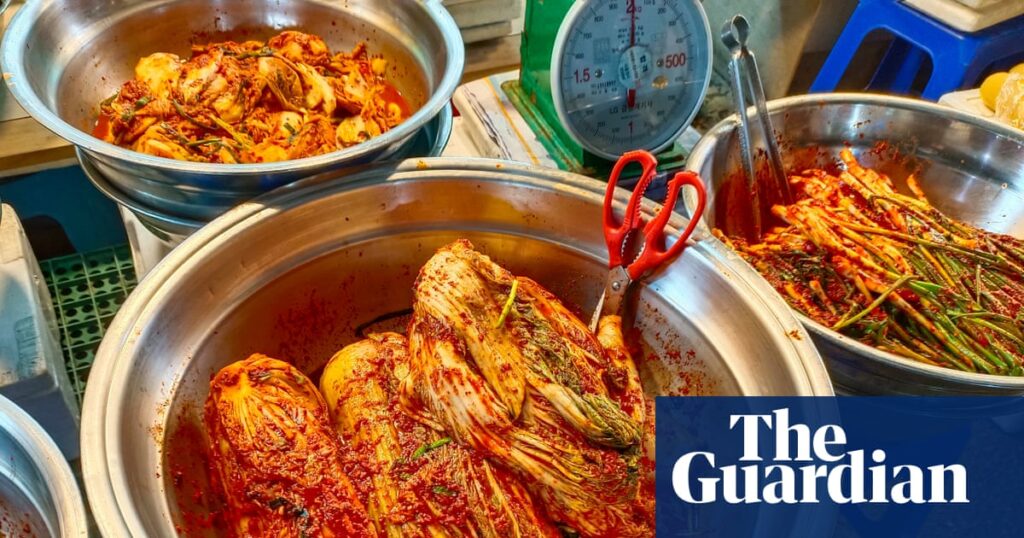
The pungent scent of red chili powder hangs in the air at Kim Chieun’s kimchi factory in Incheon, about 30km west of Seoul. Inside, salted cabbage soaks in large metal vats, marking the first stage of a process that Kim has meticulously followed for more than 30 years. However, overseeing the production line has become increasingly fraught as South Korea imports more kimchi than it exports, with the gap widening due to the influx of cheaper Chinese-made products in the domestic market.
“Kimchi has become a world food from Korea, but this makes no sense at all,” Kim laments, describing how local restaurants have shifted to lower-priced imports, abandoning his products. “This market has been taken away from us.” Chinese kimchi sells to restaurants for about 1,700 won ($1.15) per kilogram, whereas Korean-made versions average about 3,600 won ($2.45), more than double the price. In the first 10 months of this year, South Korea imported $159 million worth of kimchi, almost entirely from China, while exporting $137 million.
The Cultural and Economic Significance of Kimchi
Kimchi, a fermented vegetable dish served with almost every Korean meal, is a cornerstone of food culture on the Korean peninsula. The term encompasses far more than the spicy cabbage most familiar to international diners. There are over 150 recognized types, made with radish, cucumber, spring onions, and other vegetables, seasoned with blends of chili powder, garlic, ginger, and fermented seafood paste, shaped by local climates and tastes. The fermentation process produces beneficial lactic acid bacteria, contributing to kimchi’s reputation as a health food.
Traditionally, families prepared large quantities together during kimjang, the annual winter preparation ritual recognized by UNESCO as intangible cultural heritage. However, the way Koreans consume kimchi is changing. Single-person households have more than tripled since 2000, now accounting for over 36% of all households, and fewer people make kimchi at home.
Market Dynamics and Challenges
Instead, kimchi is increasingly consumed ready-made or while dining out, where it is served free of charge with every Korean meal. Charging for such a staple would be unthinkable. As a result, while overall kimchi consumption has declined, demand for commercially produced kimchi has grown, with producers becoming increasingly dependent on restaurants and large buyers.
“If you avoid losses and don’t go bankrupt, that’s already fortunate,” says Kim. “For many of us over the past decade, we haven’t been able to invest in facilities.”
Market forces mean that price, rather than origin or method, are now the decisive factor. Jeon Eun-hee, who has run a kimchi factory in Hwaseong, 47km from Seoul, for 29 years, abandoned plans for a second facility eight years ago as Chinese imports gained ground and has contemplated closing the business if sales continue to decline.
“Should we really be using imported kimchi when this is a food that contains our people’s soul?” he asks. “It’s truly heartbreaking.”
Climate and Economic Pressures
The pressures have been compounded by the climate crisis, which is disrupting cabbage farming, the single most important input in kimchi production. Summer cultivation has become increasingly difficult in traditional highland growing areas, with wholesale cabbage prices during peak seasons sometimes more than doubling from one year to the next.
Government agencies and producers are developing climate-resistant varieties and improved storage systems, but industry groups question whether such measures can offset the pressures. Around three-quarters of South Korea’s kimchi manufacturers are micro-businesses with four or fewer employees, relying on labor-intensive methods that struggle to compete with industrial-scale production in China.
Efforts to Preserve Korean Kimchi
Kim, who also heads the Kimchi Association of Korea, says the industry is trying to respond, albeit with limited tools. The association has introduced a voucher scheme, funded by industry contributions, offering selected restaurants 1,280 won (87c) per kilogram to switch back to Korean-made kimchi. The group has petitioned for kimchi to be subject to advance tariff assessment, a measure that would increase scrutiny of declared import prices.
South Korea’s agriculture ministry aims to “strengthen both domestic and export foundations to build a sustainable growth base for the entire kimchi industry.” Measures include voluntary labeling schemes that let restaurants signal they use Korean kimchi, agricultural support such as weather forecasting and pest control for cabbage growers, and research to extend kimchi’s shelf life for export.
“Korean kimchi has a unique taste,” Kim asserts. “That cannot be replicated.”
As South Korea grapples with these challenges, the future of its national dish remains uncertain. The resilience of traditional methods and the unique flavors of Korean kimchi may yet prove to be its strongest defense against the tides of globalization and economic pressure.