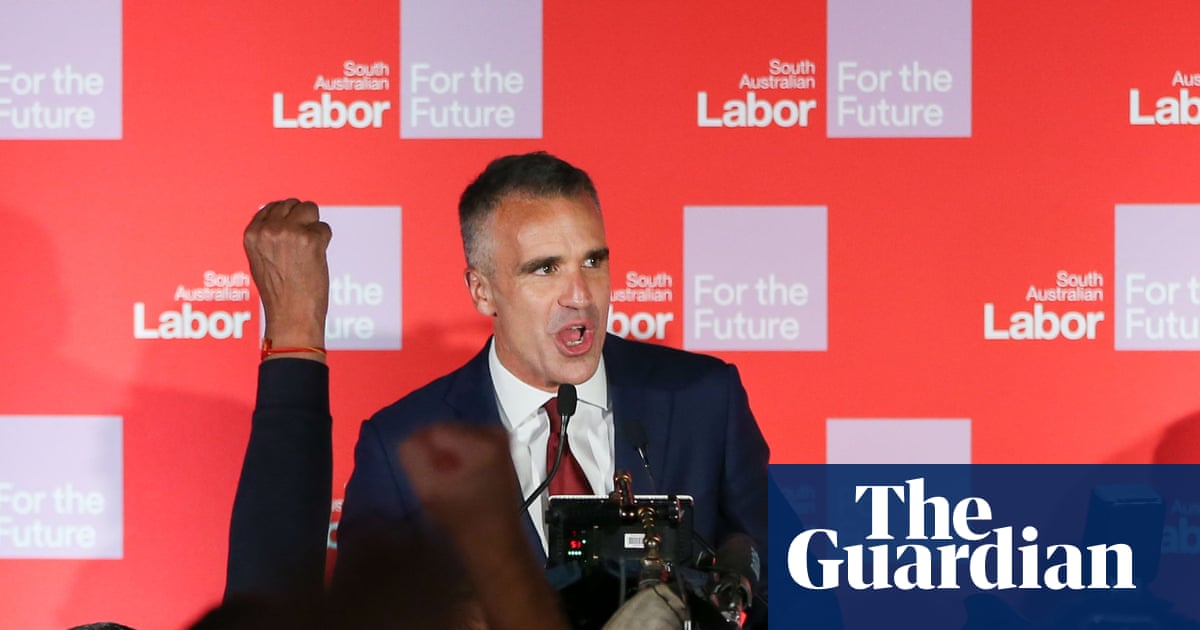




The South Australian state election, set for Saturday, is shaping up to be a decisive moment in the state’s political landscape. With polls closing at 6:30 PM AEDT, the latest surveys indicate a potential landslide victory for the Labor Party, which is projected to secure a substantial majority in the 47-seat lower house. These seats are elected in single-member electorates using preferential voting, a system that has historically favored major parties.
Recent polls from Newspoll, DemosAU, YouGov, and Fox & Hedgehog have consistently shown Labor’s primary vote ranging between 37% and 40%, with the Greens capturing 11% to 12%. Notably, One Nation has emerged as a significant force, polling in the low 20s and surpassing the Liberals, who are struggling in the high teens. This shift suggests a dramatic reconfiguration of the right-wing political spectrum in South Australia.
Adelaide and Regional Dynamics
Breakdowns from the DemosAU, YouGov, and Fox & Hedgehog polls highlight Labor’s strong performance in Adelaide, where they are expected to outperform the Liberals on primary votes. However, should Labor secure these seats, the Liberals’ higher primary vote counts in some areas may become irrelevant. In contrast, One Nation is poised to outperform the Liberals in regional seats, potentially capturing these constituencies.
Such outcomes could see the Liberals nearly wiped out in the lower house, with One Nation stepping in as the primary right-wing party. This would not only mark a significant shift in South Australia’s political alignment but also bolster Labor’s dominance.
Upper House Elections and Voting Reforms
Alongside the lower house elections, eleven of the 22 upper house seats will be contested through statewide proportional representation with preferences. A quota for election is set at one-twelfth of the vote, or 8.3%. Historically, only votes cast on election day have been counted immediately, but recent legislative changes now allow for pre-poll and postal votes to be included in the initial count.
This reform means a greater share of the overall vote will be counted by the end of election night, although pre-poll votes will still take longer to tally. The change aims to provide a clearer picture of the election outcome sooner than in previous years.
Polling Insights and Political Implications
The latest SA Newspoll, conducted from March 12 to 18 with a sample of 1,048, shows Labor at 40% of the primary vote, a slight decrease from mid-February. One Nation stands at 22%, while the Liberals have seen a minor increase to 16%. Premier Peter Malinauskas maintains a strong net approval rating of +34, despite a slight drop, while Liberal leader Ashton Hurn’s approval has improved to +8. Malinauskas is favored as the better premier by a significant margin of 64–22.
According to the SA DemosAU poll, Labor’s primary vote is at 37%, with One Nation at 23%. The poll indicates a decline in Malinauskas’ net positive score to +29, while Hurn remains at net zero. One Nation’s Cory Bernardi holds a negative net approval of -16.
The SA YouGov poll for The Advertiser, conducted from March 9 to 17, reinforces Labor’s lead with 38% of the primary vote. The poll suggests a steady preference for Labor over both One Nation and the Liberals, with Malinauskas leading Hurn as the preferred premier by 62–23.
The Fox & Hedgehog poll echoes these findings, with Labor at 38% and One Nation at 21%. The poll highlights a growing preference for One Nation among respondents, suggesting a four-point gain against Labor.
National and State-Level Comparisons
Meanwhile, a New South Wales Resolve poll conducted in March reflects a contrasting scenario, with Labor’s primary vote dropping to 29%, while One Nation debuts at 23%. This poll suggests a potential shift in voter sentiment ahead of the NSW state election in March 2027.
Nationally, a Morgan poll indicates Labor at 28.5% of the primary vote, with the Coalition at 24% and One Nation at 22.5%. These figures suggest a competitive political landscape, with Labor maintaining a slight edge over the Coalition.
By the numbers: Labor leads the Coalition by 54–46 in national preferences, with a slight gain for the Coalition.
Looking Ahead
The South Australian election results could have far-reaching implications for the state’s political future. A Labor landslide would solidify its dominance, while One Nation’s rise could redefine the right-wing political spectrum. As the votes are counted, all eyes will be on how these dynamics unfold and what they mean for the broader Australian political landscape.
With pre-poll and postal votes now included in the initial count, the election night promises to deliver more comprehensive results than ever before. The political shifts observed in South Australia may serve as a bellwether for future elections across the country.