



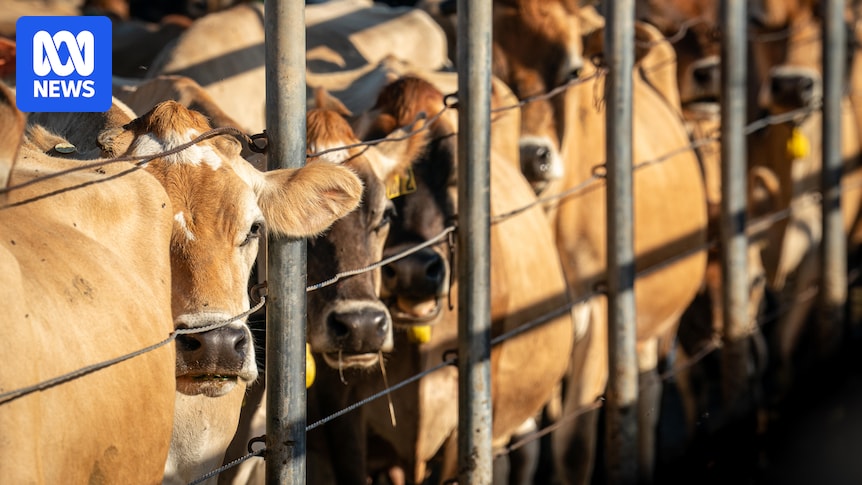
South Australian farmers are set to benefit from a groundbreaking development as virtual fencing technology has been formally legalized in the state. This innovative system, which allows livestock to be moved remotely using electronic collars, promises to enhance safety by guiding animals away from the path of approaching bushfires.
The state’s approval of virtual fencing marks South Australia as the last jurisdiction in Australia to embrace this technology, with a full rollout anticipated next year. The announcement has been met with enthusiasm by Livestock SA, an organization representing primary producers who are eager to transition to this new method of livestock management.
“The benefits are multi-dimensional,” Livestock SA chief executive officer Travis Tobin stated. “Heaven forbid if they do come, but in natural disasters, it gives you that flexibility where you’re not losing kilometres of fence lines, and the animals can get away so they’re not trapped.”
New Technology Could Revolutionize Emergency Responses
While specific details regarding the licensing and governance of the new technology are yet to be disclosed, businesses are actively collaborating with the state government to ensure a smooth rollout. One such business, Halter, plans to apply for a permit to sell and install virtual fencing in South Australia.
Brent Thomas, Director of Strategic Relations at Halter, emphasized that the benefits of virtual fencing extend beyond everyday operations. He highlighted the technology’s potential to safeguard both human and animal lives during emergencies such as floods or bushfires.
“With this technology, farmers are able with the palm of their hand, to move their cattle to safer ground,” Thomas explained. “Many South Australian farmers were keen for the announcement, having added their names to the company’s waitlist months ago. They had been really hopeful this news would come out for a long time.”
Farmers Eager for Technological Transition
Among the farmers eagerly anticipating the implementation of virtual fencing is Adam Mann, co-manager of Donovan’s Dairy in the South East. Mann has been a vocal advocate for the technology throughout the year, recognizing its potential to save both time and money on his farm.
“It’s nice to be on an even playing field with the rest of the states,” Mann remarked. “We’ll be trying to get it on as soon as possible, early 2026 will be a pretty good goal for us.”
Implications and Future Prospects
The legalization of virtual fencing in South Australia represents a significant step forward in utilizing technology to address the challenges posed by natural disasters. As climate change continues to increase the frequency and intensity of such events, innovative solutions like virtual fencing could play a crucial role in mitigating their impact.
Experts suggest that the adoption of virtual fencing could also lead to broader applications in the agricultural industry, potentially transforming livestock management practices across Australia. By providing farmers with enhanced control over their herds, this technology may contribute to more efficient and sustainable farming operations.
As South Australia prepares for the rollout of virtual fencing, the eyes of the agricultural community will be on the state to assess the effectiveness and impact of this technology. The successful implementation could serve as a model for other regions facing similar challenges, underscoring the importance of innovation in the face of adversity.