




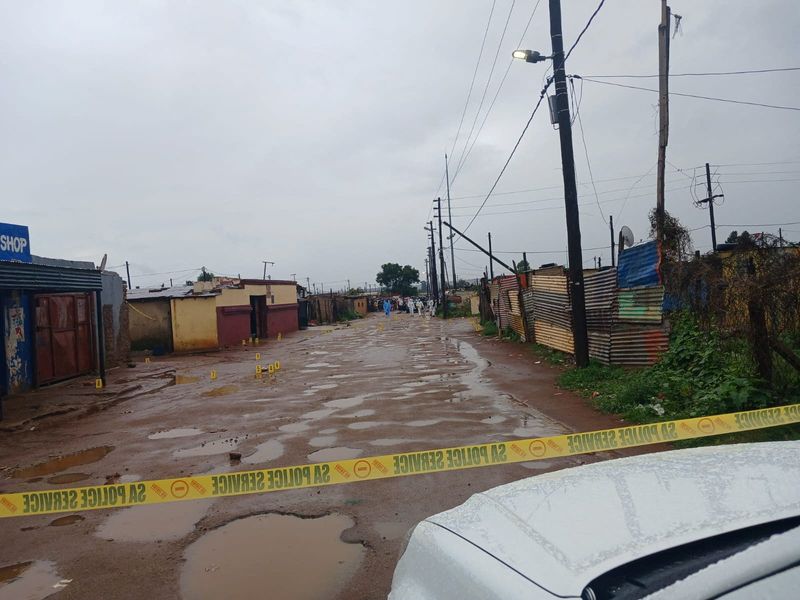
In a tragic event that underscores the persistent issue of gun violence in South Africa, nine people were killed and at least ten others wounded when a group of gunmen opened fire at a pub in Bekkersdal, a township located 46 kilometers west of Johannesburg. The shooting occurred in the early hours of Sunday, marking the second mass shooting in the country in just three weeks.
The attack unfolded just before 1 am at the KwaNoxolo tavern in the Tambo section of Bekkersdal. According to police reports, approximately 12 unknown suspects arrived in a white mini-bus and a silver sedan, indiscriminately firing at patrons before fleeing the scene. The violent spree continued as some victims were randomly shot in the streets.
Provincial police commissioner Maj. Gen. Fred Kekana revealed to SABC television that among the deceased was a driver from an online car-hailing service who had been outside the pub at the time of the attack. A manhunt has been launched by Gauteng Serious and Violent Crime Investigations in partnership with the Crime Detection Tracing Unit to track down the perpetrators of this heinous act.
Recurring Tragedies in South Africa
This latest incident is part of a troubling pattern of mass shootings in South Africa, particularly in bars and taverns, known locally as shebeens. Earlier this month, a similar attack in an unlicensed bar near the South African capital resulted in at least 12 deaths and 13 injuries. In 2022, another shooting in the Johannesburg township of Soweto claimed 16 lives, while four more people were killed in a separate bar shooting in another province on the same day.
These events highlight a grim reality for South Africa, which has one of the highest homicide rates globally. In 2024 alone, the country recorded nearly 26,000 homicides, averaging over 70 per day. Firearms are the leading cause of death in these cases, despite the country’s stringent gun control laws. Officials attribute many of these murders to the proliferation of illegal firearms.
Expert Opinions and Historical Context
Experts suggest that the high incidence of gun violence in South Africa is a complex issue rooted in socio-economic disparities, historical legacies of violence, and the availability of illegal weapons. Dr. Johan Burger, a senior researcher at the Institute for Security Studies, notes that while gun control laws are robust, the enforcement and control of illegal arms remain significant challenges.
“The presence of illegal firearms in South Africa is a major contributing factor to the high levels of violence. Efforts to curb this require not only strict policing but also community engagement and socio-economic interventions,” Dr. Burger explains.
Historically, South Africa’s struggle with violence can be traced back to its apartheid past, where systemic oppression and armed resistance were prevalent. Post-apartheid, the country has faced difficulties in reconciling these historical tensions with contemporary challenges of inequality and crime.
Implications and Future Steps
The government faces mounting pressure to address the root causes of gun violence and improve public safety. Community leaders and advocacy groups are calling for comprehensive strategies that include better policing, community-based interventions, and economic development to tackle the underlying issues driving crime.
Meanwhile, the ongoing investigation into the Bekkersdal shooting aims to bring the perpetrators to justice and provide some measure of closure for the victims’ families. Authorities are urging anyone with information to come forward as they intensify efforts to prevent further tragedies.
As South Africa grapples with these challenges, the need for a multi-faceted approach that combines law enforcement with social reform becomes increasingly evident. The nation watches closely as the government and communities work together to forge a path towards a safer future.