
A small demountable office building in Honiara’s Chinatown has sparked a flurry of rumors. The 20-foot-long converted shipping container, located behind Chung Wah School, is set to become the latest outpost of the Royal Solomon Islands Police Force (RSIPF) in the capital. Concerns have arisen among locals that this unremarkable structure could symbolize China’s expanding security ambitions in the Solomon Islands.
However, both the RSIPF and the Chinese community organization funding the project have dismissed these claims, asserting that the initiative is merely a grassroots effort to protect local business owners and maintain law and order. The controversy surrounding the new “temporary” police station underscores the uncertainties and anxieties faced by the Solomon Islands during a period of economic and strategic upheaval.
A Community Still on Edge
In November 2021, Honiara was engulfed in riots, with Chinatown suffering significant damage. While much of the area has been rebuilt, remnants of the destruction remain, leaving scars on the community. Many business owners, particularly those from China’s Fujian Province, are still haunted by the chaos.
The recent rise in crime across Honiara, where job opportunities are scarce, has further strained nerves. When the RSIPF closed its police post outside a community health clinic in Chinatown last year, locals felt abandoned. In response, the Solomon Islands Chinese Association began planning to reintroduce a police presence in the neighborhood.
The Mystery of the Demountable
Last month, the plan materialized when parents at Chung Wah School noticed a shipping container on the school grounds. The Solomon Islands Chinese Association, which owns the school, had agreed to fund a new temporary police station there. Rumors quickly spread that Chinese police officers, rather than the RSIPF, would staff the office under a contentious 2022 policing agreement with Beijing.
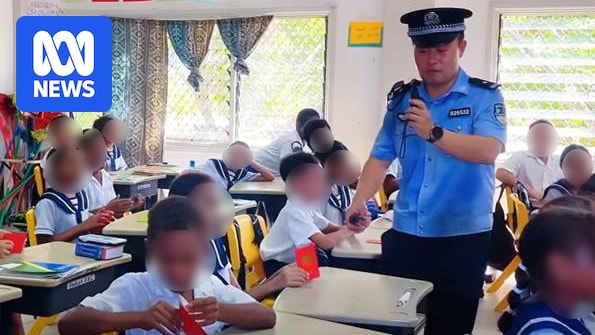
According to sources, some members of the “new” Chinese population in Honiara, who primarily speak Mandarin, prefer dealing with Chinese police for protection. A video on social media showed Chinese Police Liaison Team (CPLT) officers interacting with students, fueling speculation.
Despite internal tensions over China’s role in the Solomon Islands and the geopolitical rivalry between Canberra and Beijing, the RSIPF and the Solomon Islands Chinese Association have denied the rumors. RSIPF spokesman Desmond Rave confirmed that the new post would be “manned by RSIPF Officers,” although Chinese police might “visit” the office.
“The allocation of the office space and the presence of the RSIPF is very significant to manage increased criminal activities in Chinatown and surrounding communities in Central Honiara,” said Mr. Rave.
Australia’s Watchful Eye
As the new police office opens on March 1, Australia, New Zealand, and other Western nations are likely to monitor developments closely. The location in Chinatown, a potential flashpoint for unrest, could raise concerns in Canberra. A leaked 2022 security agreement between China and the Solomon Islands outlines a pathway for China to send armed police and military personnel to protect Chinese nationals and projects if requested by Honiara.
China has previously used overseas police stations to monitor and influence diaspora groups, raising alarm in Western nations. Former Australian High Commissioner to the Solomon Islands, Lachlan Strahan, advised caution.
“You have to wonder — what are they [the Chinese police] going to do most of the time?” Strahan said, adding that China might see advantages in establishing a presence.
Strahan suggested that a Chinese police presence could serve multiple purposes, including consular functions, and symbolize a victory in expanding China’s influence in the region.
“It would also be their attempt to push outwards and raise the Chinese flag in more places,” he noted.
As tensions simmer, the Solomon Islands faces a delicate balancing act in managing its relationships with both China and traditional allies like Australia.