


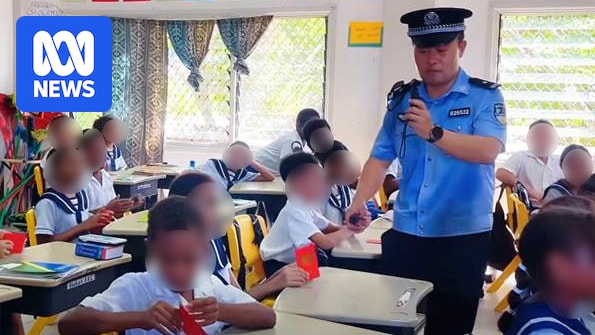
A small demountable office building in Honiara’s Chinatown has sparked widespread speculation and concern. The structure, a 20-foot-long converted shipping container, is set to become the latest outpost for the Royal Solomon Islands Police Force (RSIPF) in the capital. However, its location and the rumors surrounding it have raised eyebrows.
Some locals fear that this unassuming building could symbolize China’s growing security presence in the Solomon Islands. Yet, both the RSIPF and the Chinese community organization funding the project have dismissed these claims, asserting that the station is merely a grassroots initiative aimed at protecting local business owners and maintaining law and order.
Community Tensions and Historical Context
The announcement comes as the Solomon Islands continues to navigate economic and strategic challenges. Memories of the November 2021 riots, which left Honiara’s Chinatown in flames, are still fresh. Many businesses, including those owned by recent arrivals from China’s Fujian Province, are still recovering from the chaos.
The recent increase in crime in Honiara, coupled with limited job opportunities, has further strained community relations. When the RSIPF closed its previous police post in Chinatown, some locals felt abandoned, prompting the Solomon Islands Chinese Association to devise a plan to reintroduce police presence in the area.
The New Police Station: Rumors and Realities
Last month, the plan materialized when parents at Chung Wah School noticed a shipping container on the school grounds, destined to become the new police station. Rumors quickly spread that the station would be staffed by Chinese police officers sent by Beijing under a contentious 2022 policing agreement.
However, both the RSIPF and the Solomon Islands Chinese Association have refuted these claims. RSIPF spokesman Desmond Rave confirmed that the new post would be “manned by RSIPF Officers,” though he acknowledged that Chinese police might “visit” the office, leaving room for speculation.
“The allocation of the office space and the presence of the RSIPF is very significant to manage increased criminal activities in Chinatown and surrounding communities in Central Honiara,” said Rave.
Henry Kwan from the Solomon Islands China Association explained that the decision to locate the station at Chung Wah School was due to the lack of suitable land elsewhere. He emphasized that while Chinese police have been involved in discussions, they will not be based at the post.
International Implications and Future Prospects
Meanwhile, the new police station is likely to attract scrutiny from Australia, New Zealand, and other Western nations. The location, in particular, could be a point of concern for Canberra, especially if unrest flares up again in Honiara.
A leaked 2022 security agreement between China and the Solomon Islands outlines a framework for China to send armed police and military personnel to the islands upon request. This has raised alarms about potential Chinese influence in the region.
Former Australian High Commissioner to Solomon Islands Lachlan Strahan remarked, “You have to wonder — what are they [the Chinese police] going to do most of the time?”
Strahan cautioned against overreacting, suggesting that any Chinese police presence could serve multiple purposes, including consular protection for Chinese nationals. He noted that China might view such a presence as a symbolic victory, enhancing its influence in the Pacific.
As the new police station prepares to open on March 1, the Solomon Islands finds itself at a crossroads, balancing domestic security needs with international diplomatic pressures. The situation underscores the complexities of regional geopolitics and the delicate dance of influence in the Pacific.