


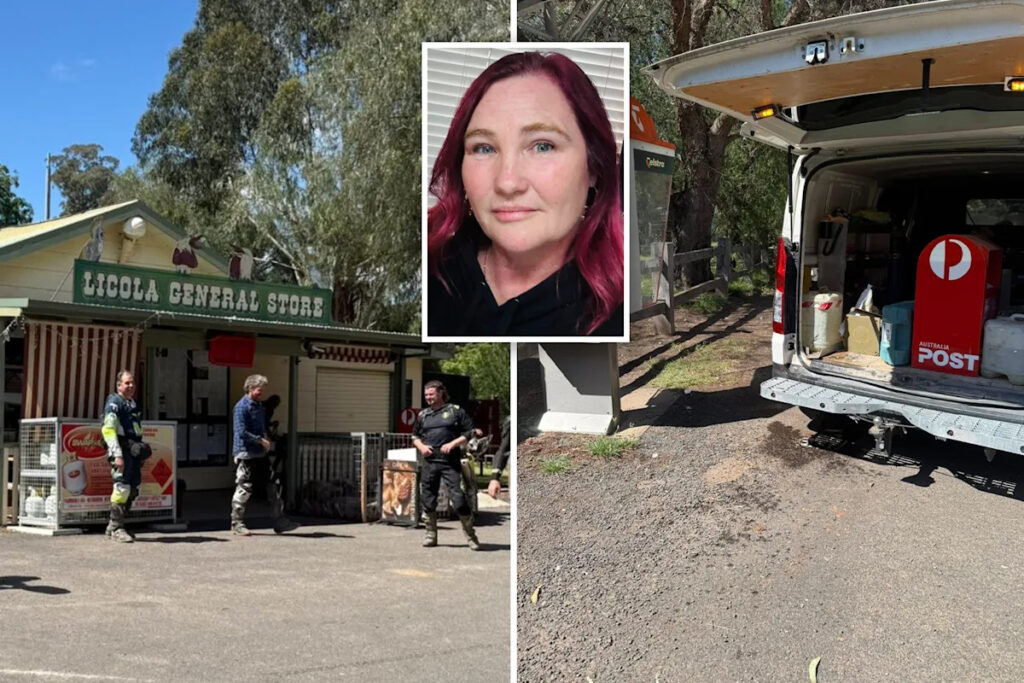
A single mother who invested her entire $400,000 life savings into a caravan park and general store in Licola, a privately-owned town in Victoria, Australia, is facing an uncertain future. Leanne O’Donnell, who moved with her two children to the rural village four years ago, has been ordered to vacate the premises by this Saturday. The decision, made by the Lions Club which has overseen the village for over 50 years, has left her devastated.
The non-profit organization, citing a maintenance loss of $50,000, has terminated Leanne’s lease and plans to take over the business. This decision forces Leanne and her teenage son to move into a caravan attached to her vehicle. “I’m not seeing a loss. I’m getting by, I’m not making a million, but I love what I do,” Leanne expressed in an interview with Yahoo News Australia. “When you love what you do, the money comes second. I work from my heart, and they’re working from a spreadsheet.”
Community Impact and Emotional Toll
Leanne’s eviction marks the end of an era for many families who have frequented the caravan park for generations. She had to inform long-time patrons that they would no longer be able to maintain their annual setups. “One of the annual [caravanners] has been here for 36 years. One had to pull his father’s van down that he inherited — it’s the last thing he had left of his dad,” she recounted, highlighting the deep emotional connections tied to the site.
The Lions Club’s decision has stirred tensions within the community, as the town itself has been put up for sale with an estimated price tag of $6-$10 million. This move comes amid broader financial challenges faced by the Licola Wilderness Village, a camp for disadvantaged children located across from Leanne’s business.
End of an Era for Licola
Despite the upheaval, Leanne continued to operate until Australia Day, determined not to disrupt service to the community she has come to cherish. However, the dismantling of her business is now a reality. “Everybody kept saying it’s just a lease ending. Just deal with it, pack and move on. But I am the only shop in town,” she lamented. “This is like a complete erasure of a business and a community and the heritage of the area.”
Adding to the community’s woes, Licola’s only Australia Post box was removed this week. An Australia Post spokesperson confirmed that the “agreement with the agent of the Community Postal Agency (CPA) at Licola ceased on 23 January after their lease was not renewed by the landlord.” They thanked Leanne for her dedicated service to the community.
Future Prospects and Reflections
The Licola Wilderness Village board, in a statement to Yahoo News, acknowledged the difficult decision to sell the town. They cited “increasing financial pressures, ageing accommodation and infrastructure, reduced school and camp participation, rising insurance costs and limited capacity for reinvestment” as factors making the current model unsustainable. “This decision does not step away from that legacy — it protects it,” a spokesperson stated, emphasizing a shift towards a broader and more sustainable model of support for children.
As Leanne faces the imminent deadline, she is scrambling to sell her equipment and stock, hoping to recover some of her investment. “Now I’m moving into a caravan because I’ve got no money to buy a house or buy a business or anything like that, apart from what I get at the end of this,” she said, referring to the $100,000 she hopes to recoup. “Now, I’ve gotta get creative.”
The unfolding situation in Licola serves as a poignant reminder of the fragility of small businesses and the profound impact of economic decisions on rural communities. As the town transitions to new ownership, residents and business owners like Leanne are left to navigate an uncertain future.