




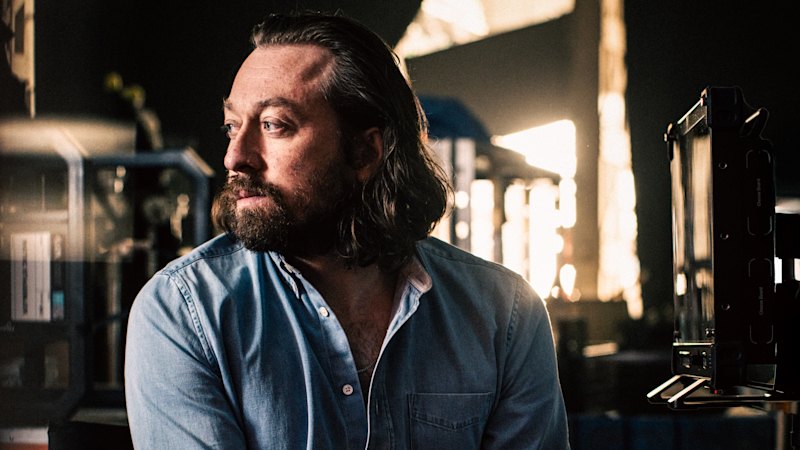
In the decade since leaving Australia, Simon Stone has become a study in perpetual motion. From the theatres and festivals of Europe to the stages of Seoul and New York, Stone has crafted a reputation as an auteur director, reimagining the works of classic dramatists like Seneca and Lorca. His journey has been marked by a series of international hits, starting with his 2014 production of Medea in Amsterdam, which later captivated audiences in New York with Rose Byrne. His electrifying adaptation of Yerma, starring Billie Piper at the Young Vic, and last year’s rendition of Ibsen’s The Lady from the Sea with Alicia Vikander, have further solidified his standing.
Stone’s relentless pace and innovative vision have made him a sought-after figure in the theatre world. His groundbreaking staging of Chekhov’s The Cherry Orchard, debuted in Seoul with a Korean cast, is set to make waves at the Adelaide Festival. Despite the controversy surrounding Adelaide Writers’ Week, Stone’s engagement remained untouched, highlighting his ability to transcend local tumult with universal storytelling.
From Australia to the World Stage
Stone’s journey from Australia to the international stage is a testament to his unique vision and adaptability. His work often involves updating classic dramas for modern sensibilities, a skill that has earned him both praise and criticism. Playwright Andrew Bovell once admonished him to “write your own plays and stop effing around with everybody else’s.” Yet, it is this very approach that has allowed Stone to breathe new life into classic narratives, making them resonate with contemporary audiences.
His adaptation of Ibsen’s The Wild Duck at Sydney’s Belvoir Street Theatre marked a turning point, leading to his eventual move to Europe. “I was always leaving,” Stone reflects, noting the dislocation that comes with frequent travel. His path mirrors that of other successful Australian directors like Barrie Kosky and Benedict Andrews, who have also found fertile ground for their creativity in Europe.
The Impact of Personal History
Stone’s personal history deeply informs his work. Witnessing his father’s death from a heart attack at the age of 12, Stone was raised by his mother and sisters. His plays often feature strong female characters grappling with profound challenges, such as the infertility struggles in Yerma or the complex maternal conflicts in his contemporary Medea.
His own experiences of trauma and guilt have shaped his artistic perspective, leading him to explore characters who represent extreme versions of human potential. As Stone once noted, “We all have trauma and hurt that we don’t talk about, and good drama tells us we’re not the only person who’s been through that.”
Global Collaborations and Cultural Resonance
Stone’s work is not only a reflection of his personal journey but also a testament to his ability to connect with diverse cultures. His recent collaboration with Korean actors for The Cherry Orchard at Seoul’s LG Arts Centre illustrates this. The production, which drew parallels between late-19th-century Russia and modern South Korea, resonated with young audiences, demonstrating the universal appeal of Stone’s storytelling.
According to Wouter van Ransbeek, Stone’s long-time collaborator, the production was a hit among Seoul’s under-33 audience. “If it’s true that Korea is a predictor of the future, then it’s very reassuring that a young generation is vividly engaging with theatre as if going to a pop concert,” van Ransbeek observes.
The Future of Theatre and Film
As Stone continues to push boundaries, his upcoming projects reflect his diverse interests. He is set to direct Elsinore, a film about Ian Charleson, a young actor who played Hamlet at the National Theatre before succumbing to AIDS. The film, starring Andrew Scott and Olivia Colman, promises to explore the vibrant yet tumultuous gay scene in 1980s London.
Meanwhile, Stone’s theatrical endeavors continue with Innocence at the Metropolitan Opera in New York and another Chekhov adaptation, Ivanov, at London’s Bridge Theatre. His ability to navigate both theatre and film speaks to his versatility and enduring influence on the arts.
As Stone reflects on his journey, he acknowledges the challenges and privileges that come with his success. “I didn’t have the privileges my daughter is growing up with,” he admits, pondering the impact of his career on his family. Yet, his work remains a testament to the power of storytelling to bridge cultures and generations, ensuring his place as a pivotal figure in contemporary theatre.