


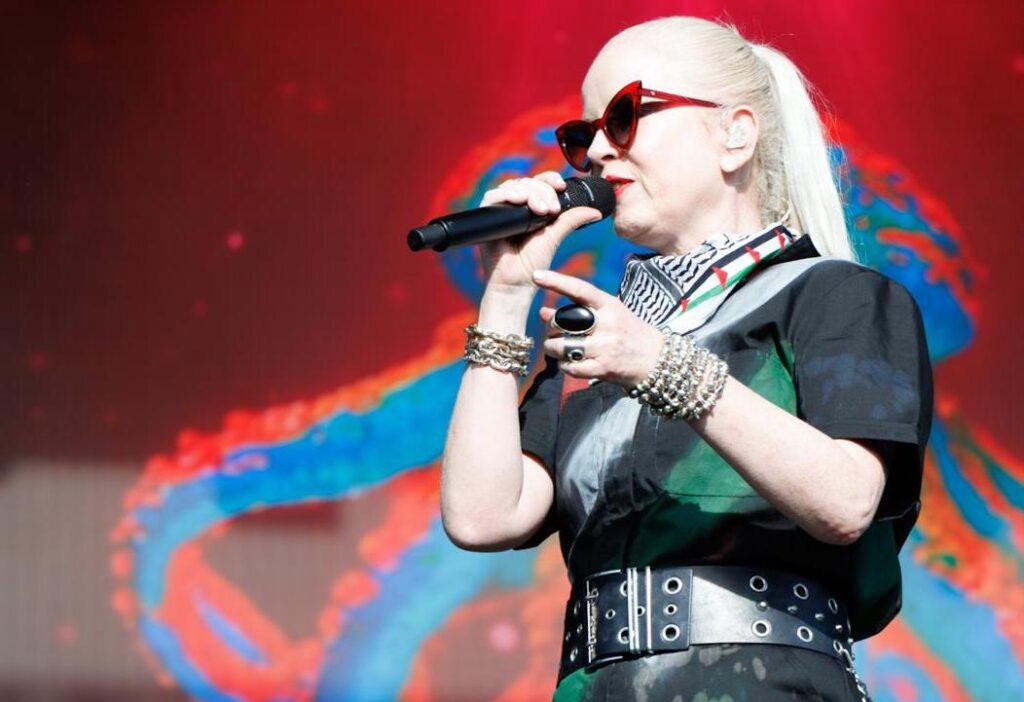
Garbage’s lead singer, Shirley Manson, has reignited discussions about the state of the music industry following a viral incident at the Good Things festival in Melbourne. During the band’s set on Friday, Manson paused mid-song to reprimand a fan for playing with a beach ball, labeling the act as “disrespectful.” Her comments, captured on video, have since sparked widespread debate online.
The incident unfolded when Manson interrupted the performance to address an audience member holding a beach ball. “I’d love to send my crew to mess you up, but I won’t, because I’m a lady,” she declared, as seen in the circulating footage. While the videos begin after her outburst, leaving the initial context unclear, new comments and footage reviewed by Blunt have shed light on the situation.
Fan’s Perspective and Audience Reactions
The fan at the center of the controversy took to social media to share his side of the story. “Mate, that was me at the show,” he wrote on Facebook. “Shirley singled me out and went on an unnecessary beach ball rant.” He described his actions as harmless fun, adding, “Good Things was awesome today in Melbourne. Hoping the beach balls in the crowd are ripe and ready for the next two shows in Brisbane and Sydney.”
Footage posted online shows the man during Manson’s rant, with no visible disturbance among surrounding audience members. Some festival-goers told Blunt editor Emily Spindler that the man had been ‘messing with other people in the crowd,’ but no video evidence supports this claim, and the man has denied it.
Manson’s Statement and Broader Industry Critique
Hours after the Melbourne performance, Manson issued a defiant statement on Garbage’s official Threads account. “I make NO APOLOGIES whatsoever for getting annoyed at beachballs at shows,” she asserted. “I joined a band because I HATED THE F**KING BEACH.” Her statement emphasized a broader frustration with how live music is treated, linking the beach ball incident to a larger critique of the music industry.
“Continue listening to Spotify and toss your stupid beach balls around like you are ten years old. I love the musical community and I want to respect their artistry. I am so tired of folks taking music for free and treating us all like circus performers.”
Manson’s comments reflect a deeper issue within the industry: the undervaluation of musicians in the age of streaming. Her outburst was not just about a single beach ball but a symbol of disrespect towards artists who struggle to sustain their careers amid dwindling financial returns.
The Larger Message: Industry Challenges
This incident is part of a larger narrative Manson has been vocal about. During Garbage’s recent North American tour, she frequently paused shows to discuss the financial difficulties facing musicians today. “The average musician makes $12 a month on Spotify,” she told audiences in October, highlighting the unsustainable nature of current revenue models.
“Everyone gets paid except for the musician. You’re going to lose the creative weirdos, the agitators, the provocateurs. You’re going to get fucking white bread.”
Manson’s frustration with streaming income, rising tour costs, and the casual consumption of music underscores her belief that these issues are interconnected. To her, the beach ball was not just a festival gimmick but a representation of an industry that undervalues its creators.
Personal Struggles and Emotional Weight
The Good Things incident also follows a difficult personal period for Manson, who confirmed the death of her father in October. While she has not directly linked her personal loss to the on-stage moment, it adds an emotional layer to what has been a challenging year for the artist.
For some fans, Manson’s outburst has raised questions about whether her reaction was excessive, while others view it as a justified response from an artist at her breaking point. The incident has already led to online calls for fans to bring beach balls to the upcoming Sydney show, potentially escalating the situation further.
Future Implications and Industry Reflection
The Good Things festival incident is more than just a clash between a singer and a beach ball; it represents the collision of differing expectations of live music in 2025. Festival-goers seek escapism and entertainment, while artists like Manson fight for the survival of their art in an industry that increasingly marginalizes them.
As the conversation continues, the incident serves as a reminder of the ongoing challenges musicians face and the need for a reevaluation of how the industry values its artists. Whether or not Manson’s approach was the right one, it has undeniably sparked a necessary dialogue about the future of live music and the respect owed to those who create it.