


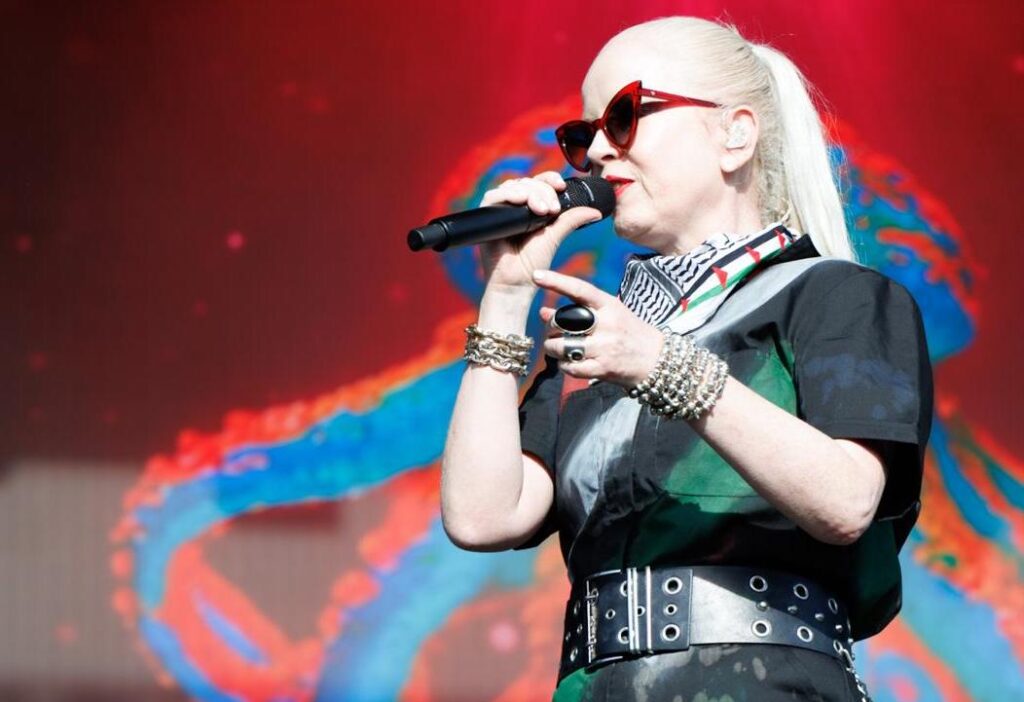
Garbage’s lead singer Shirley Manson has stirred up controversy with a fiery on-stage outburst during the Good Things festival in Melbourne. The incident, which occurred on Friday, involved Manson halting the band’s performance to reprimand a fan for playing with a beach ball. The singer’s actions have since sparked a broader conversation about festival etiquette and the challenges facing musicians in today’s industry.
Video footage from the event shows Manson stopping mid-song to address the audience member, calling the act “disrespectful” and expressing her frustration with a pointed remark: “I’d love to send my crew to mess you up, but I won’t, because I’m a lady.” The incident quickly went viral, with many videos circulating online, though they begin after Manson’s rant had already started, leaving the full context unclear.
Fan’s Perspective and Public Reaction
The fan at the center of the controversy has since spoken out, asserting that he was merely enjoying the festival atmosphere. In a comment on social media, he stated, “Mate, that was me at the show. Shirley singled me out and went on an unnecessary beach ball rant. I was just having fun at a music festival with a beachball dude.”
Despite some festival-goers claiming the fan was disrupting others, there is no video evidence to support these allegations, and the fan has denied any wrongdoing. Notably, earlier in the day, the band Machine Head had distributed beach balls to the crowd, suggesting that for many attendees, the balls were simply part of the festival’s lively energy.
Manson’s Defiant Response
Following the incident, Manson took to Garbage’s official Threads account to issue a defiant statement. She wrote, “I make NO APOLOGIES whatsoever for getting annoyed at beachballs at shows. I joined a band because I HATED THE F**KING BEACH. I joined a band because I wanted to listen to Siouxsie and the Banshees and The Cure and be dark and beautiful.”
Her statement underscores that her frustration was not directed at a specific altercation but rather at the broader principle of beach balls at concerts, which she views as a symbol of disrespect towards musicians. Manson’s comments reflect a deeper dissatisfaction with how live music is perceived and consumed in the current era.
The Broader Industry Context
Manson’s outburst is part of a larger narrative she has been vocal about during Garbage’s recent tours. She has repeatedly highlighted the financial struggles musicians face, particularly with the collapse of streaming income and the rising costs of touring. During a North American tour, she warned fans, “The average musician makes $12 a month on Spotify. Everyone gets paid except for the musician. You’re going to lose the creative weirdos, the agitators, the provocateurs.”
“Continue listening to Spotify and toss your stupid beach balls around like you are ten years old. I love the musical community and I want to respect their artistry.”
For Manson, the beach ball incident is emblematic of a music industry that undervalues its artists. Her frustration is not just with the beach balls but with a culture that treats live performances as mere background entertainment rather than a valued art form.
A Year of Challenges
The incident at Good Things also comes during a challenging period for Manson personally. In October, she confirmed the passing of her father, adding emotional weight to what has already been a tumultuous year. While she has not directly linked her personal loss to the on-stage moment, it provides context for the intensity of her response.
As the debate continues, some fans have rallied behind Manson, while others question whether her reaction was proportional. The incident has even prompted a call for fans to bring beach balls to the upcoming Sydney show, potentially escalating the situation further.
The Ongoing Conversation
The clash at Good Things highlights a broader tension between festival-goers seeking escapism and artists fighting for the survival of their craft. As the music industry continues to evolve, the expectations of live music experiences are being redefined. Manson’s outburst serves as a reminder of the challenges musicians face in an industry that pays them less than ever before.
Ultimately, the incident raises important questions about respect, artistry, and the future of live music. As festivals continue to be a major part of the music landscape, finding a balance between audience enjoyment and artist respect will be crucial for the industry’s sustainability.