

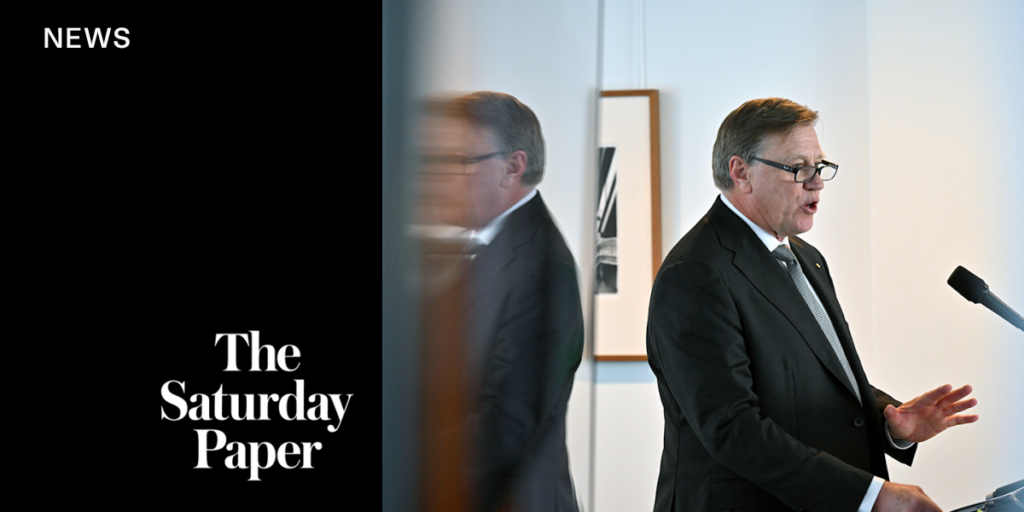
The Senate’s year-long inquiry into university governance has concluded with the release of its final report, highlighting significant challenges within the sector. The inquiry, marked by intense public hearings, captivated many in the higher education community as senior leaders faced rigorous questioning.
Two testimonies stood out during the proceedings, offering insights into the future direction of university governance. The appearances of a vice-chancellor and a chancellor provided contrasting narratives that underscore the sector’s pressing issues.
The Chancellor’s Controversial Testimony
Anticipation surrounded the appearance of Professor John Pollaers, the chancellor of Swinburne University of Technology and convenor of the University Chancellors Council (UCC). The UCC, a central governance body, had previously submitted a report that the Senate criticized for downplaying the sector’s crisis.
On the day of his testimony, an article in The Australian Financial Review detailed multiple complaints against Pollaers, including allegations of staff mistreatment and overstepping his role. Pollaers denied the allegations, and Swinburne University issued a statement defending his governance and integrity.
“The chancellor was ‘widely regarded within the university and across the higher education sector as a champion of integrity, good governance, and social purpose.'” — Swinburne University Statement
Despite the university’s defense, the Senate grilled Pollaers on the complaints and other issues, such as a consultancy awarded to an inexperienced agency and his honorary title of “Professor.” The scrutiny led to an emergency council meeting where Swinburne decided to hold an independent inquiry into his conduct.
Vice-Chancellor’s Vision for Reform
In stark contrast, Professor George Williams, vice-chancellor of Western Sydney University, presented a forward-thinking vision for the sector. In his essay, “Aiming Higher: Universities and Australia’s Future,” Williams candidly addressed the crisis and proposed reforms focused on student and staff commitment.
“Universities have become the political equivalent of the banking sector before the Hayne Royal Commission.” — Professor George Williams
Williams’s leadership at WSU, corroborated by Chancellor Jennifer Westacott, exemplifies these principles. The university has embarked on a “decasualisation” program, converting casual teaching positions into ongoing roles, and Williams voluntarily reduced his salary to align with government benchmarks.
Broader Sector Challenges
The inquiry revealed systemic issues across other universities. Monash University faced criticism for underpaying staff, while the University of Melbourne was scrutinized for executive remuneration conflicts. The soon-to-merge University of South Australia and University of Adelaide were questioned about consultant spending, and University of Technology Sydney’s job cuts drew ire.
The Senate’s final report recommends strengthening the Tertiary Education Quality and Standards Agency’s powers, enhancing industrial compliance, and prioritizing research and education over corporate agendas. However, questions remain about the effectiveness of these measures in addressing deeper cultural issues.
Looking Forward: Proposals for Change
One proposal gaining traction is the democratic election of university leaders, a practice common in Scandinavian universities. This approach could enhance accountability, transparency, and trust, addressing the legitimacy concerns currently plaguing Australian institutions.
“By electing a rector, employees and students gain influence over the administration, which gives the leadership legitimacy…” — University of Oslo
Such reforms could represent the bold policy initiatives needed to restore confidence in the sector. However, significant change may require a comprehensive inquiry akin to a royal commission, as suggested by Professor Williams.
As the sector grapples with these challenges, the Senate’s inquiry has set the stage for potential reforms that could redefine university governance in Australia.