




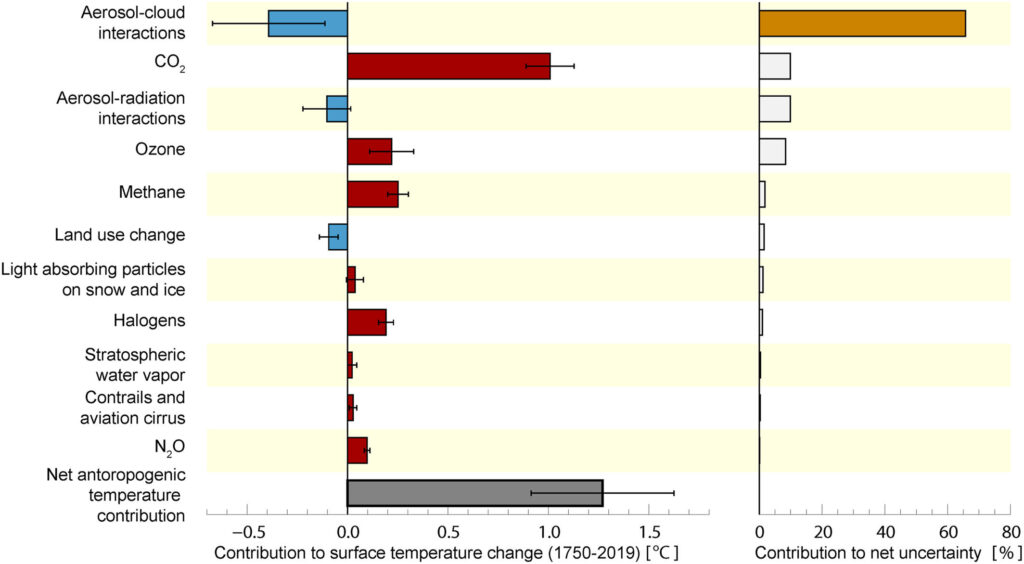
The Earth is warming at an unprecedented rate, with extreme weather events becoming more frequent and intense. While carbon dioxide emissions are the primary driver of global warming, air pollution also plays a significant role. However, the extent of this influence remains unclear. Now, Europe’s leading scientists in aerosol and cloud research have joined forces to address this uncertainty in climate science.
Researchers from three major projects have collaborated to determine the impact of airborne particles on current global temperature records. Their findings are anticipated to enhance predictions of climate change’s pace and regional patterns in the coming years.
“Pollution in the shape of tiny airborne particles impacts how sunlight and heat are reflected or absorbed in the atmosphere. The challenge is that we don’t know exactly how much,” said Ulas Im, senior researcher at Aarhus University in Denmark.
Understanding Aerosol-Cloud Interactions
Ulas Im, along with other European experts on aerosol-cloud interactions, has co-authored a paper in AGU Advances titled “Aerosol-Cloud Interactions: Overcoming a Barrier to Projecting Near-Term Climate Evolution and Risk.” The paper emphasizes the need for investment in research to reduce uncertainties in these interactions, which is crucial for projecting near-term climate changes and supporting effective mitigation strategies.
Im highlighted the importance of understanding aerosol-cloud interactions to discern the contributions of aerosols and greenhouse gases to recent warming. This knowledge is vital for policymakers, as it affects regional projections of rainfall, monsoons, and extreme weather, complicating mitigation and adaptation planning.
Collaborative Efforts to Close Knowledge Gaps
The projects CleanCloud, CERTAINTY, and AIRSENSE are working together as part of the EC-ESA Earth System Science Initiative. This collaborative effort aims to close knowledge gaps and accelerate scientific breakthroughs in understanding aerosol impacts on climate.
“This collaboration signifies a step change in what we can provide to society. Climate models are used to make decisions about the future, and by making them more accurate, we will improve knowledge about how we can best protect ourselves, crops, livelihoods, infrastructure, and more, against future extreme events,” said Jennie Thomas, project coordinator of CERTAINTY.
Implications for Future Climate Policy
The announcement comes at a critical time as policymakers worldwide grapple with the complexities of climate change. The research findings are expected to inform more accurate climate models, which are essential for developing strategies to protect against future extreme weather events.
By improving the accuracy of climate models, scientists hope to provide better insights into how societies can adapt to and mitigate the impacts of climate change. This includes safeguarding agriculture, infrastructure, and communities from the adverse effects of extreme weather.
The move represents a significant step forward in climate science, with the potential to transform how we understand and respond to the challenges posed by global warming. As the world continues to experience the effects of climate change, such research is crucial for shaping effective policies and ensuring a resilient future.