


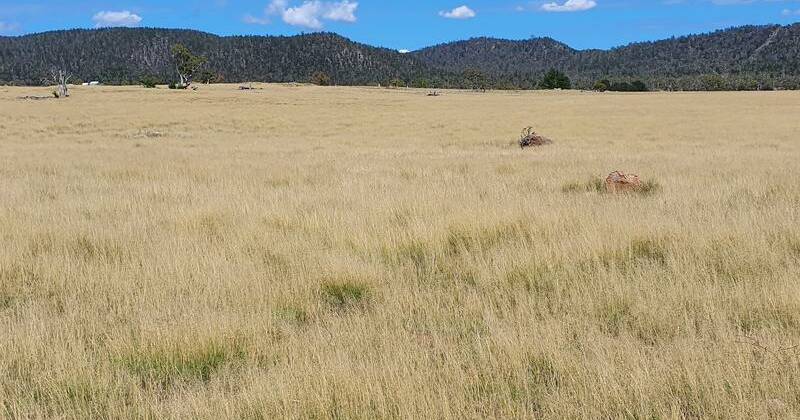
Farmers in New South Wales have been battling the invasive African lovegrass for over a century, with the weed posing a significant threat to the region’s agriculture. The Snowy Monaro region, a prime grazing area, has been particularly affected, as the weed overwhelms native pastures and poses a bushfire risk when dry.
“Lovegrass really takes over. Nothing competes with it,” said Brett Jones, the biosecurity coordinator for the local council. Farmers have spent their lives trying to manage this persistent weed, which was accidentally introduced to Australia before 1900. Its rapid spread is facilitated by a quick seeding cycle and adaptability to both wet and dry conditions.
Harnessing Technology to Tackle the Weed
In a groundbreaking effort to address this longstanding issue, researchers have begun using satellite imagery and artificial intelligence to monitor the spread of African lovegrass and another invasive species, the bitou bush. A recent study published in the journal Weed Research revealed that an algorithm could detect African lovegrass with 89.8% accuracy and bitou bush with 86.1% accuracy.
Charles Darwin University spatial analyst Glen Shennan explained that satellites offer a broader view of the weed invasion compared to drones. “Satellites take photographs from 700km away, providing a decade’s worth of imagery to illustrate changes in the landscape,” Shennan noted. This technology could significantly enhance early intervention efforts and direct mitigation strategies more effectively.
The Economic Impact of Invasive Weeds
Managing invasive plants like African lovegrass costs Australia over $4 billion annually. The weed not only affects pasture quality but also develops resistance to herbicides, complicating control efforts. “It’s an enormous amount of money that lovegrass costs Australia each year,” Shennan emphasized, highlighting the potential savings from improved management strategies.
Brett Jones echoed these concerns, stating, “What we’ve done for the last 50 years hasn’t been working. It’s just getting out of control and taking over the place.” The introduction of satellite technology offers a glimmer of hope in this ongoing battle.
Looking Forward: The Promise of Innovation
While the research is still in its early stages, the potential for satellite technology to revolutionize weed management is promising. By providing detailed, long-term data, it could enable more targeted and effective interventions, ultimately reducing the economic burden on Australian farmers.
As the fight against African lovegrass continues, the integration of cutting-edge technology may finally offer a viable solution to a problem that has persisted for generations. The success of these efforts could serve as a model for managing other invasive species worldwide, demonstrating the power of innovation in addressing environmental challenges.