




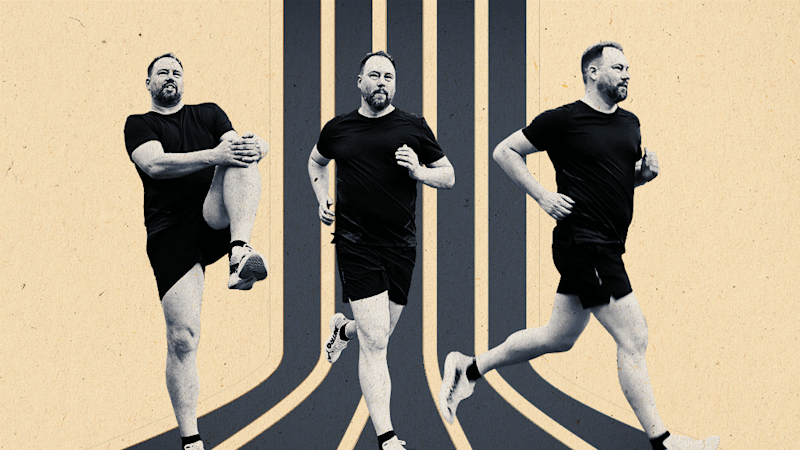
It’s a rainy and grey morning at the Collingwood Harriers Athletic Club in Melbourne, yet the world is awake. On June 5, 2024, I mark my 156th consecutive day of running. My goal is to run every day for a full year, a commitment that began as a New Year’s resolution. At 46, facing middle-age spread and health issues like sleep apnea and exercise-induced asthma, I found myself weighing 117 kilograms. Running seemed like a simple, elegant solution to these challenges.
To ensure I stayed committed, I devised a rule: no days off, no excuses. This discipline has brought me here, waiting for my running partner, Hugh van Cuylenburg, a podcaster and nominee for Australian of the Year, on a tartan athletics track. Known for his work with The Resilience Project, van Cuylenburg has transformed his passion for sprinting into a tool for personal growth and resilience.
The Journey Begins
My journey started with a simple idea: running could be more than just a daily exercise. I could leverage my experience as a sportswriter to interview experts and incorporate their wisdom into my routine. Why run alone when I could learn from Olympic athletes like Jessica Hull and Steve Moneghetti, or even from van Cuylenburg himself?
Van Cuylenburg’s story is one of transformation. Growing up in Melbourne, he found his extrinsic value in making people laugh, which later became part of his job as a primary school teacher. A transformative backpacking trip to India led him to work with disadvantaged children, using the principles he learned abroad. His book, The Resilience Project, and subsequent organization have made significant impacts in education and sports.
Learning from the Best
Today, van Cuylenburg is giving me a crash course in sprinting. We start with a 400-meter slow jog, part of a cautious approach that includes gym sessions, cycling, and track workouts. The goal is to build resilience and strength through dynamic stretches and drills designed to teach proper sprinting technique.
As van Cuylenburg explains, “Sprinting is about the amount of force you can put through the track in the quickest possible time, which is so different from distance running.” We engage in exercises like “A skips” and “B skips,” focusing on postural alignment and muscle coordination.
“The body can do all of these motions, but it’s used to almost none of them.” — Hugh van Cuylenburg
The Impact of Daily Running
Running every day has not only improved my physical health but also my mental and emotional well-being. Van Cuylenburg shares similar sentiments, noting that sprinting demands healthy habits like proper nutrition, sleep, and recovery techniques. He has even given up drinking to enhance his performance.
“There’s nothing like the feeling of running fast,” van Cuylenburg says. “The most present I am in my life is when I’m sprinting.” This presence translates into other areas of life, fostering creativity and positive solutions to everyday challenges.
For van Cuylenburg, sprinting is more than exercise; it’s a metaphor for life. The 400 meters, a demanding race, reflects the challenges we face and the resilience required to overcome them. “You see the stagger between lanes unfold. The grandstand rises before you. It’s incredible,” he describes.
Reflections and Future Steps
As we complete our training session, I reflect on the transformative power of running. The discipline and resilience I’ve developed over the past months have spilled over into other areas of my life, enhancing my relationships and overall happiness. The runner’s high, as van Cuylenburg describes, feels essential to survival.
My journey of running every day for a year continues, inspired by the insights and experiences shared by those like van Cuylenburg. As I look forward to the remaining 209 days, I am reminded of the simple joy and profound impact of putting one foot in front of the other.
This article is an edited extract from Run for Your Life by Konrad Marshall, available now. For more insights, visit Good Weekend magazine’s page at The Sydney Morning Herald, The Age, and Brisbane Times.