




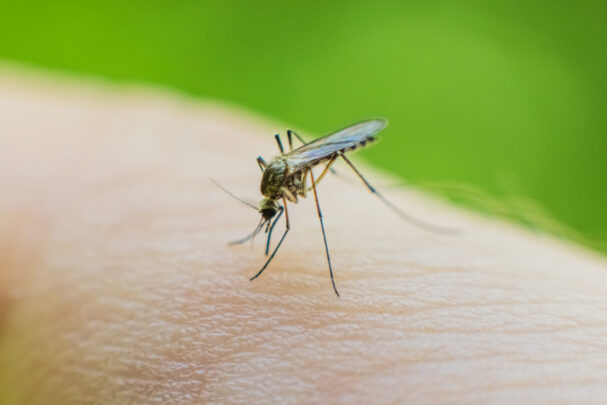
Australians are being urged to take precautions against mosquito bites this summer, as new research highlights a significant increase in the risk of Ross River virus due to warmer temperatures across much of the country. This warning comes as a scoping review led by the University of Adelaide, published in the Australian and New Zealand Journal of Public Health, reveals a strong correlation between rising temperatures and the prevalence of the virus.
The study analyzed 30 different pieces of research examining the relationship between temperature and mosquito-borne diseases such as Ross River virus and Barmah Forest virus. The findings indicate that rising temperatures are particularly linked to increased infection risks in coastal and riverland regions.
Each year, approximately 3,000 cases of Ross River virus are reported in Australia. The disease, transmitted by mosquitoes, can lead to symptoms such as rash, fever, and joint pain. While most individuals recover within a few weeks, some may experience prolonged symptoms that can significantly affect their quality of life.
Regional Variations in Infection Risk
According to lead author Christina Mary Varghese from the School of Public Health at the University of Adelaide, the study found that maximum temperatures are associated with higher Ross River virus cases in specific regions. These include coastal areas in Queensland, such as Brisbane, Cairns, and Townsville, as well as parts of New South Wales, Tasmania, and Western Australia.
“Studies found that maximum temperatures are linked to higher Ross River Virus cases in coastal Australia, particularly in Queensland (Brisbane, Cairns, Townsville, Mackay, Gladstone, Bundaberg, Redland and Darling Downs), New South Wales (North-East NSW), Tasmania (Sorell region), and WA (Mandurah),” said Varghese.
However, the relationship between temperature and infection risk varies by location. Varghese noted that in some areas, such as Darwin and certain inland regions of South Australia, Victoria, and Queensland, minimum temperatures also appeared to increase the risk of infection.
Complex Factors Influencing Outbreaks
Predicting outbreaks remains a challenge due to the complex interplay of factors involved, including rainfall, humidity, and stagnant water. Varghese emphasized the difficulty in forecasting outbreaks but noted that infections tend to spike when temperatures are around 26 degrees Celsius.
“It is very hard to predict Ross River Virus outbreaks, with a complex range of factors contributing to increased risk, including rainfall, humidity, and stagnant water conditions,” Varghese explained. “But we know that cases are more likely when temperatures are between 17 and 31 degrees.”
The review also examined Barmah Forest Virus, finding that infection risk was similarly linked to minimum temperatures in both coastal and inland areas. One significant finding was the lack of data on smaller towns and the need for more research on Ross River Virus in Queensland.
Preventive Measures and Future Research
With more Australians traveling, camping, and spending time outdoors during the summer, researchers recommend wearing light-colored clothing, using mosquito nets, and applying repellent to exposed skin. Senior author Professor Peng Bi from the University of Adelaide highlighted the review’s findings on the gaps in understanding how climate change may affect future disease patterns.
“There has been no Australian based study assessing associated healthcare costs, nor projecting future disease burden under different climate change scenarios – this is a key knowledge gap that needs to be addressed,” Bi said.
Bi stressed the importance of understanding how climate change will influence risk in different regions and the need for more research across inland Australia to track changes over time.
Public Health Association of Australia chief executive Terry Slevin noted the relevance of these findings ahead of the launch of Australia’s Centre for Disease Control in January. The center will monitor mosquito-borne diseases and provide advice on prevention as climate change continues to affect weather patterns.
“As the Australian weather warms due to climate change, we are likely to see different parts of Australia exposed to mosquito carried diseases like Ross River Fever and Barmah Forest Virus,” Slevin stated.
Important Legal Information: This article is of a general nature and is for informational purposes only. It does not take into account personal health requirements or existing medical conditions. It should not be considered personalized health advice. Before making any health-related decisions, individuals should determine if the information is appropriate for their situation and seek professional medical advice.