


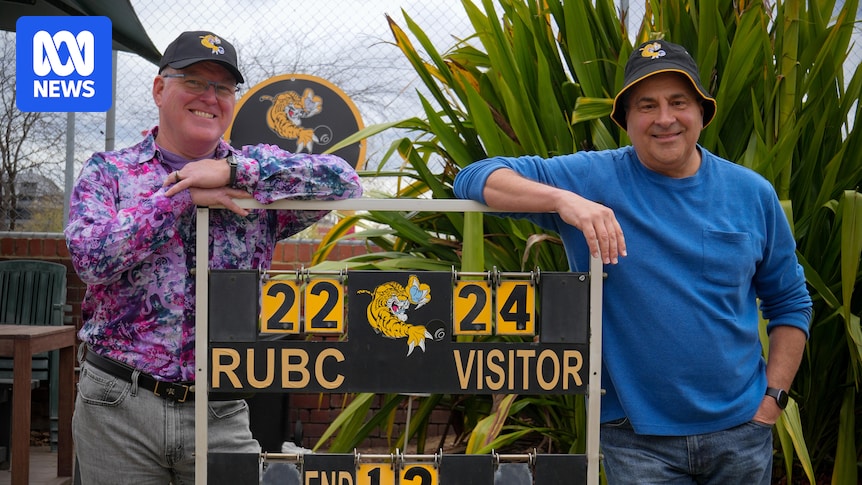
Growing up in America, Paul Cunningham faced significant challenges in sports due to his sexuality. In 2023, he relocated to Australia amid rising anti-LGBTQI+ sentiment in the United States, fearing an escalation if former President Donald Trump were re-elected. Upon his arrival in Melbourne, Cunningham discovered a lawn bowls club in Richmond that unexpectedly rekindled his passion for team sports.
“My experience with team sport from high school was overwhelmingly negative,” Cunningham recalled. Initially joining the Richmond Union Bowling Club through casual social gatherings, he and his husband Don were later invited by the club president to participate in a Pride Cup tournament. The experience was transformative, leading Cunningham to join the club’s committee with a focus on fostering LGBTQI+ inclusion.
Breaking Stereotypes: A Conservative Sport Embraces Change
Three years prior, the Richmond Union Bowling Club made history as the first lawn bowls club globally to host a Pride Cup tournament. Club president Robert Hutton explained that the initiative aimed to “open the club up to the LGBTQI+ community.” Cunningham initially approached the club with preconceived notions, expecting it to be dominated by “conservative old white guys.”
Contrary to his expectations, the club’s vibrant and inclusive atmosphere was a revelation. Hutton’s decision to hold a Pride Cup was a “leap of faith” that paid off, with the tournament now one of the club’s most significant annual events, attracting around 250 attendees this year.
“It’s just a fun day,” Hutton said. “It’s a bowls tournament, but I don’t think anyone really gives a rat’s toss whether they win or not.”
Building an Inclusive Community Beyond the Sport
As a committee member, Cunningham is now responsible for organizing the next Pride Cup. His firsthand experience has underscored the importance of such events in reintegrating LGBTQI+ individuals into club sports. “Working with the Pride Cup organization, you start to really learn about how important it is for clubs to proactively show people that they’re in a welcoming environment,” he stated.
Part of fostering inclusivity involves attracting social members who may not play but enjoy the club’s atmosphere. Sharon Menzies, an 80-year-old member, initially visited the club seeking a venue for a show. Despite the club not being “five star,” she was drawn to its “vibe.”
“When they come, they think, ‘Gee, we had such a good time,'” Menzies said, reflecting on her performance at the Queen of the Greens drag show, which drew over 150 attendees.
Menzies, who has faced discrimination as an intersex person, advises others to “develop the intestinal fortitude to just be who you are.” Though she didn’t initially intend to play, she now hopes to take up bowls after recovering from knee surgery.
Striving for Gender Parity and Broader Inclusivity
While the club has made strides in diversity, it now aims to increase female participation, aspiring for equal gender representation. “It’s very easy for a boy to turn up and play sport,” Hutton noted, contrasting his experiences with those of female family members.
To encourage female participation, the club has introduced both open and women-only competitions, moving away from the traditional gender-segregated tournaments. Hutton hopes these changes will eliminate barriers, allowing women to feel safe and welcome.
“[We’d like to] throw away the barriers. You can come in here, feel safe, feel welcome and enjoy it,” Hutton emphasized.
As the Richmond Union Bowling Club continues to champion inclusivity, its efforts serve as a model for other sporting clubs worldwide, highlighting the potential for sports to unite diverse communities and challenge societal norms.