
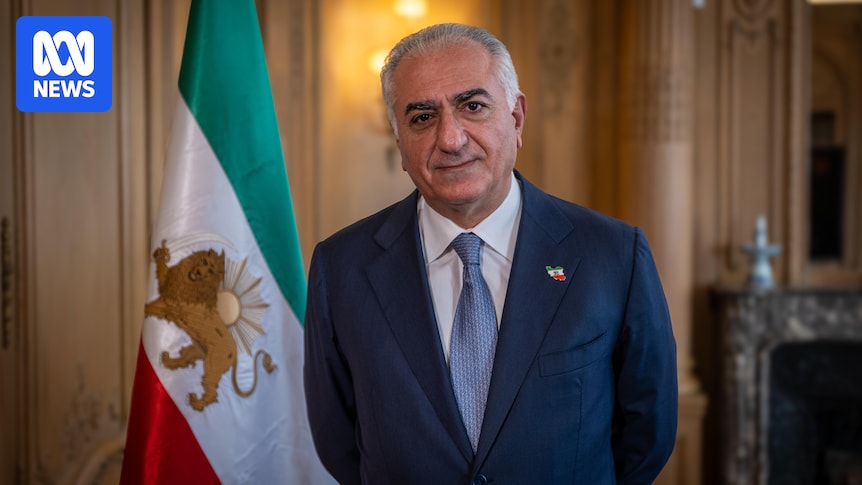
As the United States and Iran conclude their third round of nuclear talks, concerns are mounting over the potential for renewed conflict in the Middle East. Amidst these tensions, Reza Pahlavi, the exiled crown prince of Iran, is advocating for a targeted US military strike on Iran, irrespective of the outcome of the negotiations. Pahlavi, who has lived in exile for nearly five decades, remains a controversial yet influential figure among those opposing Iran’s current regime.
Pahlavi believes that a US strike on Iran’s nuclear facilities could weaken the regime and empower the Iranian populace to initiate change. “The Iranian people have shown tremendous resilience,” he stated, referencing the widespread protests that erupted in late December and early January, which were met with severe repression by the regime.
Reza Pahlavi’s Vision for Iran’s Future
For decades, Pahlavi has positioned himself as a potential leader for a secular democracy in Iran should the current regime fall. Despite not being the sole opposition force, his support has grown, particularly during recent protests. Demonstrators, frustrated with economic mismanagement and corruption, have been heard chanting “Javid shah!”—a nod to Pahlavi’s lineage.
He has consistently urged the US to abandon negotiations with Tehran’s clerical leaders, arguing that “Iranians haven’t died for nuclear negotiation.” Pahlavi contends that removing the regime would eliminate threats such as radicalism, terrorism, and nuclear proliferation.
Challenges and Criticisms
While Pahlavi’s rhetoric resonates with many, his critics question his ability to lead, given his long absence from Iran and the lack of formal endorsement from key international leaders. Some experts argue that his proposed transition plan concentrates too much power in his hands, raising concerns about the potential for authoritarianism.
“If Iran is to transition from a very brutal totalitarianism to an open society where everyone has equal rights and dignity, rhetoric will not be enough,” said Mariam Memarsadeghi, an Iranian-American activist.
International Support and Strategies
Pahlavi’s call for international intervention extends beyond military action. He advocates for comprehensive sanctions, the neutralization of the Islamic Revolutionary Guard Corps, and measures to disrupt the regime’s financial networks. He praised Australia’s decision to list the IRGC as a terrorist organization and urged further support for his cause.
The 2026 Munich Security Conference provided a platform for Pahlavi to amplify his message. The event, attended by prominent figures like US Senator Lindsey Graham and European Parliament President Roberta Metsola, highlighted Iran’s human rights abuses and the potential for regime change.
Building a Coalition for Change
Pahlavi has called on Iran’s military and police to defect and align with the people, describing the regime as a “sinking ship.” He established a platform for defectors, claiming significant interest from within Iran’s military and bureaucracy. However, experts like Professor Mehrzad Boroujerdi caution that successful regime change requires substantial organizational strength on the ground.
“You have to ask yourself, if I am confronting a brutal regime, like the Islamic Republic, do I have, do my followers have the stomach?” Boroujerdi questioned.
The Path Forward: Transition Plans
Pahlavi has outlined a phased transition plan, beginning with stabilizing Iran’s economy and holding a national referendum within the first 100 to 180 days post-regime change. This plan, known as the Iran Prosperity Project, seeks to avoid the chaos seen in post-Saddam Iraq by ensuring “maximum defections” from the regime.
Phase two involves establishing democratic institutions and preparing for free elections, while the final phase focuses on long-term economic reconstruction. Despite these plans, concerns remain about the concentration of power in Pahlavi’s hands during the transition.
“The worst thing that can happen is that the Islamic Republic is overthrown and … the opposition would not be able to hold the state together,” warned Professor Boroujerdi.
Ultimately, the question of who will lead Iran post-transition remains open. Pahlavi emphasizes that the decision lies with the Iranian people, and his role would conclude once a democratic government is established. “That will be my job accomplished, and that has always been my finish line from the day I started 46 years ago,” he affirmed.