



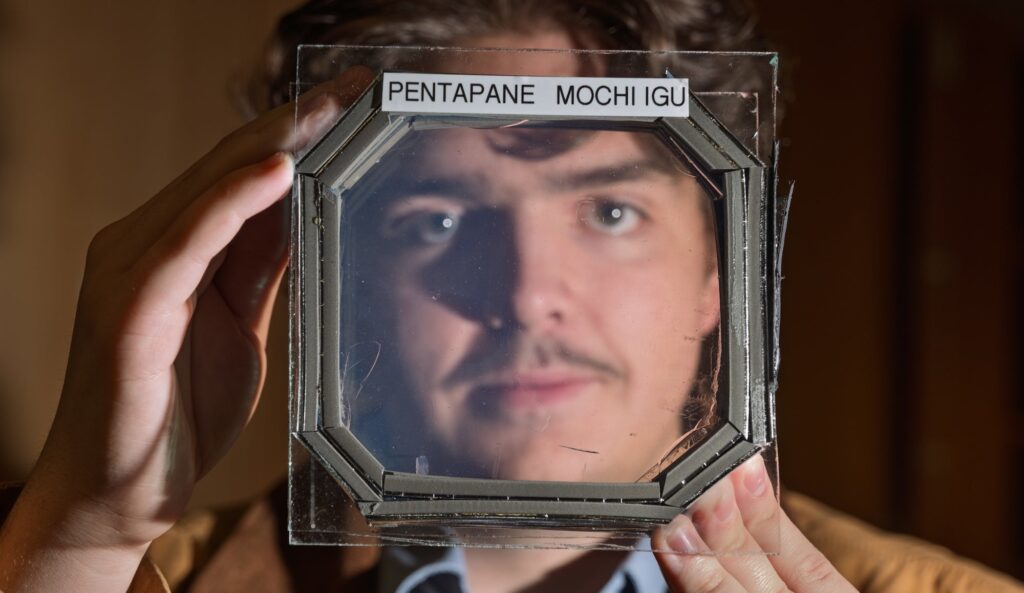
Physicists at the University of Colorado Boulder have unveiled a groundbreaking material that could significantly enhance the energy efficiency of buildings worldwide. Dubbed the Mesoporous Optically Clear Heat Insulator, or MOCHI, this innovative material functions like a high-tech version of Bubble Wrap, offering superior insulation without obstructing the view.
MOCHI can be applied as large slabs or thin sheets to the inside of windows, providing a nearly transparent solution to heat exchange challenges. Although currently produced only in laboratory settings and not yet available for consumer use, researchers are optimistic about its potential. “To block heat exchange, you can put a lot of insulation in your walls, but windows need to be transparent,” explained Ivan Smalyukh, senior author of the study and a physics professor at CU Boulder. “Finding insulators that are transparent is really challenging.”
The study detailing MOCHI’s development was published on December 11 in the journal Science. Buildings, from single-family homes to office skyscrapers, account for approximately 40% of global energy consumption, often losing heat in cold weather and absorbing it during warmer conditions. Smalyukh and his team aim to mitigate this energy loss with their novel material.
Innovative Design and Functionality
MOCHI is composed of a silicone gel that traps air within a network of pores much thinner than a human hair. This unique structure allows a mere 5-millimeter-thick MOCHI sheet to insulate effectively, even capable of holding a flame in one’s palm without transferring heat. “No matter what the temperatures are outside, we want people to be able to have comfortable temperatures inside without having to waste energy,” said Smalyukh, who is also a fellow at the Renewable and Sustainable Energy Institute (RASEI) at CU Boulder.
Bubble Magic: The Science Behind MOCHI
The secret to MOCHI’s effectiveness lies in its precise control of air pockets. While similar to aerogels, which are commonly used insulators (including in NASA’s Mars rovers), MOCHI differs in its optical clarity. Aerogels often scatter light, resulting in a cloudy appearance, whereas MOCHI maintains transparency.
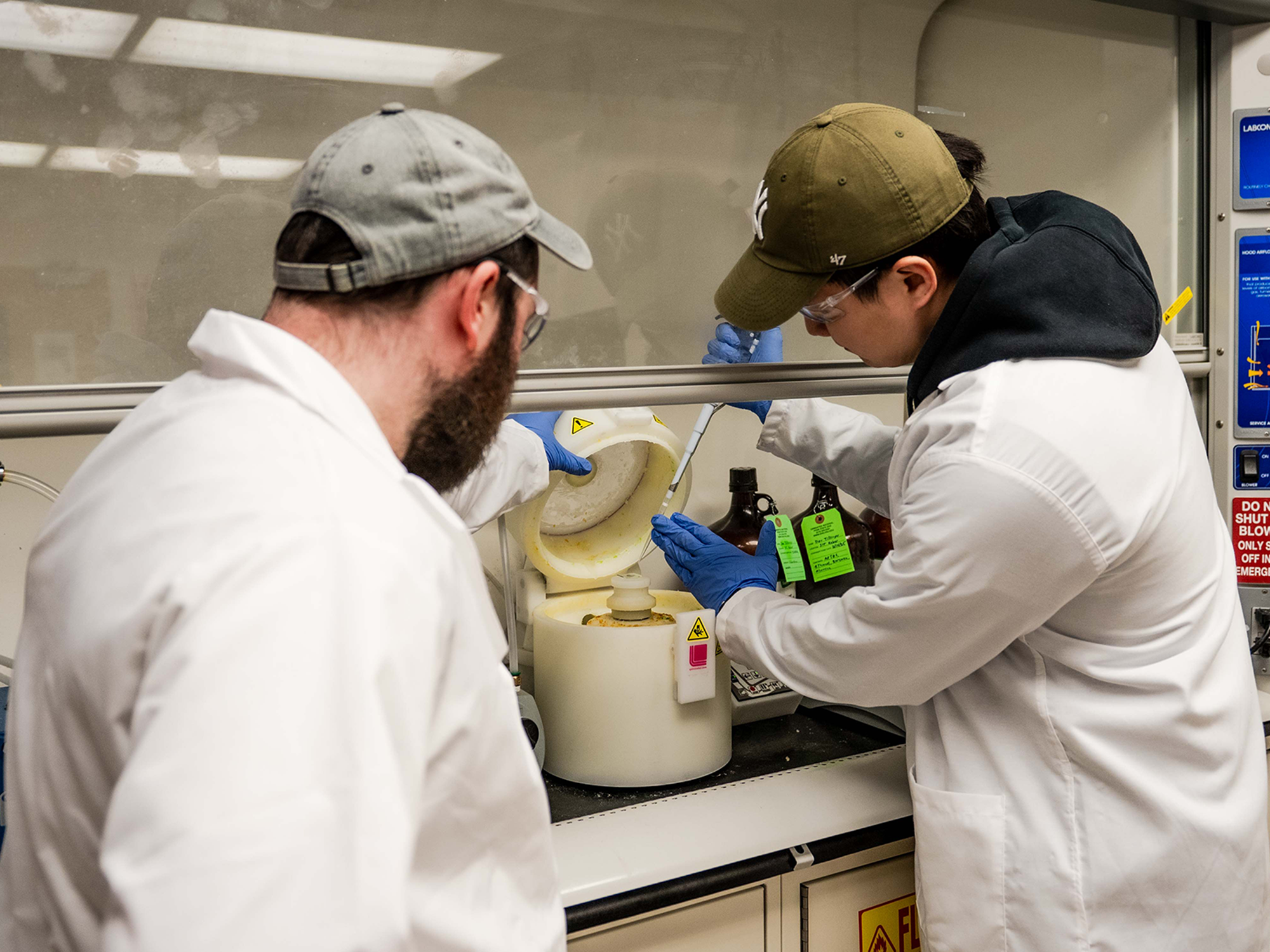
To create MOCHI, the team combines surfactants with a liquid solution, forming thin molecular threads. Silicone molecules then adhere to these threads, which are eventually replaced by air, forming a complex network of air-filled pipes. “The molecules don’t have a chance to collide freely with each other and exchange energy,” Smalyukh noted. “Instead, they bump into the walls of the pores.”
Potential Applications and Future Prospects
MOCHI’s ability to reflect only 0.2% of incoming light opens up numerous applications. Engineers could leverage this material to harness solar energy efficiently, even on cloudy days, potentially heating water and building interiors sustainably. “Even when it’s a somewhat cloudy day, you could still harness a lot of energy and then use it to heat your water and your building interior,” Smalyukh said.
While commercial availability is not imminent due to the current labor-intensive production process, Smalyukh is confident that manufacturing can be streamlined. The relatively low cost of MOCHI’s ingredients also supports its future commercialization. For now, the outlook for MOCHI, much like the view through a window coated with this material, remains promisingly clear.
Co-authors of the study include Amit Bhardwaj, Blaise Fleury, Eldo Abraham, and Taewoo Lee, postdoctoral research associates in CU Boulder’s Department of Physics. Former postdoctoral researchers Bohdan Senyuk, Jan Bart ten Hove, and Vladyslav Cherpak also contributed to the research.