




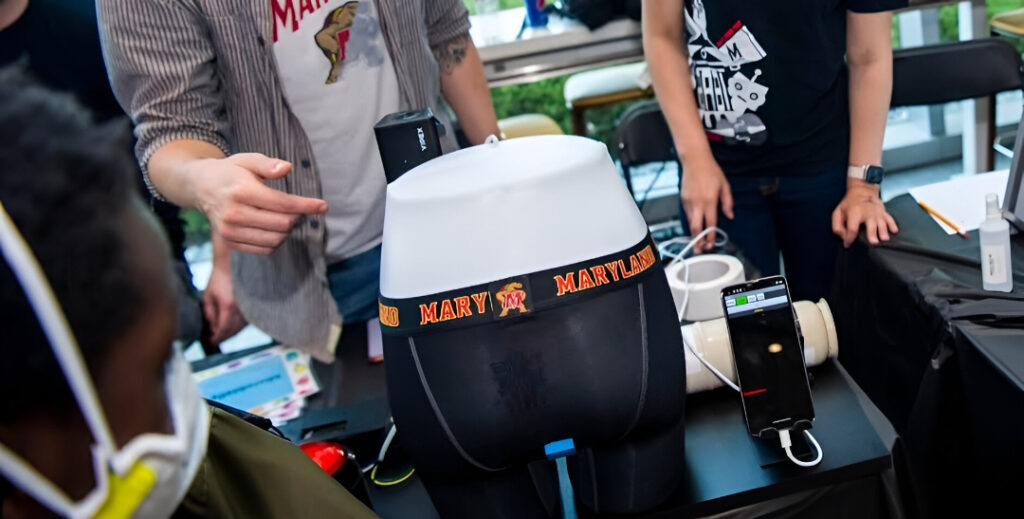
Tracking gut health has traditionally involved awkward stool samples or unreliable food diaries, but researchers at the University of Maryland have developed a groundbreaking solution. Their innovative “Smart Underwear” features a small, coin-sized sensor that clips onto regular underwear, measuring hydrogen gas from bacterial fermentation for up to seven days. This novel approach has shown a remarkable 94.7% accuracy in detecting dietary changes, surpassing many existing health tracking methods.
The announcement comes as a significant advancement in the realm of personalized health monitoring, offering a more convenient and reliable alternative to traditional methods. The device’s high accuracy rate suggests it could become a staple in gut health management, providing insights that were previously difficult to obtain.
The Science Behind Fart Tracking
The technology behind the smart underwear is rooted in electrochemical sensors, which detect gut bacteria activity with medical-grade precision. Published in the journal Biosensors and Bioelectronics: X, the one-inch square device specifically measures hydrogen gas produced when gut bacteria ferment undigested carbohydrates. This method offers a continuous monitoring capability that traditional methods lack.
Assistant professor Brantley Hall and research scientist Santiago Botasini led the validation of their sensor against conventional methods. They found that stool samples only provide snapshots, breath tests measure low concentrations, and questionnaires often rely on faulty memory. Their continuous monitoring revealed a striking finding: participants averaged 32 flatulence events daily, more than double the 10-20 events typically self-reported.
Real-World Performance Surprises Users
The GUMDROP validation study involved 38 participants who consumed either fiber-rich inulin gumdrops or sugar controls while wearing the device. Within 3-4 hours, hydrogen levels spiked dramatically for those who ate the fermentable fiber. In contrast, participants who consumed sugar gumdrops showed minimal gas production, despite one-third reporting digestive discomfort. This discrepancy highlights how placebo effects can skew traditional symptom tracking.
During extended wear testing, 95% of users reported no discomfort wearing the device for 11 hours daily, with only one dropout during high-intensity activities. This suggests the device is not only effective but also comfortable for prolonged use, making it feasible for everyday application.
Commercial Ambitions Meet Research Reality
Hall and Botasini have founded Ventoscity LLC to commercialize their patent-pending device, aiming to use it for food intolerance diagnosis and microbiome interventions. However, the company has yet to announce a consumer release date, as the device remains a research prototype. Their ongoing Human Flatus Atlas study, which is recruiting 500 participants nationwide, seeks to establish baseline “normal” ranges for gut health, a gap in current medical literature.
This development follows a broader trend in health technology, where continuous monitoring devices are transforming how we manage personal health. Similar to how continuous glucose monitors (CGMs) revolutionized diabetes management by replacing finger pricks with constant data, smart underwear could make gut health optimization as routine as checking your step count.
The Future of Personalized Nutrition
As the field of personalized nutrition continues to grow, the implications of this technology are vast. Continuous monitoring of gut health could lead to more tailored dietary recommendations, improving overall wellness and potentially preventing digestive disorders. The ability to track and analyze gut activity in real-time offers a new dimension to health monitoring, promising a future where personalized nutrition is accessible and actionable.
While most health wearables focus on metrics like heart rate or sleep patterns, this smart underwear represents a significant shift towards understanding digestive wellness. As research progresses and the technology becomes available to consumers, it may indeed change how we approach our health, making gut health optimization a part of our daily routine.
The move represents a bold step towards integrating advanced technology into everyday life, with the potential to significantly enhance our understanding of digestive health. As Ventoscity LLC continues its research and development, the future of personalized nutrition may indeed lie in the clothes we wear.