
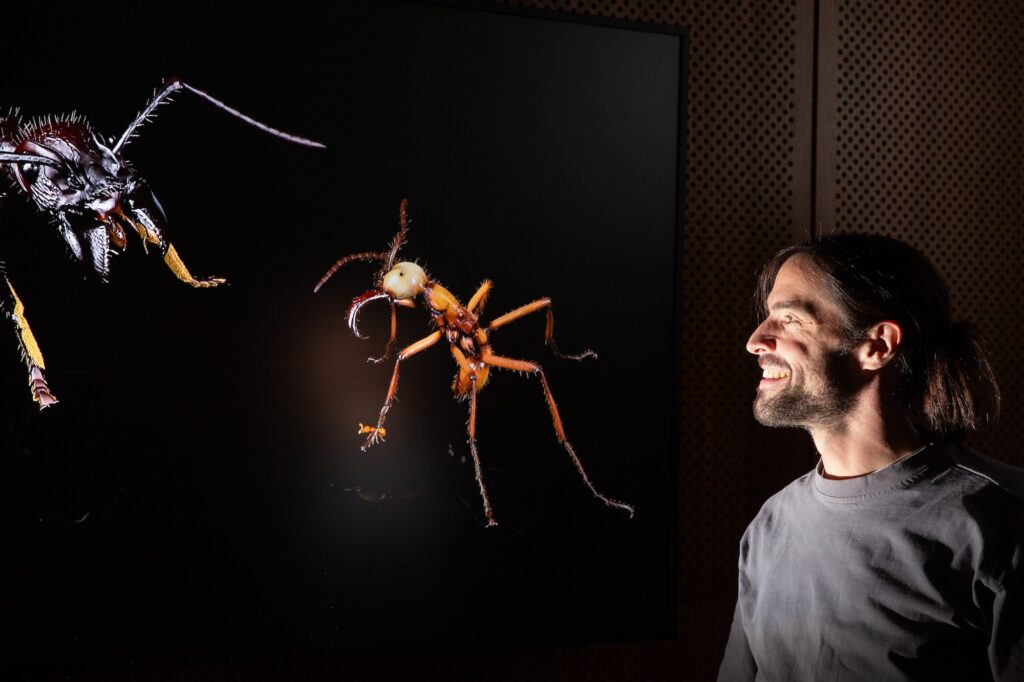
Philipp Loesel
A groundbreaking initiative has emerged from an international team of researchers, who have unveiled a pioneering database named Antscan. This first-of-its-kind resource amalgamates high-fidelity 3D scans with genetic information for thousands of ant specimens, encompassing hundreds of species. The project, spearheaded by the Karlsruhe Institute of Technology in Germany, in collaboration with the Australian National University (ANU) and the Okinawa Institute of Science and Technology, aims to democratize access to ant data, fostering new studies in biodiversity and evolution.
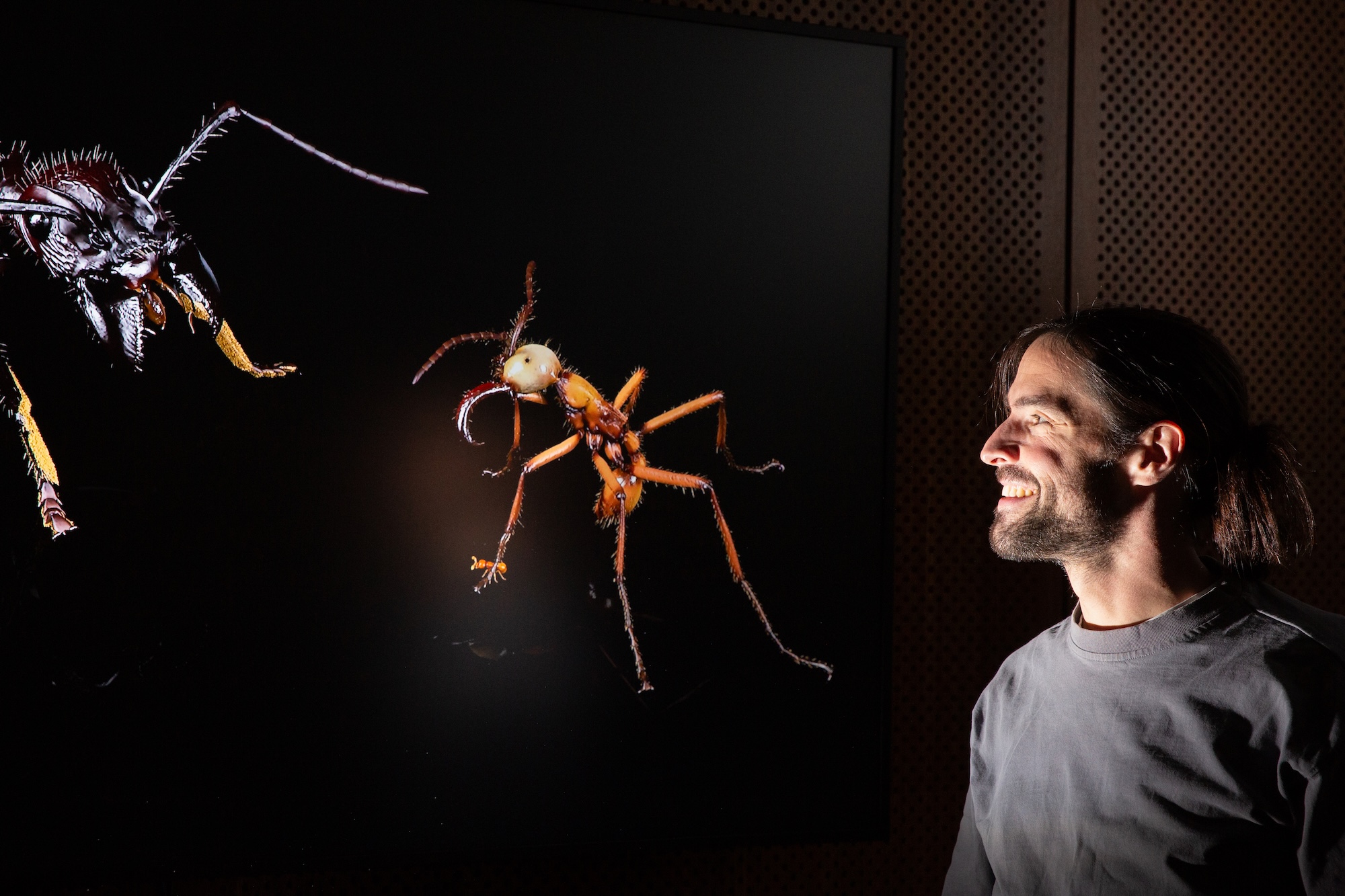
Antscan represents a significant leap forward in the study of ants, offering a method for rapidly producing similar databases for other organisms. Published in the prestigious journal Nature Methods, the project provides a rich, up-to-date dataset freely accessible to researchers, artists, and the public worldwide. “I want to make the tools and databases I develop accessible to everyone. Seeing other researchers use them for their own discoveries is what really drives me,” said Dr. Philipp Loesel from the ANU Materials Physics Department.
The Significance of Ants in Scientific Research
Ants, with over 14,000 known species, are pivotal to research on evolution and ecology due to their ubiquitous presence across global ecosystems. The creation of the Antscan database is underpinned by the availability of advanced information, surpassing traditional photos and surface scans to include genetic data and tomography. This comprehensive approach captures the full morphology of ants, detailing both internal and external structures.
However, the challenge lay in the lengthy process of scanning and processing x-ray tomography images, historically taking up to 90 hours per specimen. The Antscan team overcame this hurdle by employing synchrotron micro-tomography, drastically reducing scan times from approximately 12 hours to a mere 2 minutes per scan. This technological advancement at the Karlsruhe Synchrotron, known as KIT Light Source, enabled the scanning of thousands of specimens within a single week, a task that would have otherwise taken six years.
Innovative Approaches to Data Processing
Following the scanning process, the specimens required segmentation—a meticulous task of identifying and separating the exoskeleton, organs, and tissues. To expedite this, the team utilized Dr. Loesel’s Biomedisa package, an auto-segmentation software that had previously reduced the segmentation time of a weevil image from 77 hours to just 9 hours. Initially, the team focused on segmenting the ants’ surface, with Dr. Loesel noting, “We have not automated the segmentation of all parts of the ants. For such a heterogeneous database, this is still extremely challenging and is reserved for future work.”
As more ant samples were segmented, Biomedisa’s efficiency improved through AI training on the datasets, resulting in a fully automated segmentation process and further reducing post-processing time. Additionally, Biomedisa provided its website as the portal for accessing the Antscan database.
Implications and Future Prospects
The completed Antscan platform now offers high-fidelity, segmented 3D models of approximately 2,200 ant specimens to any researcher with internet access. To date, these models cover 792 species, with 186 species accompanied by genetic data. The authors emphasize that these are just the initial steps, with ample room for growth as contributions expand. “With Antscan, we aim to form a platform for future comparative research on the genomic basis of phenotypic variation and diversification in invertebrates,” they stated.
The methodology pioneered by Antscan holds potential for application beyond ants, with researchers hopeful it will inspire similar databases across the spectrum of life. “Antscan establishes a design that can be adapted for other lineages of small organisms across the tree of life and serves as a vast open resource for promoting research on the morphology and anatomy of ants,” the authors concluded.
This development not only revolutionizes ant research but also sets a precedent for future scientific endeavors, highlighting the power of collaborative innovation in expanding our understanding of biodiversity.