

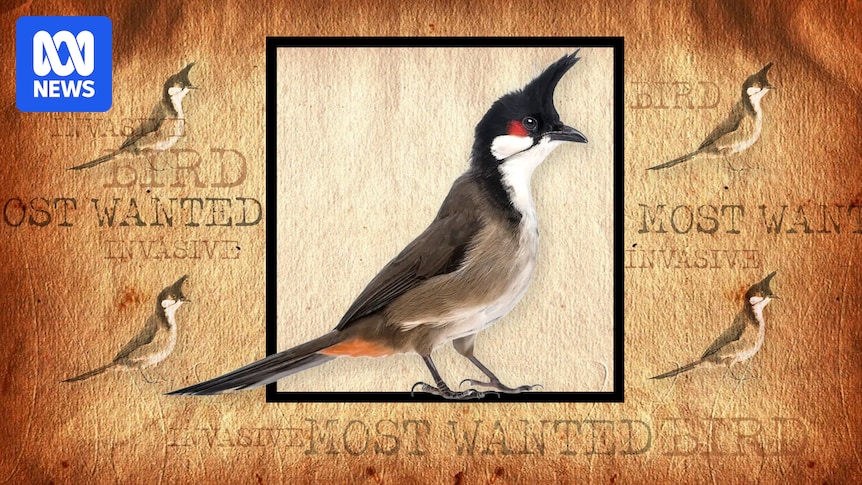
With its distinctive black mohawk and vivid red cheeks, the red-whiskered bulbul might seem like a bird-watcher’s delight. However, in South Australia, this bird has become a source of concern for the state’s $2 billion horticulture industry. The Invasive Species Council has highlighted the bird’s presence as a significant gap in the nation’s biosecurity measures.
Authorities have been on the lookout for a single red-whiskered bulbul spotted in Adelaide’s northern suburbs several weeks ago. The bird, likely an escapee from captivity, is illegal to keep in South Australia. This development follows the species’ establishment in parts of New South Wales and Queensland, where it has been known to damage crops, spread weeds, and compete with native birds.
Biosecurity Concerns and Potential Impact
James Johnson, a senior advocate with the Invasive Species Council, expressed concerns about the possibility of more bulbuls being present. “This could be the start of a new invasion if we don’t act quickly,” he warned. “We haven’t found this bird yet, so we’re actually calling on the public to keep an eye out and report any sightings.”
Johnson pointed out that the bulbul contributes to the spread of invasive weeds like feral olive trees in Western Sydney, posing a significant risk to both the environment and agricultural areas. “It’s been spotted in Salisbury — that’s not too far from our agricultural areas in the north of Adelaide, and it could very easily get into these fruit-picking areas and do a lot of damage,” he added.
Authorities on High Alert
According to a spokesperson from South Australia’s Department of Primary Industries and Regions (PIRSA), the sighting was first reported in late November. “The red-whiskered bulbul is a high-risk pest bird that can damage SA’s vineyards and orchards by eating soft fruit, flower buds, and insects, potentially reducing yields or causing crop failure and threatening the state’s $1.8 billion wine and $2.08 billion horticulture industries,” the spokesperson stated.
PIRSA has actively disseminated information in the area to track the bird and “eliminate the potential threat.” The department has urged anyone with information about sightings to contact PIRSA Biosecurity or report it to the Pest Alert Hotline.
Impact on Local Growers
Last summer, bird infestations caused significant losses to orchards around Adelaide, with some growers reporting entire trees stripped of fruit in minutes. Forest Range apple and cherry grower Mark Filsell recalled the swarms of lorikeets from last year, which thankfully have been less prevalent this season. However, he remains wary of the bulbul’s potential impact.
“We’ve seen it in places like Victoria where if you don’t net your orchard, you get nothing,” Filsell remarked, highlighting the existing challenges pest birds pose to the region’s fruit growers.
Broader Biosecurity Implications
The appearance of the bulbul in Adelaide has raised broader biosecurity concerns. “The Australian government really needs to be thinking about rigorously protecting our environment and agricultural industries at the border,” Johnson emphasized. He also called for a national conversation about managing species crossing state borders and the necessary investments to address these issues.
South Australia has recorded two small incursions of red-whiskered bulbuls in recent years, including 10 wild birds in the Adelaide Hills in 2017 and eight illegally kept birds in West Croydon in 2018. All of these birds were either captured or removed, according to PIRSA.
Keeping a red-whiskered bulbul in captivity is illegal and can result in a fine. Anyone with information about breeding or sightings is urged to contact PIRSA Biosecurity or report it to the Pest Alert Hotline on 1800 084 881.
This ongoing situation underscores the importance of robust biosecurity measures to protect Australia’s valuable agricultural sectors from invasive species.