


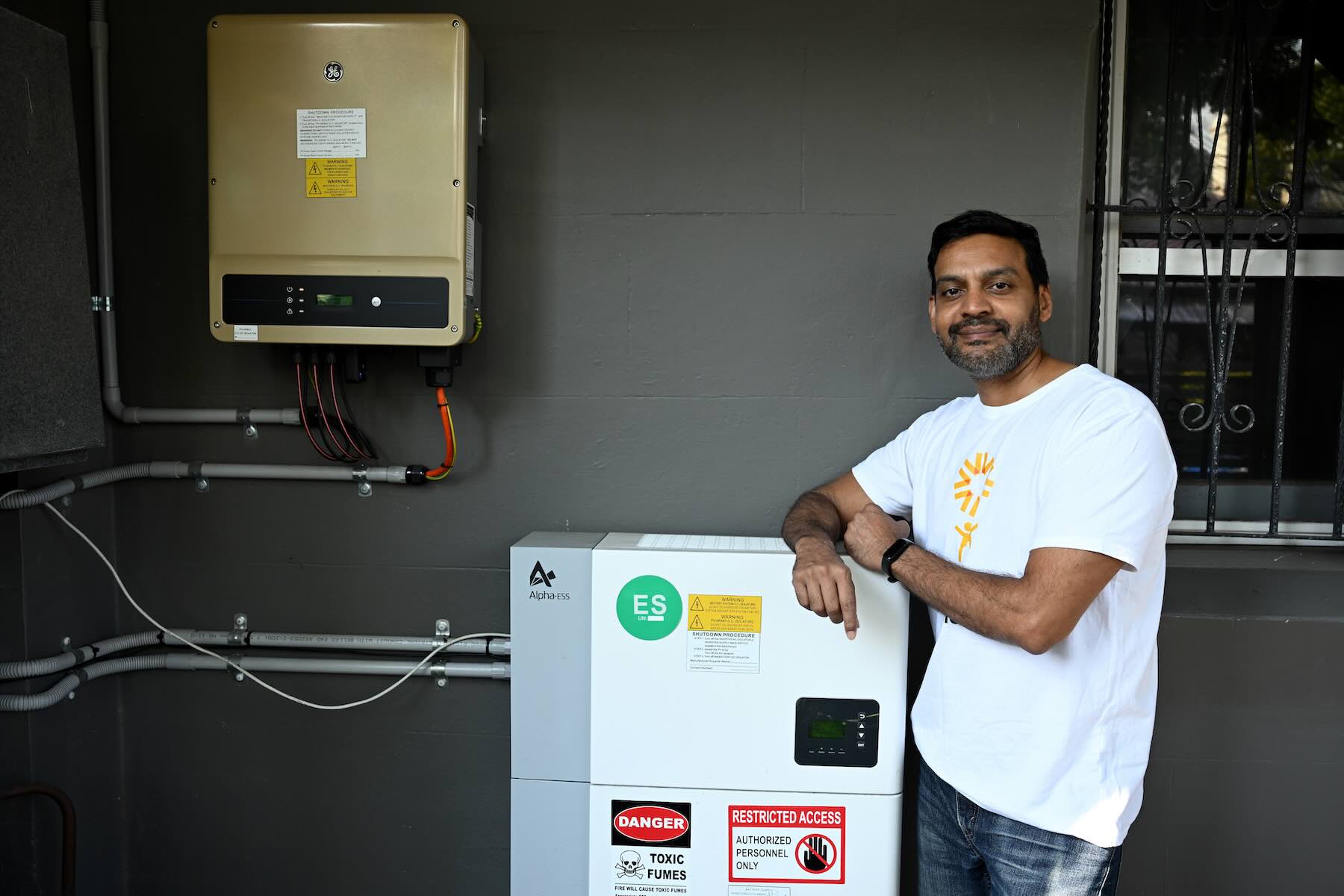
The rate of home battery installations through Australia’s federal rebate program has reached unprecedented levels. Households are rushing to install discounted, often large-scale energy storage systems before changes to the scheme’s rules take effect in May. According to the latest data from industry analyst SunWiz, 1.2 gigawatt-hours of Cheaper Home Batteries were registered through the federal Small-scale Renewable Energy Scheme (SRES) in February, marking a record since the rebate’s inception in July of last year.
This surge follows a brief summer lull, with February registrations jumping 24 percent from January, setting a brisk pace for the rebate’s current structure. SunWiz’s managing director, Warwick Johnston, noted in a monthly report,
“Since the STCs [Small-scale Technology Certificates] were introduced [for home batteries], the market has never seen as many registrations as it has over the past month.”
State-by-State Growth and Local Impacts
All Australian states recorded an increase of more than 10 percent in registered battery capacity in February, with Tasmania experiencing a remarkable 58 percent growth. TasNetworks’ Andrew Davis highlighted this boom on LinkedIn, noting that the island state is witnessing unprecedented residential battery uptake. Davis reported that TasNetworks is handling an average of 50 inquiries about home batteries daily and registering approximately 250 installations per month.
“That’s 3-3.7 megawatt-hours (MWh) of new behind-the-meter storage each month,” Davis wrote, “the equivalent of 12–15 community batteries added to the grid.”
He emphasized that customers are primarily using batteries for energy arbitrage under Tariff 93, charging when prices are low and discharging when high. Davis added,
“This momentum is reshaping how our customers engage with energy and how we plan and operate our network.”
Rebate Success and Future Adjustments
The Cheaper Home Batteries scheme has been a runaway success, with over 250,000 households installing more than 6.2 gigawatt-hours (GWh) of battery storage nationwide. However, the scheme’s popularity has exhausted its initial $2.3 billion budget, partly due to the unexpected demand for super-sized home battery systems of 50 kWh and above.
In response, federal energy minister Chris Bowen announced a budget increase to $7.2 billion in December, alongside adjustments to prolong the rebate’s lifespan. From May 1, batteries up to 14 kilowatt-hours (kWh) will continue to receive a full 30% discount off the upfront cost, while those between 14 kWh and 28 kWh will get 60% of the discount, and batteries between 28 kWh and 50 kWh will receive 15 percent.
The five-month grace period before these changes was expected to drive a continued boom, a prediction confirmed by SunWiz data. Rumors suggest the Albanese government is considering further subsidy adjustments, possibly scaling back or ending the program early to address federal budget constraints.
Trends in Battery and Solar Markets
Despite looming changes, SunWiz reports that rebate applicants are increasingly opting for larger battery systems. Johnston noted,
“The top-heavy skewness of STC registrations continued in February, with growth in the 40–50 kWh segment increasing further, indicating that large batteries contribute more than smaller ones.”
Victoria leads in average battery installation size, nearing 42 kWh, with other states also showing growth. Meanwhile, the rooftop solar market set a record for February, surpassing the previous high in 2021 and marking a 40 percent increase from January. The national market registered 281 MW in February, 6 percent ahead of the previous year. The Northern Territory led with a 73 percent growth, while New South Wales, Queensland, and Tasmania saw increases exceeding 30 percent.
By segment size, the 50-75 kW category saw the most significant growth, rebounding by 40 percent in February. Most capacity segments recorded growth, except for the 30-50 kW segment, which declined by about 6 percent, according to SunWiz.
As the energy landscape evolves, the implications of these trends are significant. The surge in battery installations and solar uptake highlights a shift towards energy independence and efficiency, with potential impacts on energy markets and infrastructure planning. The upcoming policy changes and potential future adjustments will be closely watched by industry stakeholders and consumers alike.