



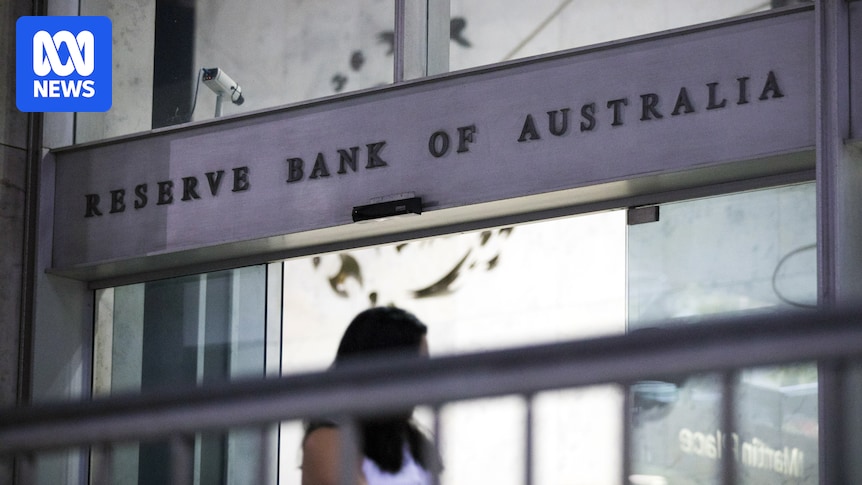
The Reserve Bank of Australia (RBA) has acknowledged the inherent difficulties in economic forecasting, admitting that its predictions are frequently off the mark. This candid admission comes amidst a backdrop of fluctuating market conditions and economic uncertainty.
RBA Chief Economist Sarah Hunter, speaking in Perth, addressed the challenges faced by the central bank in accurately predicting economic trends. “Forecasting is really difficult business, our forecasts are often wrong,” she stated, highlighting the unpredictable nature of global economic forces.
Hunter elaborated on the factors contributing to the RBA’s forecasting challenges, noting that the global economy has become more resilient than anticipated. Additionally, she pointed out that investment in artificial intelligence and data centers has exceeded expectations, financial conditions have been less restrictive, and private demand has recovered more swiftly than projected.
Market Reactions and Economic Indicators
The Australian share market has been experiencing significant volatility, with the ASX 200 reaching a four-month high. Market analyst Zavier Wong from eToro commented on the situation, noting that the Australian market is “flirting with all-time highs” despite prevailing uncertainties.
Wong attributed this performance to the strong showing by Australian banks, particularly ANZ and Commonwealth Bank, which have been pivotal in lifting the market. “When the largest sector on the ASX is delivering like this, it lifts the entire market with it,” Wong explained.
“You’ve got stocks moving 5%, 10%, even 30% in a single session, that’s a lot of volatility and will continue into another big week next week,” Wong added.
The ASX 200 closed up 0.3% to 9,044 points, with ANZ shares rising by 8.5%. Meanwhile, the Australian dollar is trading at approximately 71 US cents.
Corporate Developments: ANZ and Barbeques Galore
In corporate news, ANZ has faced criticism for a staff barbecue event at its Melbourne office, where employees were asked to pay $10 for a sausage sizzle. The Finance Sector Union labeled the event as “tone deaf” amidst the bank’s announcement of rising profits and impending job cuts.
ANZ’s quarterly results revealed a cash profit of nearly $2 billion, driven by a cost-cutting program that has already seen 60% of planned staff reductions. CEO Nuno Matos emphasized the bank’s focus on productivity and revenue growth.
Meanwhile, Barbeques Galore, one of Australia’s largest barbecue retailers, has entered receivership. Despite recent efforts to restructure and a change in leadership, the company has struggled with liquidity issues. The appointment of Grant Thornton as voluntary administrators marks a critical juncture for the retailer, which operates nearly 100 stores nationwide.
Economic Context and Future Outlook
The economic landscape remains complex, with mixed signals from various sectors. The RBA’s admission of forecasting challenges underscores the broader uncertainties faced by policymakers and market participants alike.
Looking ahead, the upcoming earnings reports from major resource companies like BHP and Rio Tinto will be closely watched. These results are expected to set the tone for the resources sector, particularly in light of recent commodity price volatility.
As the global economy continues to navigate post-pandemic recovery, the interplay between monetary policy, market dynamics, and corporate strategies will remain a focal point for investors and analysts.
The RBA’s acknowledgment of its forecasting limitations serves as a reminder of the inherent unpredictability of economic trends, prompting a cautious yet vigilant approach to future economic planning and decision-making.