



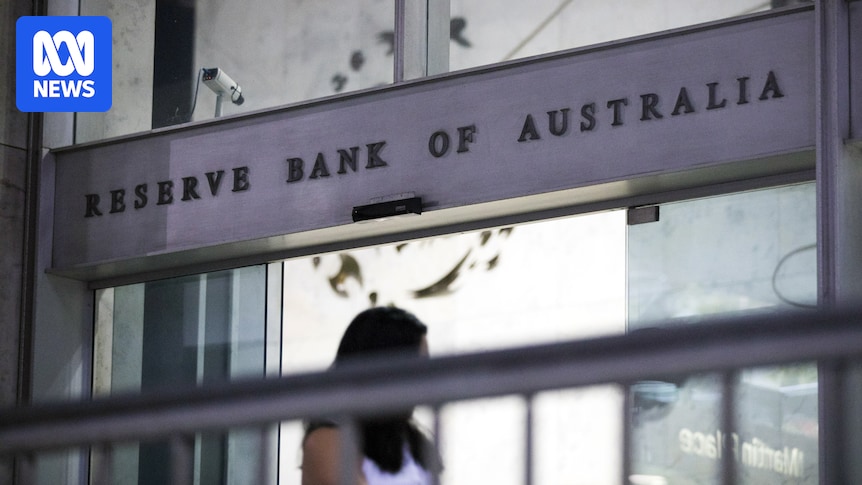
In a candid admission, the Reserve Bank of Australia (RBA) has acknowledged the inherent difficulties in economic forecasting, highlighting that their predictions are often inaccurate. This revelation comes as the Australian share market experiences notable fluctuations, with the ASX 200 reaching a four-month high.
At a recent event in Perth, RBA Chief Economist Sarah Hunter addressed the challenges of economic forecasting, stating, “Forecasting is really difficult business; our forecasts are often wrong.” Hunter elaborated on the global economic resilience and unexpected strength in AI investments, which have contributed to the unpredictability of economic outcomes.
Market Movements and Economic Indicators
The Australian share market, buoyed by strong performances in the banking sector, has seen significant gains. Market analyst Zavier Wong from eToro noted, “Despite market uncertainty, the Australian share market is flirting with all-time highs.” The ASX 200 closed up 0.3% to 9,044 points, with banks like ANZ leading the charge.
Meanwhile, the Australian dollar experienced a slight dip, trading at 71.15 US cents. Other global indices showed mixed results, with the S&P 500 remaining flat and the FTSE gaining 1.1%.
ASX 200: +0.3% to 9,044 points
Australian dollar: -0.1% to 71.15 US cents
S&P 500: Flat at 6,941 points
FTSE: +1.1% to 10,472 points
Volatility and Earnings Season
Wong highlighted the volatility in the market, with stocks experiencing significant single-session movements. “Earnings quality is being rewarded aggressively, and misses are being punished just as hard,” he remarked. The upcoming earnings reports from major players like BHP and Rio Tinto are expected to further influence market dynamics.
RBA’s Economic Insights
Hunter’s comments on the global economy’s resilience and the unexpected strength in AI investments underscore the challenges in maintaining accurate economic forecasts. She noted that financial conditions have been less restrictive than anticipated, contributing to a faster recovery in private demand.
“The global economy became more resilient; AI investment had been stronger than anticipated.”
These insights come as the RBA continues to navigate the complexities of economic policy in a rapidly changing environment.
ANZ’s Controversial Barbecue and Financial Performance
In other news, ANZ has faced criticism for a staff barbecue event amidst rising profits and ongoing job cuts. The Finance Sector Union has labeled the event “tone deaf,” as ANZ reports a $1.94 billion cash profit for the quarter. The bank’s shares reached a record high due to a cost-cutting program that includes 3,500 job reductions.
ANZ’s financial success, juxtaposed with the layoffs, has sparked debate over corporate responsibility and employee welfare. The union’s Nicole McPherson criticized the bank, stating, “ANZ has delivered nearly $2 billion in quarterly profits while cutting 3,500 jobs yet have asked staff to pay $10 for a sausage sizzle.”
“ANZ has delivered nearly $2 billion in quarterly profits while cutting 3,500 jobs.”
Barbeques Galore and Economic Implications
Adding to the economic landscape, Barbeques Galore has entered receivership, affecting nearly 100 stores and 500 employees. The company, recently acquired by US private equity group Gordon Brothers, faces liquidity challenges despite efforts to restructure.
The receivership highlights the ongoing struggles within the retail sector, as businesses adapt to changing consumer behaviors and economic pressures. The future of Barbeques Galore remains uncertain as administrators evaluate potential restructuring or sale options.
“Barbeques Galore is a retailer and wholesaler of premium barbeques, heating and related lifestyle products operating over 90 stores throughout Australia.”
Looking Ahead
As the RBA grapples with forecasting challenges and market volatility continues, the economic outlook remains complex. The upcoming earnings reports and global economic conditions will play critical roles in shaping Australia’s financial landscape.
For businesses like ANZ and Barbeques Galore, navigating these challenges will require strategic adjustments and a focus on sustainable growth. The broader implications for the Australian economy include potential shifts in employment, consumer confidence, and investment trends.
As these stories unfold, stakeholders will be closely monitoring developments, seeking to understand the broader economic implications and potential paths forward.