




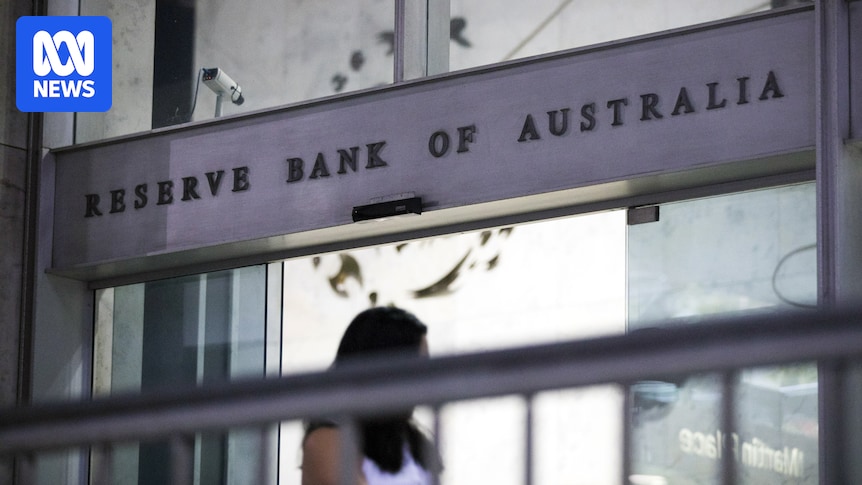
In a candid admission, the Reserve Bank of Australia (RBA) has acknowledged that its economic forecasts are often inaccurate. This statement was made by RBA chief economist Sarah Hunter during a recent address in Perth, highlighting the inherent difficulties in economic forecasting amid a rapidly changing global landscape.
Hunter’s remarks come at a time when the Australian economy is experiencing significant fluctuations. The ASX 200 index closed up 0.3% at 9,044 points, driven largely by strong performances in the banking sector. Meanwhile, the Australian dollar saw a slight dip, trading at 71.15 US cents.
Market Dynamics and Economic Forecasts
Market analyst Zavier Wong from eToro noted that despite prevailing uncertainties, the Australian share market is approaching all-time highs, thanks to robust performances by major banks like ANZ and Commonwealth. “The banks are doing all the heavy lifting,” Wong commented. “When the largest sector on the ASX is delivering like this, it lifts the entire market with it.”
Wong also pointed out the volatility in single-stock movements this earnings season, with some stocks experiencing dramatic shifts of up to 30% in a single session. This volatility is expected to persist, especially with major companies like BHP and Rio Tinto set to report their earnings soon. These results will be crucial in setting the tone for the resources sector.
RBA’s Forecasting Challenges
During her speech, Hunter addressed the challenges faced by the RBA in making accurate forecasts. She cited several unexpected developments, including a more resilient global economy, stronger-than-anticipated AI investments, and faster-than-expected recovery in private demand. “Forecasting is really difficult business, our forecasts are often wrong,” Hunter admitted.
Hunter’s comments underline the complexities of economic forecasting, especially in an era marked by rapid technological advancements and unpredictable global events. Her acknowledgment of the RBA’s forecasting challenges is a reminder of the limitations faced by central banks worldwide.
ANZ’s Controversial Barbecue and Financial Performance
In other news, ANZ has come under fire for a controversial staff barbecue at its Melbourne office, where employees were charged $10 for a sausage sizzle. The Finance Sector Union criticized the event as “tone deaf,” especially in light of ANZ’s rising profits and ongoing job cuts.
ANZ recently reported a 17% increase in its first-quarter cash profit, reaching $1.94 billion. This performance was bolstered by a cost-cutting program that included significant staff reductions. Despite the backlash over the barbecue, ANZ’s financial results have been well-received by investors, with shares hitting a record high.
Barbeques Galore Enters Receivership
Meanwhile, Barbeques Galore, one of Australia’s largest barbecue retailers, has entered receivership. The company, which operates nearly 100 stores nationwide, is facing liquidity challenges despite recent restructuring efforts. Receivers from Ankura and administrators from Grant Thornton have been appointed to oversee the process.
The company assured customers that operations would continue as usual while future options are evaluated. However, the situation has left uncertainty for the approximately 500 employees and numerous franchisees.
Looking Ahead
The RBA’s acknowledgment of its forecasting challenges and the market’s volatile nature underscore the complexities facing Australia’s economic landscape. As major corporations like ANZ and Barbeques Galore navigate financial pressures, the broader implications for the economy remain to be seen.
With significant earnings reports on the horizon and ongoing economic shifts, stakeholders will be closely monitoring developments. The RBA’s transparency about its forecasting limitations may prompt a broader discussion on how economic predictions are made and communicated in an ever-changing world.