



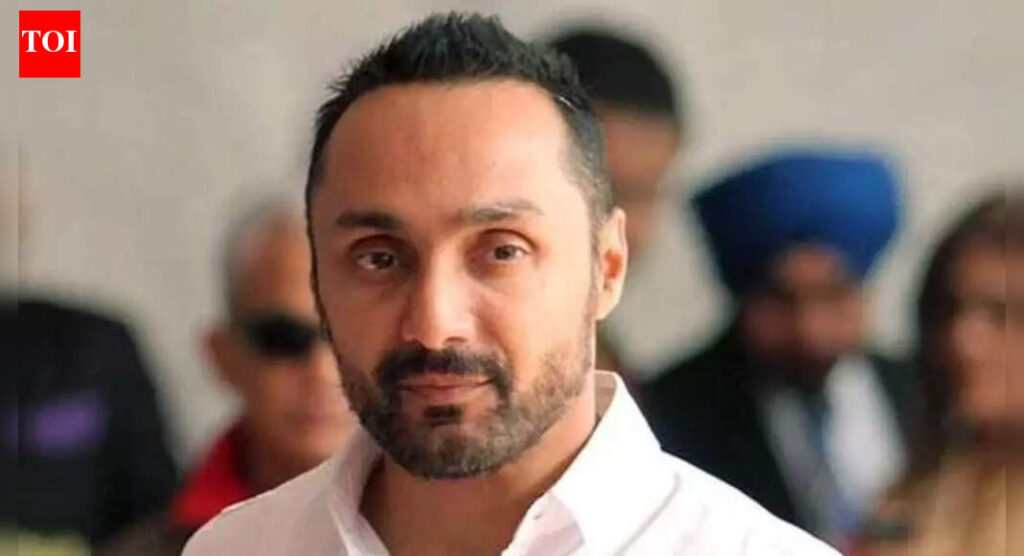
Actor and former rugby player Rahul Bose is at the center of a legal controversy in Himachal Pradesh, accused of obtaining a domicile certificate under questionable circumstances. This certificate reportedly enabled him to qualify as the national president of the Rugby Federation. The allegations, brought forward by a member of Shimla’s royal family, suggest that Bose failed to fulfill promises made to establish a state-level rugby body, while allegedly holding a domicile certificate from Maharashtra.
The controversy dates back to 2023, when Bose reportedly assured the erstwhile royal family of Shimla that he would work toward establishing and securing recognition for a state-level rugby association. However, two years later, that recognition remains pending, causing frustration among rugby enthusiasts in the region. According to a report by India Today, a member of the royal family of the Jubbal princely state in Shimla claims that after significant groundwork and mobilizing “hundreds of members from several districts,” their existing association is now being overlooked in favor of a new one.
Allegations of Misconduct and Legal Ramifications
The complaint, led by Divya Kumari, accuses Bose of leveraging the goodwill of the royal family for personal gain within the Rugby Federation. It further alleges that he secured a Himachal Pradesh domicile certificate through fraudulent means to bolster his eligibility as national president. Kumari has publicly questioned the legitimacy of this certificate, emphasizing that Bose required it “to obtain two votes from Himachal Pradesh in the national selection process.”
“She questions how one person can have domicile certificates from two different states,” the complaint reads.
The matter has now reached the Himachal Pradesh High Court, where Divya Kumari has filed a formal plea seeking intervention and investigation. The case is set to be heard on December 18, with local reports suggesting growing disappointment within the rugby community, particularly among individuals who played key roles in building the original association.
Community Reaction and Broader Implications
Many in the local rugby community view the formation of a parallel body as an attempt to erase their contributions, prompting stronger appeals for clarity and accountability from sports authorities. Divya Kumari has also alleged efforts to suppress the controversy, insisting that stakeholders deserve transparency regarding the association’s fate and the authenticity of its leadership.
Meanwhile, the allegations against Bose have sparked a broader debate about the integrity of sports administration in India. Experts suggest that this case highlights the need for stricter regulations and oversight in the issuance of domicile certificates, particularly when they are used to influence national-level sports appointments.
Historical Context and Expert Opinions
This is not the first time questions have been raised about the use of domicile certificates in sports administration. Historically, similar allegations have surfaced in other states, where individuals have been accused of manipulating residency requirements to gain strategic advantages. According to sports law expert Dr. Neha Sharma, “The integrity of sports governance is contingent upon transparent and fair processes. Cases like these undermine public trust and necessitate immediate corrective measures.”
Dr. Sharma further notes that the Himachal Pradesh High Court’s decision could set a precedent for future cases, potentially leading to reforms in how domicile status is verified and utilized in sports contexts.
Looking Ahead: Potential Outcomes and Next Steps
As the case progresses, the Himachal Pradesh High Court’s ruling will be closely watched by both the legal community and sports administrators. A decision against Bose could lead to significant changes in the Rugby Federation’s leadership and prompt a reevaluation of the current processes for verifying domicile status. On the other hand, a ruling in his favor might raise further questions about the adequacy of existing regulations.
For now, the focus remains on the upcoming court date, with stakeholders and observers eager to see how this legal battle unfolds. The outcome could have far-reaching implications, not just for Rahul Bose and the Rugby Federation, but for the broader landscape of sports governance in India.