

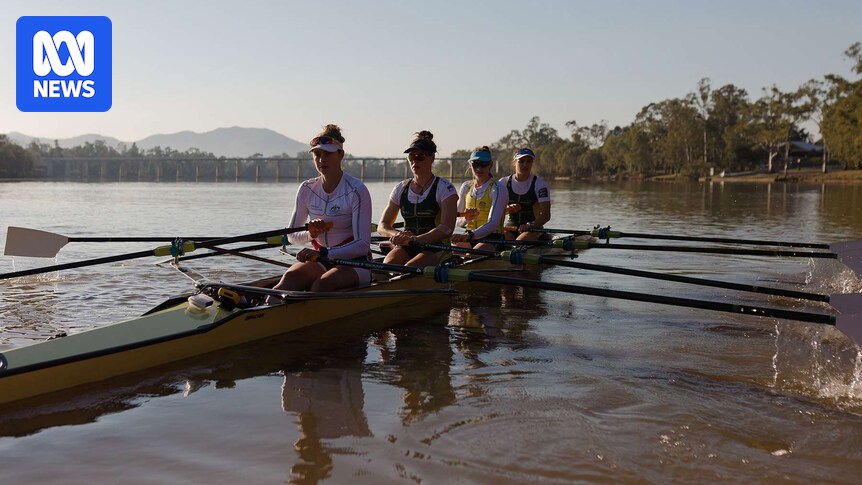
With seven years remaining until the 2032 Brisbane Olympic and Paralympic Games, Queensland’s preparations are gaining momentum. Premier David Crisafulli marked this milestone by visiting Rockhampton, where the Fitzroy River is slated to host rowing and canoeing events. However, the river’s suitability has sparked debate among national and international bodies.
The Fitzroy River, the largest river catchment flowing to Australia’s east coast, is under scrutiny to meet the strict international racing criteria required for Olympic events. Technical testing, commissioned by the Games Independent Infrastructure and Coordination Authority (GIICA), began today to assess the river’s capability.
Environmental and Technical Challenges
Dr. Shaneel Chandra, a senior lecturer in chemistry at CQUniversity and former acting chief scientific officer in the Office of the Great Barrier Reef, expressed confidence in the river’s potential. “I believe that with the right controls, the Fitzroy River will be able to meet the international standards overall,” he stated. He emphasized the ongoing management programs addressing water quality and invasive species, which he expects will intensify as the Games approach.
Despite these assurances, concerns persist. Former Olympian Ross Tong has voiced skepticism about the river’s ability to meet international standards. Meanwhile, World Rowing officials are scheduled to conduct their own technical assessment to ensure compliance with global requirements.
Infrastructure and Environmental Concerns
The announcement comes as the Queensland government faces pressure to deliver on its ambitious infrastructure plans. Major projects, including the new Victoria Park precinct, are still in the planning stages. The precinct will feature a 63,000-seat stadium, the National Aquatic Centre, and an athletes’ village. Deputy Premier Jarrod Bleijie highlighted the opportunity for industry leaders to contribute to Queensland’s largest infrastructure legacy.
“This is a once-in-a-lifetime opportunity for industry leaders to help deliver Queensland’s largest infrastructure legacy,” said Deputy Premier Jarrod Bleijie.
Simon Crooks, recently appointed as the chief executive of GIICA, is optimistic about meeting the construction deadlines. “To be honest, my job is to get on and get delivering, to start work on getting people pushing shovels in the ground and working,” he said, expressing confidence that the projects could be completed in time.
Financial and Political Implications
The state government has committed to delivering the Games within a $7.1 billion joint funding envelope with the Commonwealth. However, Premier Crisafulli has been criticized by Shadow Treasurer Shannon Fentiman for not providing detailed cost estimates for specific projects. “That’s what’s called being in government,” Fentiman remarked, emphasizing the importance of transparency when investing taxpayer funds.
Historically, hosting the Olympics has been a catalyst for urban development and economic growth, but it also brings financial risks and logistical challenges. The Sydney 2000 Olympics, for instance, were awarded seven years before the event, similar to Brisbane’s timeline, providing a precedent for Queensland’s current preparations.
“To those who say it can’t be done, never write off a Queenslander. We prove that time and time again,” Premier Crisafulli asserted, highlighting the state’s resilient spirit.
Looking Ahead
As the countdown to the 2032 Games continues, Queensland faces the dual challenge of ensuring the Fitzroy River meets international standards and executing its extensive infrastructure plans. The technical assessments and industry collaborations over the coming years will be crucial in determining the success of Queensland’s Olympic aspirations.
With the world watching, the state aims to leverage the Games as a platform for showcasing its environmental and infrastructural advancements, while also addressing the concerns of stakeholders and the public. The next few years will be pivotal in shaping the legacy of the Brisbane 2032 Olympics.