




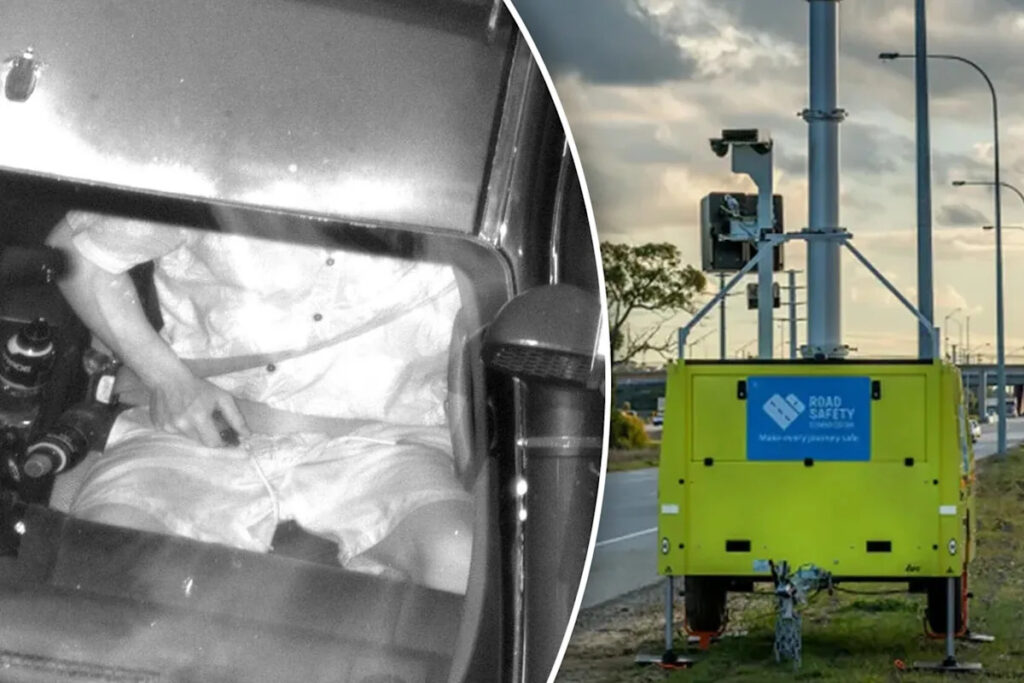
A Queensland driver has expressed frustration after receiving a $1,250 fine due to a passenger momentarily removing their seatbelt. The incident, captured by a detection camera, has sparked debate over the fairness of current road safety laws, which hold drivers accountable for their passengers’ actions.
The driver, who wishes to remain anonymous, claims they were unaware the passenger had unbuckled their seatbelt to remove a jumper. This situation raises questions about the extent of a driver’s responsibility and whether the law adequately reflects real-life scenarios within a moving vehicle.
Understanding the Legal Framework
Under Australian road laws, drivers are tasked with ensuring that all passengers are properly restrained throughout the journey. The regulations are part of a broader effort to enhance road safety and reduce fatalities, with seatbelts being a key focus of these initiatives.
According to the Australian Road Rules and state-specific regulations, drivers can face fines and demerit points if passengers are not wearing seatbelts. This holds true even if the passenger is over the age of 16 and also receives a fine. The rationale behind this is that drivers are deemed best positioned to enforce safety measures within their vehicles.
“Seatbelt detection cameras, now operating in most states, have made enforcement stricter,” noted a road safety expert. “Fines and demerit points across each state vary from $407 and $423 and three demerit points (in Victoria and NSW) up to $1,251 and four demerit points (in Queensland).”
The Role of Technology in Enforcement
The introduction of seatbelt detection cameras has significantly altered the landscape of traffic law enforcement. These cameras utilize AI-powered image analysis to determine whether seatbelts are properly fastened, leading to stricter compliance measures.
However, the technology is not without its flaws. There have been instances where cameras have produced errors or false positives, prompting some drivers to dispute the fines formally. Infringement notices are typically issued to drivers, not passengers, when offences are detected remotely.
Challenging a Fine: Legal Options
For drivers wishing to contest such fines, the legal options are limited but available. The principle of strict liability applies, meaning the offence does not require intent or even knowledge. If a passenger is unbelted while the car is in motion, the driver is held responsible.
Drivers can request an internal review, as detailed in the fine notice. Success in these reviews often hinges on proving that the fine was wrongly issued, for example, if the seatbelt was misread by the AI. Supporting evidence, such as photographs or dashcam footage, is crucial in these cases.
“You can challenge the fine and elect to go to court,” advised a legal expert. “However, you would need to demonstrate that the fine was wrongly issued or that there were exceptional circumstances justifying the removal of the seatbelt.”
Future of Seatbelt Laws
Seatbelt laws, credited with saving thousands of lives, have been a cornerstone of road safety for over 50 years. Despite the driver’s concerns, there is no current indication that these laws will be relaxed. In fact, enforcement is becoming more stringent, with increased penalties and the use of technology to ensure compliance.
Road safety authorities periodically review traffic laws, but the focus remains on reducing fatalities, with seatbelt compliance being a major factor. The ongoing emphasis on safety suggests that any changes to these laws would likely aim at further tightening rather than loosening regulations.
This information is general in nature and should not be regarded as specific legal advice. For legal advice on a specific situation, consulting a qualified solicitor is recommended.