



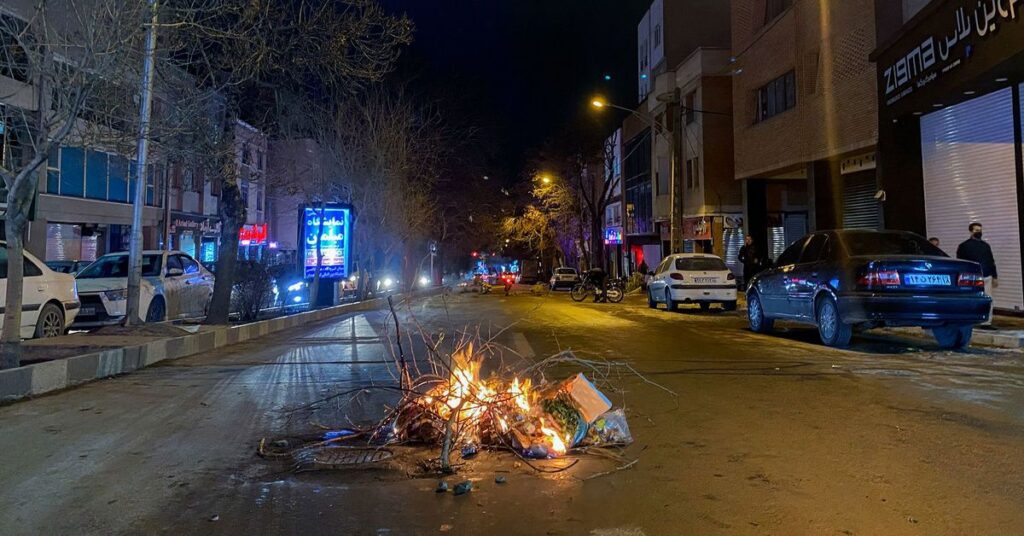
Anti-government protests have erupted in Tehran as Iranians, frustrated by a faltering economy and intensified crackdowns by security forces, took to the streets of the capital. Demonstrators shouted slogans against the ruling theocratic regime, reflecting a growing wave of dissent across the nation.
In response, authorities swiftly cut internet access and telephone lines throughout Iran, a move described by an internet watchdog organization as a potential precursor to a violent crackdown. Despite the blackout, videos of the protests continue to surface online, capturing the intensity of the demonstrations.
Nationwide Unrest and Calls for Change
The protests in Tehran are part of a broader wave of unrest sweeping across Iran’s provinces, driven by crippling economic conditions. Millions of Iranians are grappling with rampant inflation and a plummeting currency. The economic grievances have sparked widespread demonstrations, which have turned violent following the deployment of government security forces.
Exiled Crown Prince Reza Pahlavi has emerged as a figurehead for some of the protesters, urging them to “take to the streets and, as a united front, shout your demands.” His calls have resonated with many, as evidenced by slogans such as “This is the last battle, Pahlavi will return,” heard during the marches.
International Reactions and Government Response
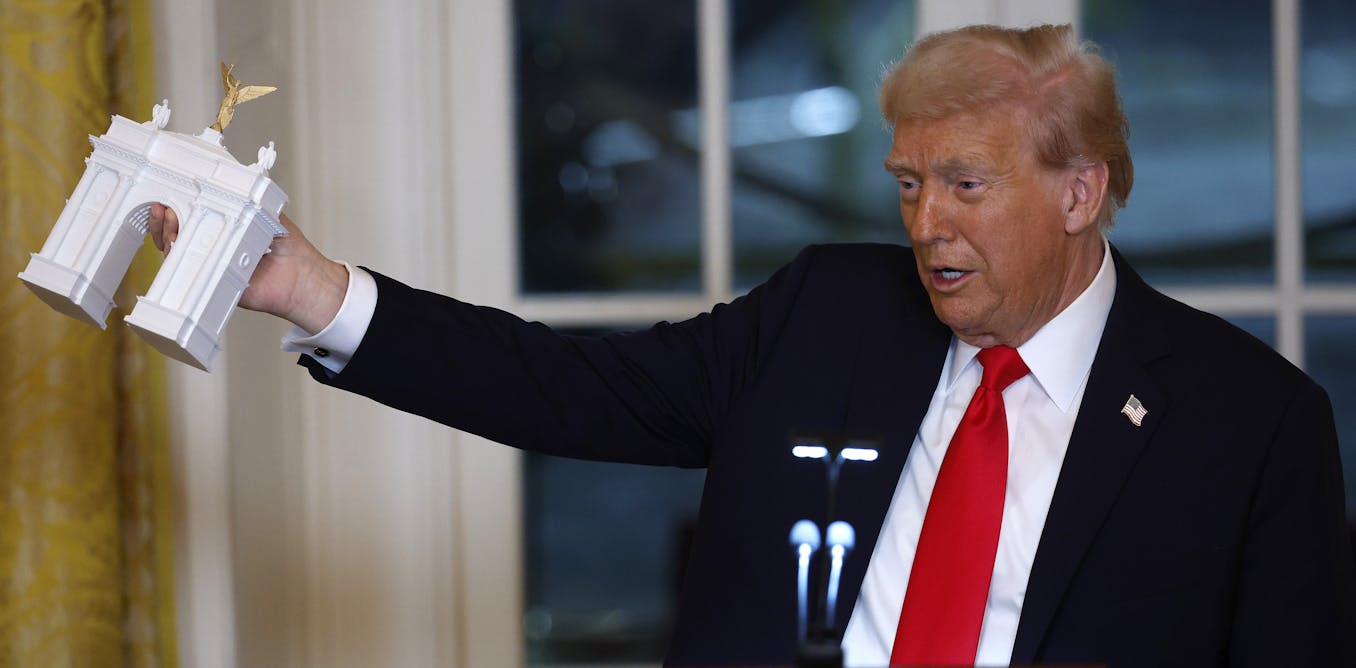
The unrest has caught the attention of international leaders, with US President Donald Trump reiterating his threat to retaliate against Iran if security forces kill protesters. “I have let them know that if they start killing people, which they tend to do during their riots … we’re going to hit them very hard,” Trump stated in a recent interview.
Meanwhile, the Iranian government has attempted to quell the protests by offering direct cash handouts, although such measures have been criticized as insufficient. President Masoud Pezeshkian acknowledged the limitations of these efforts, stating, “We should not expect the government to handle all of this alone.”
Historical Context and Economic Triggers
The current protests are the largest since the demonstrations following the death of Mahsa Amini in 2022. This time, the unrest began with shopkeepers in Tehran’s Grand Bazaar protesting against the government’s economic policies. The central bank’s decision to end a program that allowed some importers to access cheaper US dollars exacerbated the situation, leading to soaring prices for basic goods and further fueling public anger.
The bazaaris, traditionally supportive of the regime, have played a significant role in the protests. Their involvement marks a pivotal shift, given their historical alliance with the Shiite Muslim clergy, which helped bring about the Islamic Revolution of 1979.
Expert Opinions and Future Implications
Experts suggest that the protests, while significant, may not lead to regime change without a viable alternative to the current ruling system. Arang Keshavarzian, an associate professor of Middle Eastern and Islamic studies at New York University, commented, “None of Iran’s political leaders have a blueprint to get Iran out of the crises. The only tool that the Islamic Republic truly has left is coercion and force.”
“People have tried different methods to air their views, but over the past 15 years, large segments of the population have lost trust in the regime and don’t believe they are able and willing to actually listen to them and address their grievances and interests,” Keshavarzian added.
A Nation at a Crossroads
The ongoing protests represent a significant challenge to the Iranian regime, underscoring the profound crises confronting the government. With external pressures such as international sanctions and potential military conflicts looming, the state’s ability to navigate these turbulent times remains uncertain.
As the unrest continues to unfold, the world watches closely, aware that the outcome could have far-reaching implications not only for Iran but for the broader Middle East region.