



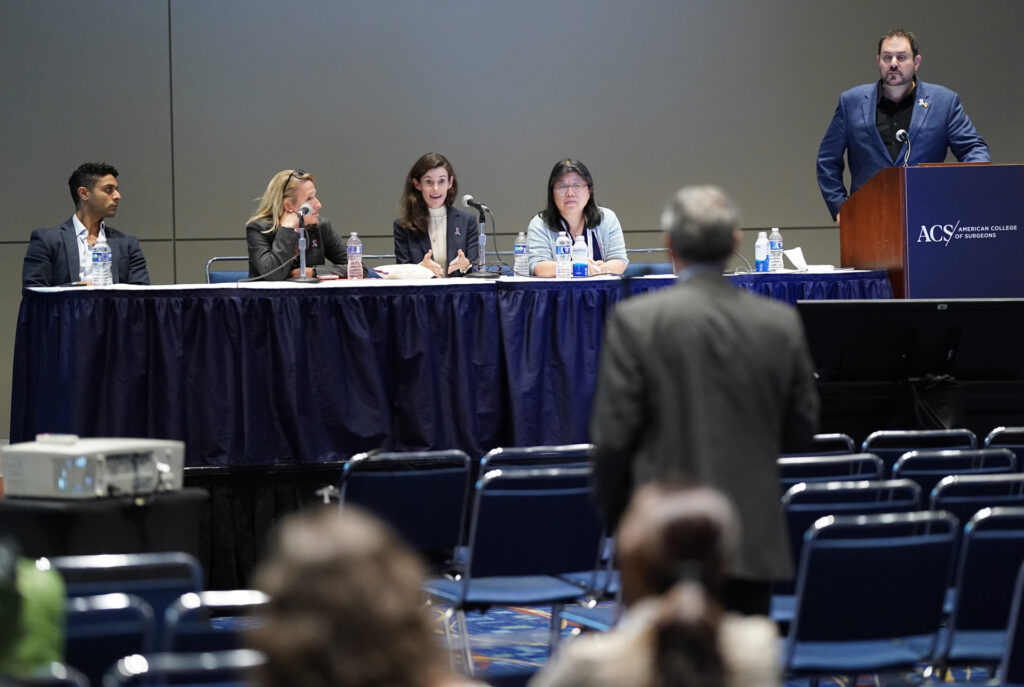
American College of Surgeons Clinical Congress 2025 at the McCormick Place West in Chicago, Illinois on October 7, 2025.
CHICAGO – Known as “the silent killer” due to its lack of symptoms and reliable screening tests, ovarian cancer remains one of the deadliest gynecologic cancers, claiming more than 12,000 lives annually. Experts from the American College of Surgeons (ACS) suggest that a single preventive procedure, integrated into general surgery, could significantly reduce the incidence of ovarian cancer.
“Ovarian cancer is frequently detected late, with devastating outcomes,” said Dr. Joseph V. Sakran, executive vice chair of surgery at Johns Hopkins Medicine. “Although ovarian cancer might initially seem like a challenge best left to gynecologic oncologists, exploring other opportunities to prevent ovarian cancer with general surgeons is critical.”
Understanding the Origins of Ovarian Cancer
Traditionally believed to originate in the ovaries, many aggressive forms of ovarian cancer are now thought to begin in the fallopian tubes. These slender structures, which play a role in fertilization, have no essential function once a woman no longer desires future fertility. Recent research indicates that removing the fallopian tubes can prevent many ovarian cancers, yet this option is often not discussed with women.
At the ACS Clinical Congress 2025 in Chicago, Dr. Sakran led a session on integrating fallopian tube removal into general surgery practice. The panel emphasized the importance of offering this procedure to post-reproductive women undergoing elective abdominal or pelvic surgeries, such as hernia repairs or gallbladder removals, after obtaining informed consent.
Preventive Potential and Procedure Details
Experts estimate that incorporating opportunistic salpingectomy into 60% of eligible surgeries could prevent nearly 6,000 ovarian cancer deaths annually. Women aged 45 or older, who are at average risk of ovarian cancer, are considered ideal candidates for the procedure. “Average-risk” refers to women without a genetic or familial history of ovarian cancer.
“For those of us caring for patients with ovarian cancer, this isn’t just a statistic, but is less pain and suffering in our clinics and fewer lives lost,” said Dr. Kara Long of Memorial Sloan Kettering.
The procedure also preserves the ovaries, which continue to produce essential hormones throughout a woman’s life. Recognition of the surgery’s preventive potential is growing. In September, the American Cancer Society partnered with the Break Through Cancer Foundation to increase awareness among clinicians and the public about the benefits of opportunistic salpingectomy during other planned surgeries.
Redefining the Role of General Surgeons
Opportunistic salpingectomy adds approximately 5 to 13 minutes to a planned abdominal surgery. General surgeons can perform it during select non-emergency operations, such as gallbladder removal, bariatric surgery, or hernia repair. Expanding education and access is particularly important in rural areas with limited surgical care.
Despite its promise, there is a need for more training and guidance on reimbursement. A new ICD-10-CM code (Z40.82) classifies opportunistic salpingectomy as preventive for ovarian cancer; however, broad insurance coverage remains a challenge. Experts also stress the importance of thorough patient counseling about the risks and benefits. While the procedure is low risk, it permanently prevents natural conception, although pregnancy remains possible through IVF.
“We want to bring opportunistic salpingectomy into everyday dialogue – both inside and outside the clinic,” said Dr. Rebecca Stone, director of gynecological oncology at Johns Hopkins Medicine.
Dr. Stone noted that fallopian tube removal is similar to other preventive interventions, such as colectomy or polypectomy, used to prevent colon cancer. “Opportunistic salpingectomy gives us the power to change that by preventing ovarian cancer from ever developing. Expanding access to this procedure is one of the greatest challenges in medicine today.”
Looking Ahead: Expanding Access and Awareness
The move to integrate opportunistic salpingectomy into general surgical practice represents a significant shift in how ovarian cancer prevention is approached. As awareness grows, the hope is that more women will have the opportunity to consider this preventive measure during elective surgeries, potentially saving thousands of lives each year.
For additional information, journalists can contact [email protected] to connect with experts on ovarian cancer prevention. Further resources on cancer prevention and survivorship are available at the American College of Surgeons’ media center.