




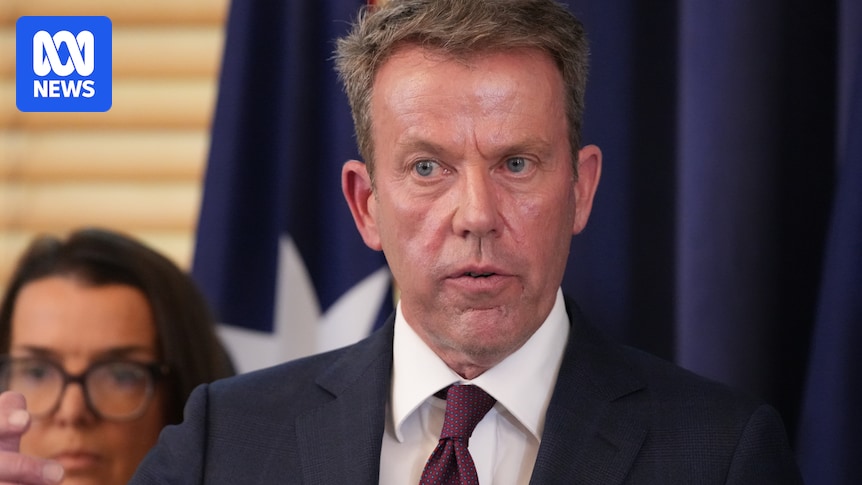
The Australian political landscape is witnessing a flurry of activity as federal politics grapple with energy challenges and social issues. Shadow Energy Minister Dan Tehan has criticized the government’s energy transition strategy, citing recent warnings from the Australian Energy Market Operator (AEMO) about potential blackouts. Meanwhile, Social Services Minister Tanya Plibersek has urged states to address alcohol regulations to combat violence against women and children.
The announcement comes as AEMO cautions that the energy grid is unprepared for the closure of the Eraring coal plant in New South Wales. This warning has sparked debate over the pace and efficacy of the country’s shift to renewable energy. Tehan argues that the transition is failing, stating, “Chris Bowen has completely ended up with egg on his face. His transition is failing.”
Energy Transition Under Scrutiny
The closure of the Eraring coal plant, initially planned for 2025 and now extended to 2027, poses significant challenges for Australia’s energy grid. AEMO’s chief executive, Daniel Westerman, highlighted the need for supporting infrastructure to ensure grid stability, noting that while renewables are in the pipeline, they are not yet sufficient to replace coal without risking blackouts.
“Coal-fired power stations are retiring, and this is not new news. Ten have retired since 2012, and the remaining fleet are getting old,” Westerman said.
This development follows a broader trend of transitioning away from coal, which has been met with mixed reactions. Former Deputy Prime Minister Barnaby Joyce criticized the lack of new coal-fired power stations, arguing that private sector interest exists if regulatory barriers are removed.
Alcohol Regulations and Social Concerns
On the social front, a rapid review from last year recommended urgent changes to alcohol regulations to prevent violence against women and children. Despite these recommendations, many states and territories have been slow to act, drawing criticism from advocates and government officials alike.
Minister Plibersek has pointed out that while some regions like the ACT and South Australia are making progress, others, including the Northern Territory and Tasmania, have regressed. She expressed particular concern over the Northern Territory’s decision to make alcohol more accessible in areas without liquor licenses.
“I’d say the Northern Territory, in particular, making alcohol cheaper and available in areas where there currently aren’t liquor licenses, I would say that’s a really concerning step backwards,” Plibersek stated.
Housing Market and Economic Implications
Meanwhile, Australia’s housing market continues to be a focal point of economic discussion. Cotality’s Home Value Index reported a 1% national increase in November, marking the third consecutive month of significant growth. Greens Senator Barbara Pocock criticized the government’s deposit scheme for new homebuyers, arguing it exacerbates housing affordability issues.
“It really is a scary circumstance and I think a lot of Australians will be sharing my alarm at the third month in a row … of more than 1 per cent increases,” Pocock said.
The housing market’s rapid growth underscores broader economic challenges, including limited supply and tax incentives for investors, which contribute to the disparity between property owners and first-time buyers.
Technology and Safety Concerns
In the realm of technology, the government has advised developers to “watermark” AI-generated content to prevent misuse and confusion. This recommendation aims to address concerns over deepfakes and the potential for AI to mislead the public.
Additionally, the rise of internet-connected cars has raised alarms about their use in domestic abuse cases. eSafety Commissioner Julie Inman Grant highlighted the potential for smart cars to be weaponized, emphasizing the need for manufacturers to enhance safety features.
“We’ve found over the years that predators have countless creative ways to misuse technology, often the technologies [we] rely on every day,” Inman Grant noted.
As Australia navigates these complex issues, the interplay between policy, technology, and social dynamics continues to shape the national discourse. The government’s responses and strategies in these areas will be closely watched as they unfold in the coming months.