
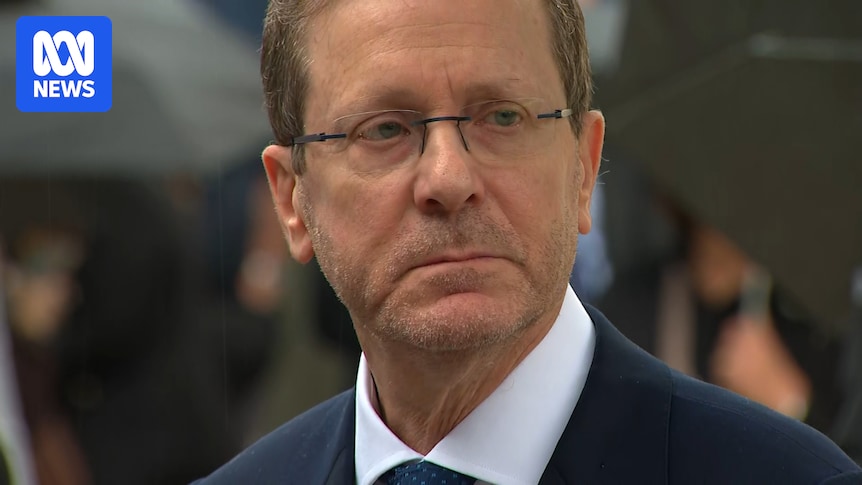
The arrival of Israeli President Isaac Herzog in Canberra has sparked heightened political and social tensions across Australia. With a significant police presence anticipated in the nation’s capital, the visit has become a focal point for protests and political debate. This comes amid ongoing discussions about leadership within the Liberal Party and concerns over rising extremism.
Political Satire and Leadership Speculation
The political landscape in Australia has been rife with speculation and satire, particularly within the Liberal Party. Labor MP Julian Hill recently mocked the absence of Liberal MP Phil Thompson on Sky News, humorously suggesting Thompson might be drafting his resignation from the front bench. This lighthearted jab underscores the deeper tensions within the party as leadership debates intensify.
Liberal Senator Dave Sharma has expressed frustration over leadership speculation, emphasizing the need for unity within the party. “Politics is a team sport,” Sharma stated, pledging support for whoever is elected as leader. This sentiment reflects the broader challenges facing the Liberals as they navigate internal divisions.
Economic Debates and Government Spending
Meanwhile, economic debates continue to dominate the national conversation, with Treasury Secretary Jenny Wilkinson addressing government spending’s role in inflation. Wilkinson noted that “private demand has made a stronger contribution to growth than public demand over the last four quarters,” aligning with Treasurer Jim Chalmers’ defense against claims that government spending is driving inflation.
However, opposition figures and some economists argue that government actions contribute to inflation, highlighting the complexity of the issue. This debate is expected to intensify as Treasury officials face further scrutiny from Coalition senators.
Security Concerns and Youth Radicalization
Amidst these political and economic discussions, security concerns have surfaced, particularly regarding youth radicalization. Australian Federal Police Commissioner Krissy Barrett warned of a growing number of young Australians being drawn into extremist ideologies, often through online radicalization. Barrett highlighted the rise of “personalized grievance” linked to global events and extremist content.
“Too many influences and influencers are poisoning the minds of our kids and the vulnerable,” Barrett stated, emphasizing the urgent need for intervention.
The AFP has launched new operations targeting extremists, including white supremacists and hate preachers, as part of efforts to address these threats. Despite these measures, Barrett acknowledged the challenges posed by individuals acting alone, without the need for organized networks.
Herzog’s Visit: A Catalyst for Debate
President Herzog’s visit has become a catalyst for debate, with some politicians and activists opposing the visit, citing concerns over Israel’s actions in Gaza. Independent Senator David Pocock criticized the government’s decision to host Herzog, arguing it has only “inflamed tensions.”
Conversely, former Prime Minister Malcolm Turnbull defended the invitation, urging for a reduction in divisive rhetoric. “This is a time to dial the temperature down,” Turnbull said, advocating for respectful dialogue and peaceful protest.
Protests against Herzog’s visit have also drawn international attention, with Israeli media focusing on the rise of antisemitism in Australia. Political scientist Tamar Hermann noted that public opinion in Israel is increasingly concerned about the country’s international standing.
“The [Israeli public] certainly understand that something very bad has happened to Israel’s image,” Hermann commented, reflecting on the impact of the Gaza conflict on Israel’s global reputation.
The visit has also reignited discussions about antisemitism and Islamophobia in Australia. Envoys Jillian Segal and Aftab Malik highlighted the dual challenges of combating Jewish hatred and preventing backlash against Muslim Australians, emphasizing the need for comprehensive strategies to address these issues.
Looking Ahead: Political and Social Implications
As Herzog’s visit continues, the political and social implications remain significant. The Liberal Party faces internal challenges as speculation about leadership changes persists. Supporters of Angus Taylor are reportedly preparing for a potential leadership challenge against Sussan Ley, with resignations expected to pave the way for a spill motion.
These developments highlight the broader political dynamics at play in Australia, as parties grapple with internal divisions and the need for cohesive strategies. The ongoing debates over economic policy, security, and international relations underscore the complexity of the current political landscape.
As the nation navigates these challenges, the focus will remain on fostering dialogue and unity, both within political parties and across the broader community. The outcomes of these discussions will shape Australia’s political trajectory in the months and years to come.