


Right up until its series premiere in October, audiences were left in the dark about Apple TV’s latest sensation, Pluribus. Despite the mystery surrounding its plot, the show had already captured attention due to its star-studded cast and creative team. Featuring Rhea Seehorn of Better Call Saul fame and masterminded by television luminary Vince Gilligan, Pluribus promised something unique with its intriguing premise involving cheery yet eerie smiling petri dishes.
In an era where new shows often shout for recognition, Pluribus took a different approach by maintaining an air of secrecy. The series, which was green-lit for two seasons before its debut, banked on Gilligan’s reputation to deliver another hit. Known for his work on Breaking Bad and Better Call Saul, Gilligan was expected to achieve a hat trick with this new venture.
The Enigmatic Plot and Stellar Cast
As Pluribus nears the end of its first season, it has not only captivated audiences but also swept up multiple award nominations. Shortly after airing its seventh episode, Apple TV announced that Pluribus had become its most-watched show ever, a testament to Gilligan’s storytelling prowess.
The series begins as a hard sci-fi narrative, where a beamed RNA sequence transforms humanity into a single, happy hive mind. With famine, war, and disease eradicated, almost every human on Earth becomes part of this collective consciousness. However, the show delves deeper into the lives of grounded, human characters in its ultra-saturated Albuquerque, New Mexico setting.
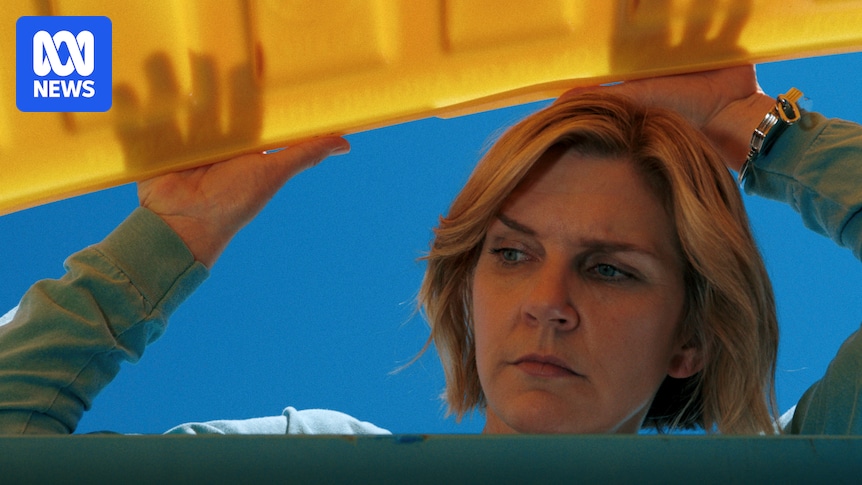
Central to the story is Carol Sturka (played by Seehorn), a disgruntled, closeted romantasy author who resists the hive mind’s pull. Her determination to uncover the truth behind this phenomenon has been a focal point of the series, earning Seehorn widespread acclaim for her performance.
Exploring Themes of Individuality and Conformity
Carol is not alone in her resistance. A handful of others also resist the hive mind, though many are tempted by the allure of perfect contentment. Gilligan, however, insists that Pluribus is not a commentary on virtue-signaling. Instead, the heart of the show lies in Carol’s struggle to awaken others to the reality they are ignoring.
“I’m kind of intrigued about the difference between individuality and conformity,” Gilligan explains. “That stuff interests me, the idea of being happy, and how important is that to us?”
Gilligan’s inspiration also stems from the current political climate in the United States, where division and discord are rampant. He wanted to explore a world where universal agreement isn’t as idyllic as it seems. “I think everybody hates that we live in a country that feels like there’s two sides, two armed camps,” he says. “But can we find a place where people disagree but they’re cool about it?”
The Accidental AI Parallel
As Carol becomes increasingly frustrated with her fellow resisters’ acceptance of the hive mind, viewers are reminded of debates surrounding artificial intelligence. Gilligan, however, claims this parallel was unintentional.
“I really wasn’t thinking about AI when I came up with Pluribus, partly because I came up with it almost 10 years ago,” he laughs. “But if people have that takeaway, more power to them.”
Gilligan’s concerns about AI in storytelling are evident. “That’s one of our highest achievements, the stories we tell one another, they have literally changed the world. The idea of robots or computers telling stories to human beings, it horrifies me.”
Looking Ahead
As Pluribus continues to captivate audiences, its success is a testament to the power of storytelling and the allure of mystery. The show’s ability to engage viewers without revealing too much has set a new standard in television, proving that sometimes, silence speaks volumes.
With the promise of a second season already secured, fans eagerly await the continuation of Carol’s journey and the unfolding of Pluribus‘s enigmatic narrative. As Gilligan once again proves his mastery in the art of television, the industry watches closely to see what other surprises he has in store.