




In a groundbreaking study, a team of physicists has tested the constancy of the speed of light with unprecedented precision, challenging a cornerstone of modern physics. This effort, led by researchers Mercè Guerrero and Anna Campoy-Ordaz from the Universitat Autònoma de Barcelona (UAB), along with collaborators Robertus Potting and Markus Gaug, seeks to explore potential deviations in light speed that could hint at new physics beyond Einstein’s theories.
Their work builds on the legacy of the 1887 Michelson-Morley experiment, which famously failed to detect any difference in the speed of light based on Earth’s motion. This “null result” was pivotal, leading Albert Einstein to propose the constancy of light speed, a fundamental aspect of his theory of special relativity. This theory, in turn, introduced the concept of Lorentz invariance, asserting that the laws of physics are the same for all observers, regardless of their relative motion.
The Intersection of Quantum Theory and Relativity
While special relativity has stood the test of time, the development of quantum theory has introduced new complexities. Lorentz invariance is central to quantum field theory and the Standard Model of Particle Physics, the latter being the most rigorously tested scientific theory to date. Despite its success, the quest to unify quantum mechanics with Einstein’s general relativity—his theory describing gravity as a geometric deformation—remains a significant challenge.
The difficulty lies in the fundamental incompatibility between quantum field theory’s probabilistic wave functions and the curved spacetime described by general relativity. Attempts to reconcile these theories into a unified framework of quantum gravity often suggest the need for slight violations of Lorentz invariance.
Testing the Limits of Lorentz Invariance
Modern experiments, leveraging advanced technology, continue the mission initiated by Michelson and Morley. Some quantum gravity theories predict that the speed of light might vary with photon energy, a deviation that would be minuscule yet detectable at very high photon energies, such as those of gamma rays.
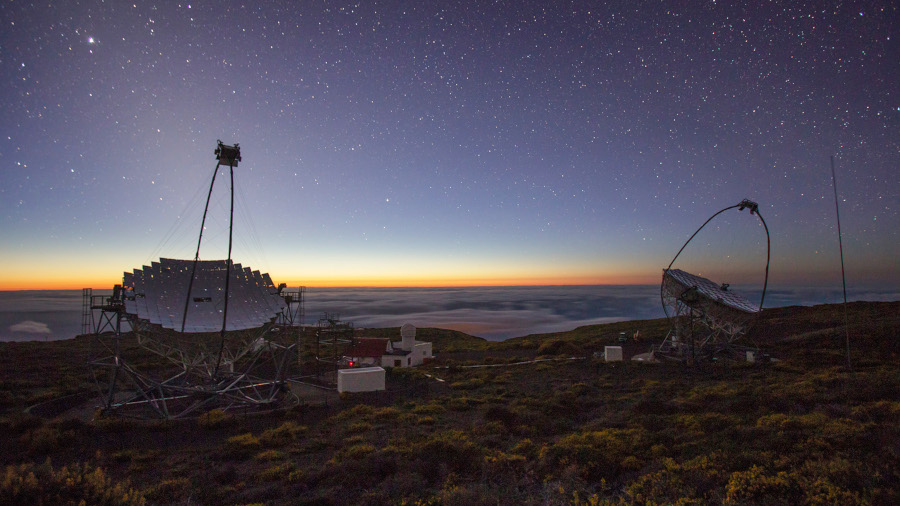
The research team employed astrophysical observations of very-high-energy gamma rays to test these predictions. By analyzing the arrival times of photons emitted simultaneously from distant cosmic sources, they aimed to detect any tiny discrepancies in photon speed that could accumulate over vast distances.
Their findings, while not disproving Einstein’s theory, have set new bounds on potential Lorentz invariance violations, improving previous limits by an order of magnitude.
Implications and Future Directions
The implications of these findings are profound. While the study did not uncover evidence against Einstein’s postulates, it narrows the parameter space for potential deviations, guiding future research in the quest for a quantum gravity theory. The researchers’ innovative statistical methods provide a new framework for analyzing astrophysical data, offering a pathway for future studies.
The next steps in this scientific journey involve the deployment of next-generation instruments like the Cherenkov Telescope Array Observatory. These tools promise to enhance the detection capabilities for very-high-energy gamma rays, potentially uncovering new insights into the fabric of the universe.
As the quest to understand the universe’s fundamental laws continues, the work of Guerrero, Campoy-Ordaz, and their colleagues represents a significant step forward. Their research not only challenges established theories but also exemplifies the relentless pursuit of knowledge that defines modern physics.
In the words of Einstein himself, “The important thing is not to stop questioning. Curiosity has its own reason for existing.”