




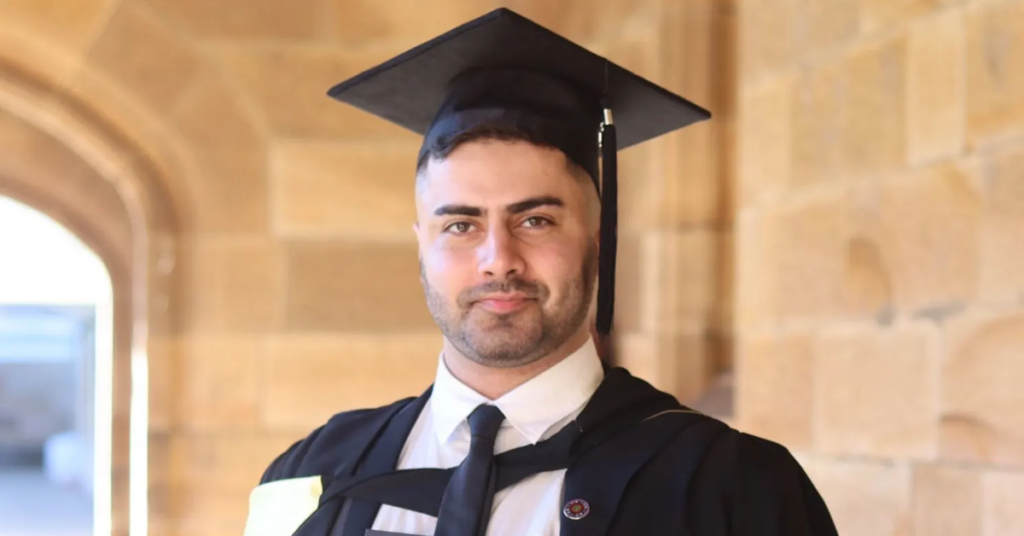
A PhD candidate has been accused of planning a terrorist attack involving a Molotov cocktail at an Australia Day event in Queensland. Sepehr Saryazdi, 24, allegedly intended to disrupt the celebrations on the Gold Coast as part of a broader plot to incite government overthrow, advocating for a new era of civilization driven by artificial intelligence.
Saryazdi appeared in Brisbane Magistrates Court to apply for bail after being charged with preparing or planning a terrorist act. Court documents reveal that between January 4 and 9, he purchased materials such as bottles of alcohol, wrapping paper, and a blanket, ostensibly for the attack. Crown prosecutor Ellie McDonald opposed bail, citing “extremely concerning” statements made by Saryazdi in a Facebook chat.
“I’ll be leading the Gold Coast riots on January 26,” Saryazdi allegedly wrote. “If you know people in Melbourne let them know so they can start buying vodka bottles early and stockpiling batches.”
Alleged Motives and Ideologies
According to the prosecution, Saryazdi expressed a belief that he would die during the attack unless intercepted by Australia’s spy agency, ASIO. He reportedly viewed his actions as logical, given what he perceived as a tyrannical government trajectory. Saryazdi allegedly advocated for a societal shift towards a “cybernetics” government, driven by AI and data analysis.
Court documents indicate Saryazdi possessed a document titled “Australia’s future cybernetics government the next phase of civilisation.” His online profiles list a Master of Mathematical Sciences from the University of Sydney and describe him as a PhD candidate with the CSIRO data and digital specialist arm and the Australian Centre for Robotics.
Legal Defense and Personal Background
Hellen Shilton, Saryazdi’s Legal Aid solicitor, argued that her client intended to garner national attention to express his disillusionment with the government rather than harm individuals. She portrayed Saryazdi as isolated, having lost contact with his parents after moving to Brisbane, and influenced by new acquaintances and protest videos.
“He admits he became quite overwhelmed emotionally. He felt he should do something with the way the world was going … it was never his intention to hurt anyone,” Shilton stated.
Shilton further argued that Saryazdi’s actions were misguided and that he had not participated in any protests, suggesting that reality began to set in after purchasing the materials for the alleged attack.
Court Decision and Future Proceedings
Magistrate Penelope Hay expressed skepticism regarding Saryazdi’s bail application, highlighting contradictions between his statements to police and his defense’s arguments. She noted the strength of the prosecution’s case and the serious nature of the alleged offenses.
“Contrary to admissions he made that he intended to throw a Molotov cocktail in a public place on Australia Day and overthrow the government?” Magistrate Hay questioned.
Ultimately, Saryazdi was denied bail and remanded in custody. He is scheduled to appear in court again on February 20. The case has raised concerns about the potential for radicalization among isolated individuals and the influence of online communities advocating for extremist ideologies.
Broader Implications and Expert Insights
The allegations against Saryazdi underscore the challenges faced by law enforcement in identifying and preventing lone-wolf attacks inspired by radical ideologies. Experts warn that the intersection of technology and extremism presents new hurdles for national security.
Dr. Emily Collins, a terrorism analyst, commented on the case, noting the increasing trend of individuals using digital platforms to disseminate extremist views and recruit followers. “The digital age has transformed the landscape of radicalization, making it easier for individuals to connect with like-minded extremists and plan attacks,” she said.
As authorities continue to investigate, the case serves as a stark reminder of the ongoing need for vigilance and the development of strategies to counteract the spread of extremist ideologies in the digital realm.