




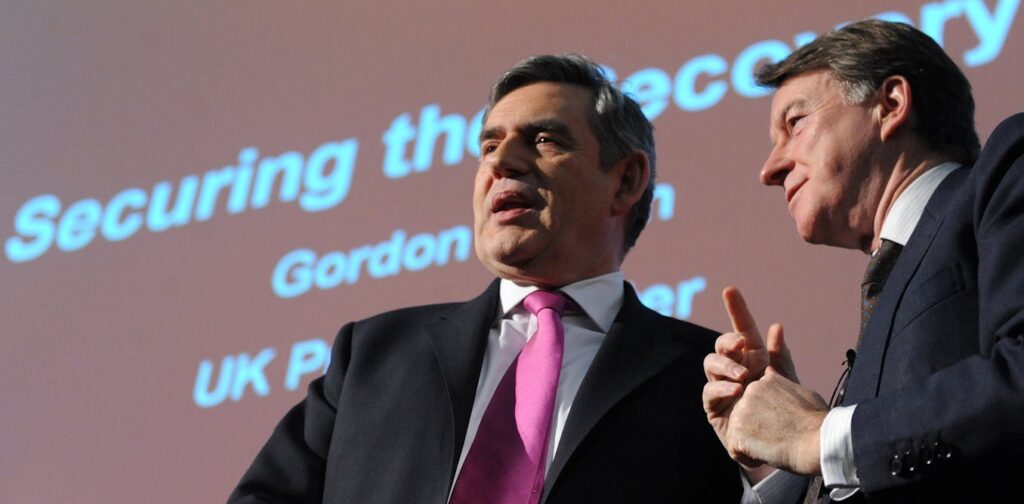
Suggestions that Peter Mandelson may have shared government information with Jeffrey Epstein amid the fallout of the global financial crisis are now under police investigation. Emails between Mandelson and the disgraced financier, released by the US Department of Justice, reportedly contain market-sensitive details. This correspondence occurred during a critical period when Mandelson was in government, and ministers were scrambling to stabilize the UK economy.
The 2008 global financial crisis, though a relic of a previous political era, continues to cast a long shadow over today’s economic and political landscape. The allegations against Mandelson, some dating back to his tenure as UK business secretary, are particularly shocking given the enduring effects of the crisis. The weakened UK economy, strained public finances, and divisive political climate can all trace their roots back to that turbulent period.
The Financial Crisis: A Historical Context
The global financial crisis of 2008 marked the end of a prolonged period of economic prosperity. It dismantled the belief, once held by then-Chancellor Gordon Brown, that the UK had achieved a “Goldilocks economy”—a state of balanced growth without overheating or recession. For 16 years, Britain enjoyed consistent economic growth following the recovery from “Black Wednesday” in 1992.
However, the first signs of trouble emerged in 2007 when US lenders specializing in sub-prime mortgages began to collapse. These high-risk loans were bundled into mortgage-backed securities and sold as low-risk investments. The illusion of safety crumbled as house prices fell, leading to a credit market freeze. Financial institutions stopped lending, interest rates soared, and stock markets plummeted.
The UK Response and Mandelson’s Alleged Involvement
The collapse of major banks, including the US giant Lehman Brothers and the UK’s Northern Rock, underscored the severity of the crisis. In response, global policymakers intervened with unprecedented measures, including bank rescues and fiscal stimulus packages. In the UK, the government nationalized Northern Rock, recapitalized major banks, and introduced liquidity schemes.
During this period, Mandelson is suspected of sharing sensitive government information with Epstein. An email from June 2009 allegedly shows Mandelson forwarding details of proposals to sell UK government assets to raise funds. Meanwhile, other emails suggest discussions between Mandelson and Epstein about opposing a proposed “supertax” on bankers’ bonuses, aimed at recouping public funds.
“The crisis had blown a hole in the UK’s public finances as the Treasury grappled with falling tax receipts and increased demands on spending on public services and welfare.”
The Long-Term Impact and Political Ramifications
While economies eventually stabilized, thanks in part to leadership from Brown and the subsequent coalition government, the repercussions of the crisis linger. The years following the financial meltdown have been marked by weak economic output, sluggish productivity growth, and stagnant wages.
The era of austerity policies, coupled with growing distrust of institutions and a backlash against elites, fueled populism across the political spectrum. Many citizens felt marginalized by globalization and frustrated with a political system they perceived as unresponsive. This discontent played a significant role in the Brexit vote, reflecting a desire to disrupt the status quo.
Understanding today’s political and economic challenges requires acknowledging the monumental hurdles the financial crisis posed to a generation of politicians. Although Mandelson denies any criminality, the allegations against him highlight the high stakes during that era. The cost of averting a global economic collapse is still being felt, both politically and economically.
As investigations into Mandelson’s alleged actions continue, the implications of these revelations could further influence the ongoing discourse about accountability and transparency in government dealings, especially during times of crisis.