


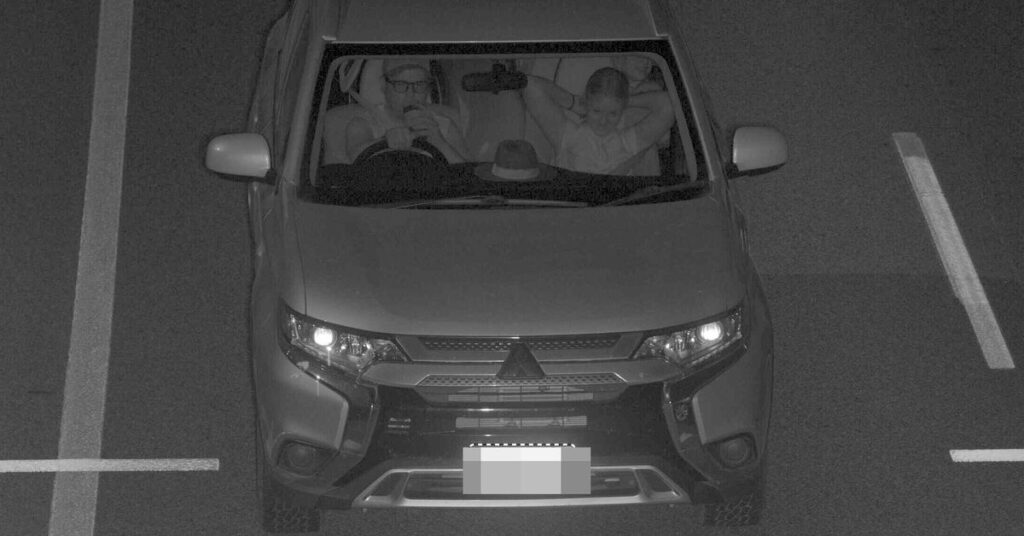
Parents in Western Australia are voicing their concerns over the state’s newly implemented AI-driven seatbelt cameras, with one Perth father labeling them an “outrageous overreach.” Nick Dekker, a local resident, recently received a $550 fine after an AI camera captured his 12-year-old daughter briefly adjusting her seatbelt to fix her ponytail while driving along the Kwinana Freeway.
The incident, which occurred in January, resulted in a hefty fine and four demerit points being issued to Dekker’s partner, the registered owner of the vehicle. “I didn’t even notice that my daughter was doing her hair or that the seatbelt had slipped behind. It was just that split second,” Dekker explained to nine.com.au.
At the time, Dekker was driving four children to the beach and was focused on the road. “A lot happens in a car full of kids; it’s a pretty active place to be,” he noted. His experience echoes that of another parent, Leesa Taylor, who faced an eight-demerit point penalty after her daughter, who has ADHD, adjusted her seatbelt during a long drive.
AI Technology and Its Impact
The AI-driven cameras, introduced across Western Australia last year, are designed to detect unlawful mobile phone use and incorrect seatbelt positioning. After a six-month warning period ended in October, more than 75,000 infringements have been issued for related offenses.
Dekker argues that the technology, initially aimed at curbing dangerous mobile phone use and unbuckled passengers, is now penalizing minor movements. “They are now looking into our cars with their cameras and it’s a fine line,” he said. “Kids turn around all the time in the front seat. You try to tell them not to, but what are you going to do, bolt them down so they don’t wriggle? It’s a bit outrageous.”
Official Response and Future Adjustments
A spokesperson for the Road Safety Commission defended the technology, highlighting its effectiveness. “As predicted, the cameras have revealed new insights into driver and passenger behavior that hasn’t been captured on scale before,” the spokesperson stated. “The cameras are proving to be extremely effective and efficient as a road safety tool in helping to… make WA roads safer.”
However, Road Safety Commissioner Adrian Warner acknowledged potential flaws in the system. “I can very much understand where [parents are] coming from. The volume of appeals and questions that we’re getting to the helpline is increased,” Warner admitted. The Commission is now considering “different standards” for adults versus minors, recognizing that children may not always adhere to the same physical standards as adults.
Implications for Parents and Road Safety
For now, the heavy fines remain in place. Parents who feel unjustly penalized are advised to submit a formal appeal to the Department of Transport or prepare for a legal challenge. The ongoing debate raises questions about balancing road safety with practical parenting challenges.
As the state continues to refine its approach, the experiences of parents like Dekker and Taylor highlight the complexities of enforcing road safety in real-world scenarios. The conversation around AI technology in traffic enforcement is likely to evolve as authorities seek to address these concerns.
Stay informed on this and other breaking news by following us across all platforms. Download the 9NEWS App via Apple and Google Play, and make 9News your preferred source on Google. Sign up for our breaking newsletter to never miss a story.