

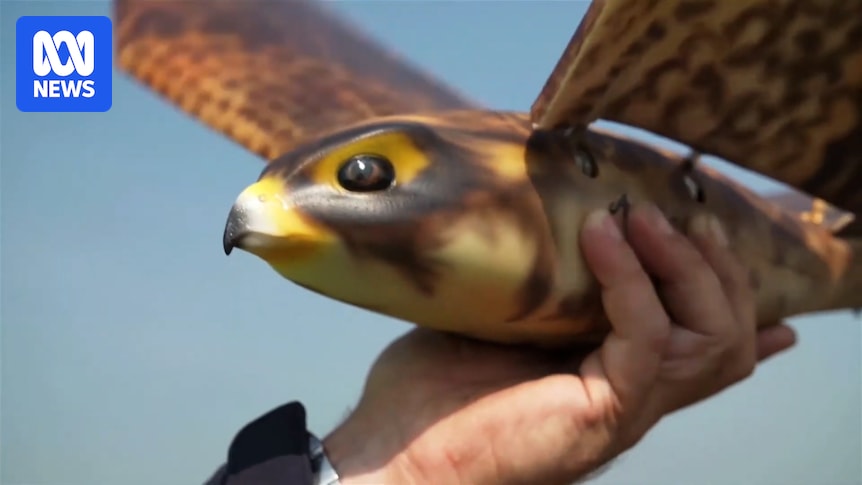
Canadian-made drones designed to mimic peregrine falcons are now patrolling the skies over Australian fruit and almond orchards. These innovative drones, available in both fixed-wing and flapping wing models, utilize bio-mimicry technology to effectively deter smaller birds from raiding fruit and nut trees.
The introduction of these drones comes at a critical time, as minimal rainfall in most parts of Victoria over the past year has driven birds to seek food in agricultural crops. AERIUM Analytics president Jordan Cicoria highlighted that field tests in Victoria and South Australia have demonstrated the drones’ resilience to the Australian climate.
Bio-Mimicry Technology: A Predator in the Skies
The drones are engineered to resemble and behave like natural predators, such as peregrine falcons, to scare off species like corellas and cockatoos. “These trials were never about proving whether the technology works — we already know that,” Cicoria stated. “We’re collecting data on the effectiveness of the robot against a range of bird species that cause significant fruit and crop loss in Australia.”
Having operated for a decade in the mining and aviation sectors, these drones have successfully reduced bird strikes at airports by preventing birds from landing in hazardous areas. Cicoria noted, “The real question for us was how that translates to agriculture, how it applies to specific crops and farming systems.”
Impact on Local Agriculture
Ardmona farmer and Victorian Fruit Growers chairman Mitch McNab, who grows apples, pears, and stone fruit, has been trialing the drone in the lead-up to harvest. “So far, we’ve seen reasonably positive results,” McNab reported. The drier conditions this year have made irrigated horticultural crops particularly attractive to birds, increasing the threat to yields.
“Typically, we might lose around 1 to 3 percent of our crop to birds, but this year that’s probably closer to 3 to 5 percent,” McNab explained.
To manage the costs associated with purchasing and operating the drones, McNab is considering a cooperative model. “The capital cost of purchasing a drone and having someone operate it isn’t always justifiable for individual growers, especially in lower-pressure years,” he said. “A shared or cooperative approach would allow better utilization of the technology, and I think that’s something Fruit Growers Victoria and Goulburn Valley growers would seriously consider.”
Looking Ahead: The Future of Drone Technology in Agriculture
This development follows a growing trend of integrating technology into agriculture to enhance productivity and sustainability. The use of drones as a deterrent for bird-related crop damage could represent a significant advancement for farmers facing similar challenges worldwide.
As the trials continue, experts are keen to see how this technology can be adapted and optimized for various agricultural settings. The success of these drones in reducing crop losses could pave the way for broader adoption, potentially transforming pest management strategies in agriculture.
Meanwhile, the agricultural community will be watching closely to determine the long-term viability and economic benefits of such technology. The potential for a cooperative model could serve as a blueprint for other regions, encouraging collaboration among growers to maximize the benefits of innovative solutions.
As climate patterns continue to shift, and with them, the behaviors of wildlife, the integration of technology like peregrine falcon drones could become an essential tool in the farmer’s arsenal, safeguarding crops and ensuring food security.