




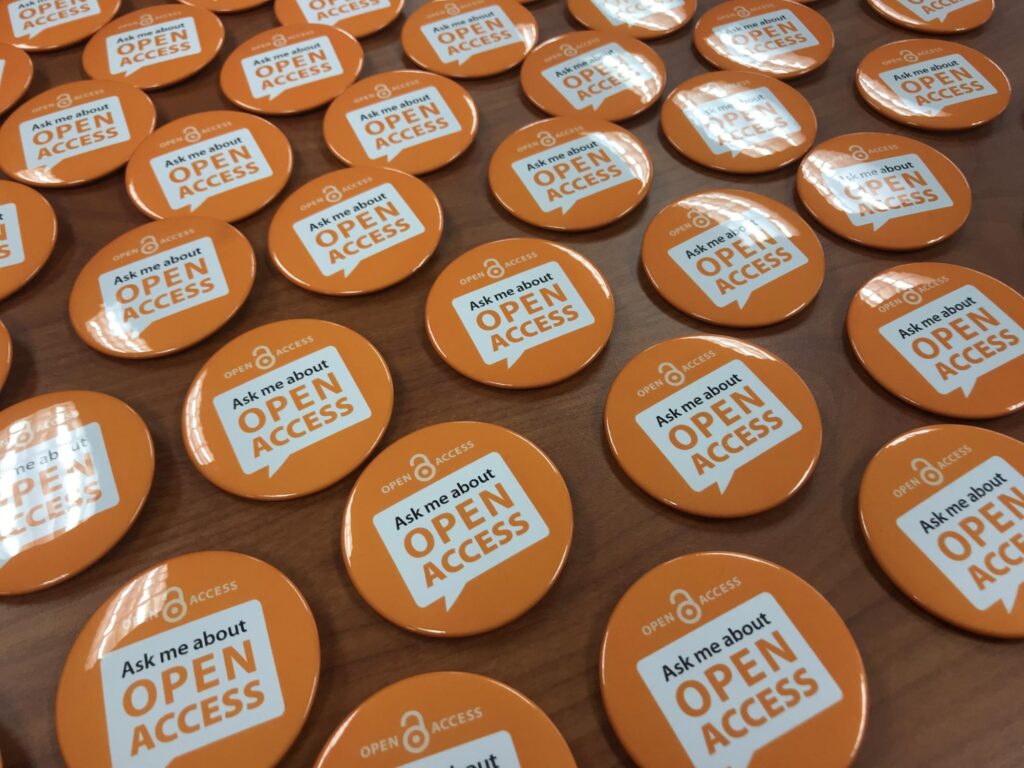
Penn State University Libraries have announced groundbreaking open-access publishing agreements with two major scientific publishers, the Association for Computing Machinery (ACM) and the American Chemical Society (ACS), set to commence in 2026. These contracts will ensure that Penn State’s peer-reviewed research is freely accessible to both authors and readers, aligning with the university’s policy initiated in January 2020 to disseminate scholarly research globally and within the commonwealth.
“With increasing open-access requirements by federal funding agencies, it is more important than ever to ensure Penn State scientific papers are freely available to the public,” stated John Meier, head of STEM libraries at Penn State University Park. “Following our agreements with other STEM publishers like Springer Nature, the University Libraries continues to negotiate contracts with scholarly publishers to remove financial barriers for Penn State researchers and, by extension, the global research community.”
ACM’s Shift to Open Access
The Association for Computing Machinery is transitioning to a fully open-access publishing model by 2026. Penn State’s “read and publish” agreement with ACM guarantees that there will be no author publishing charges for Penn State authors. ACM’s extensive publication repertoire includes over 75 journals, seven magazines, and proceedings from 170 conferences. Notably, Penn State has been a significant contributor, with nearly 100 articles published annually by its researchers in recent years.
This development follows a broader trend in academia towards open-access publishing, driven by the need to make scientific knowledge more widely available and to comply with mandates from funding bodies. The agreement with ACM is particularly significant given the organization’s influential role in computing and technology research.
ACS Partnership and Broader Implications
Simultaneously, ACS and the Partnership for Academic Library Collaboration and Innovation (PALCI), of which Penn State is an active member, have secured a renewable three-year agreement. This deal eliminates author publishing charges for Penn State researchers, with ACS publishing over 90 journals, including two new titles launching in 2026. Penn State researchers contribute more than 100 peer-reviewed articles annually to ACS publications.
These agreements are pivotal for Penn State, enabling alignment with the university’s open-access policy and federal mandates from agencies like the National Institutes of Health and the U.S. National Science Foundation. Unlike some open-access agreements that cap the number of applicable articles per year, both ACM and ACS agreements are unlimited, offering extensive publication opportunities for Penn State scholars.
Broader Context and Future Outlook
The move represents a significant step forward in the open-access movement, which has gained momentum over the past decade. The shift is partly a response to the increasing demand for transparency and accessibility in scientific research, driven by both technological advancements and the democratization of information.
According to experts, these agreements could set a precedent for other institutions seeking to negotiate similar terms. “The impact of such agreements extends beyond individual institutions,” noted a spokesperson from the Scholarly Publishing and Academic Resources Coalition. “They contribute to a broader cultural shift towards open science, which is crucial for accelerating innovation and addressing global challenges.”
“By removing financial barriers, we are not only supporting our researchers but also contributing to the global exchange of knowledge,” said Meier. “This is a critical step in ensuring that research can have the widest possible impact.”
Meanwhile, Penn State students and researchers will have full access to all ACS and ACM journals, providing them with invaluable resources for their academic and professional development.
As these agreements take effect, the academic community will be watching closely to assess their impact on research dissemination and collaboration. The success of such initiatives could inspire further open-access partnerships, ultimately transforming the landscape of academic publishing.