


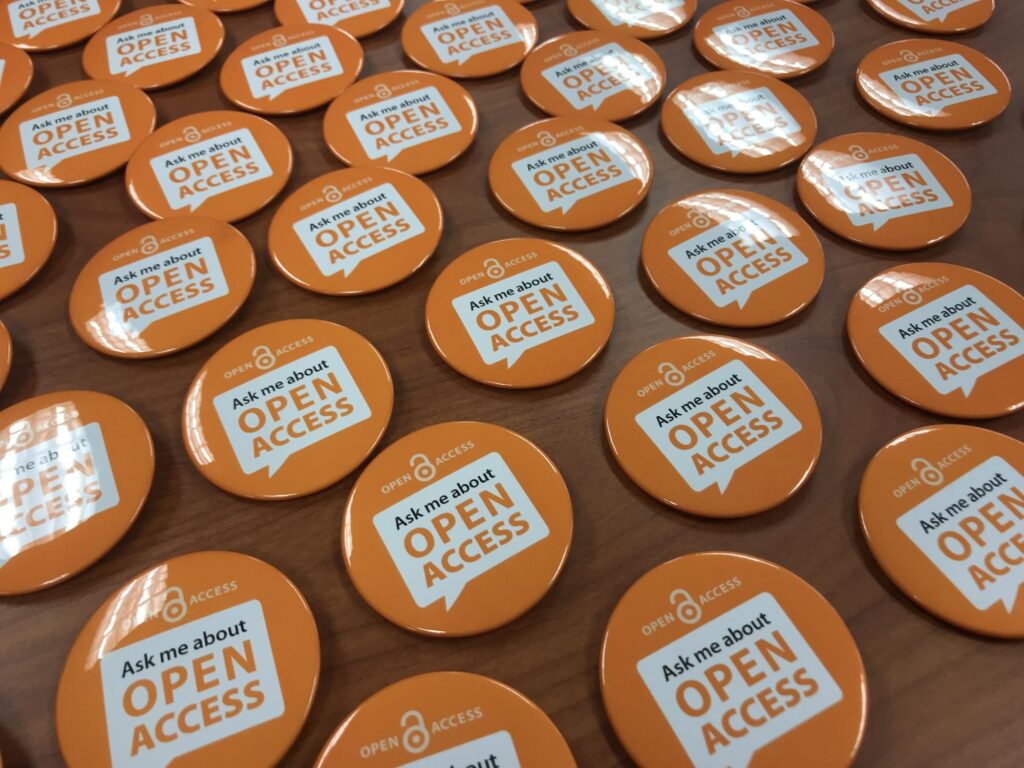
Penn State University Libraries has announced a significant step forward in open-access publishing, entering into new agreements with two major scientific publishers, the Association for Computing Machinery (ACM) and the American Chemical Society (ACS). Starting in 2026, these contracts will ensure that Penn State’s peer-reviewed research is available free of charge to both authors and readers. This move aligns with the university’s policy, enacted in January 2020, to make scholarly research accessible globally.
The agreements come at a crucial time when federal funding agencies are increasingly mandating open-access for funded research. John Meier, head of STEM libraries at Penn State University Park, emphasized the importance of this initiative, stating,
“With increasing open-access requirements by federal funding agencies, it is more important than ever to ensure Penn State scientific papers are freely available to the public.”
Meier further noted that these agreements follow previous collaborations with publishers like Springer Nature, demonstrating the university’s commitment to removing financial barriers for researchers.
ACM’s Transition to Open-Access
ACM is set to transition to a completely open-access publishing model by 2026. Penn State’s “read and publish” agreement with ACM ensures that there will be no author publishing charges for Penn State researchers. ACM’s publications are extensive, including over 75 journals, seven magazines, and proceedings from 170 conferences. Penn State has been a significant contributor, with nearly 100 articles published annually by its researchers in recent years.
ACS and PALCI Collaboration
The American Chemical Society, in collaboration with the Partnership for Academic Library Collaboration and Innovation (PALCI), has reached a renewable three-year agreement with Penn State. This deal eliminates author publishing charges for Penn State researchers, providing access to ACS’s more than 90 journals, including two new titles launching in 2026. Penn State researchers contribute significantly to ACS publications, with over 100 peer-reviewed articles published annually.
These agreements not only support Penn State’s open-access policy but also align with mandates from federal funding bodies such as the National Institutes of Health and the U.S. National Science Foundation. Unlike some open-access agreements that cap the number of articles, these agreements are unlimited, offering broader access to Penn State’s academic community.
Implications for Global Research
The move represents a significant advancement in the accessibility of scientific research. By removing financial barriers, Penn State is not only supporting its researchers but also contributing to the global research community. This development is particularly relevant in fields ranging from statistics to medicine, where open-access can accelerate innovation and collaboration.
According to experts, the trend towards open-access publishing is reshaping the landscape of academic research. By making research freely available, universities and publishers are fostering a more inclusive and collaborative scientific community. The agreements with ACM and ACS are expected to set a precedent for other institutions and publishers to follow.
As the academic world continues to evolve, Penn State’s proactive approach to open-access publishing highlights the importance of accessibility in advancing knowledge and addressing global challenges. The university’s commitment to open-access is not only a boon for its researchers but also a step towards a more equitable dissemination of knowledge worldwide.
Looking ahead, these agreements are likely to have far-reaching implications, encouraging other universities to adopt similar models and potentially influencing policy changes at the national and international levels. As open-access becomes the norm, the future of academic publishing looks set to become more inclusive and accessible for researchers and the public alike.
