

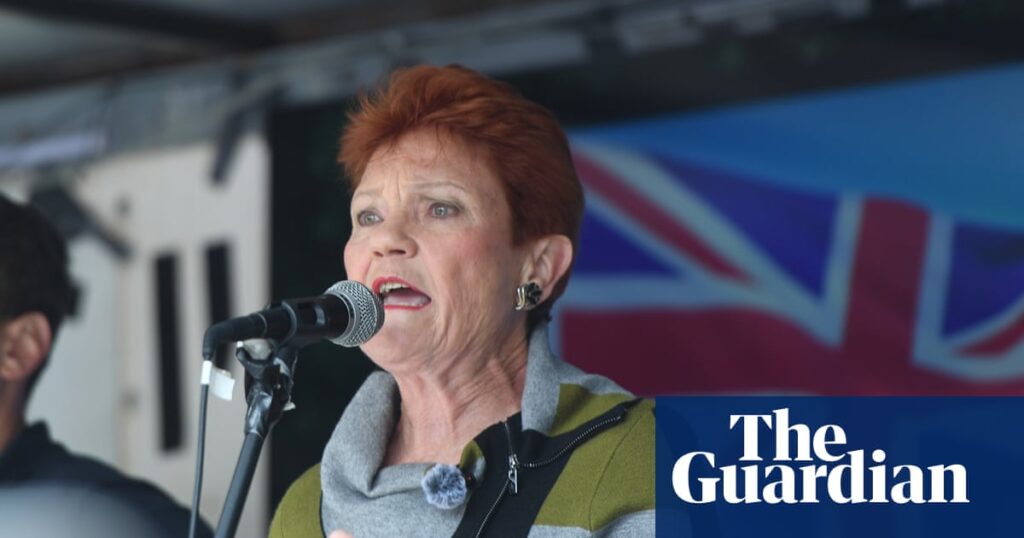
Pauline Hanson, leader of Australia’s One Nation party, and her chief of staff, James Ashby, recently traveled to Florida aboard a private jet owned by mining magnate Gina Rinehart. The trip, which occurred in late October, has sparked questions about whether Hanson has breached parliamentary rules by failing to declare the sponsored travel.
The journey, which began on October 27, saw the trio fly from Brisbane to Perth, then onward via Osaka to Palm Beach, Florida, on Rinehart’s Gulfstream 700. Publicly available flight tracking data confirmed the aircraft’s route. While in the United States, Hanson and Rinehart attended the Conservative Political Action Conference (CPAC), where Hanson criticized Australia’s major political parties and lauded the Trump administration’s policies on immigration and mining.
Questions of Parliamentary Compliance
The trip’s sponsorship, whether by Hancock Prospecting or Rinehart personally, remains unclear. Under Australian parliamentary rules, senators must declare any sponsored travel or hospitality exceeding $300. Such declarations must be updated within 35 days of any change, yet Hanson’s register was last updated in August. Neither Hanson nor One Nation has responded to inquiries about the trip’s compliance with these rules.
During their stay, Hanson and Rinehart attended a Halloween party at Mar-a-Lago, hosted by former President Donald Trump. Hanson described the event as “lovely,” though it remains uncertain if Ashby was present. Rinehart, a known Trump supporter, has been part of his female support network, the Trumpettes, since 2016, and holds a substantial $4.7 billion portfolio of US stocks, including investments in Trump Media & Technology.
Political Implications and Reactions
Hanson’s participation at CPAC, where she was invited to speak, underscores her growing international profile. In a Sky News interview, she expressed pride in representing Australians at the conference, where ticket prices ranged from $5,000 to $25,000. Hanson attributed her recent rise in voter support, as indicated by a Newspoll, to the major parties’ failure to address migration and climate change policies.
Her remarks align closely with Rinehart’s views, particularly regarding Australia’s commitment to the Paris Agreement and the ambition for net-zero carbon emissions. Hanson warned that such policies could jeopardize Australia’s mining sector, a significant economic contributor. The trip coincided with public support from Adam Giles, a senior executive at Rinehart’s Hancock Prospecting, who has encouraged donations to One Nation.
Financial and Political Connections
Rinehart’s financial ties to Australian politics are well-documented. Her company, Hancock Prospecting, donated $500,000 to the Liberal Party ahead of the last election. Under Australian Electoral Commission rules, any in-kind support exceeding $17,300 must be declared. Rinehart’s influence extends to her criticism of Liberal leadership, particularly Sussan Ley and Andrew Hastie, the latter due to his testimony against SAS soldier Ben Roberts-Smith in defamation proceedings.
Rinehart has publicly defended Roberts-Smith, who was found to have committed war crimes in Afghanistan in 2023, a claim he denies. Despite her political engagements, neither Rinehart nor Hancock Prospecting provided comments regarding the recent trip or its implications.
Looking Ahead
The controversy surrounding Hanson’s US trip highlights ongoing debates about political transparency and influence. As scrutiny intensifies, questions about the intersection of politics and private interests are likely to persist. Hanson’s next steps, particularly regarding compliance with parliamentary rules, will be closely watched by both supporters and critics.
As the political landscape evolves, the relationship between Hanson, Rinehart, and other influential figures will continue to shape Australia’s political discourse, raising broader questions about accountability and governance in the nation’s political system.