




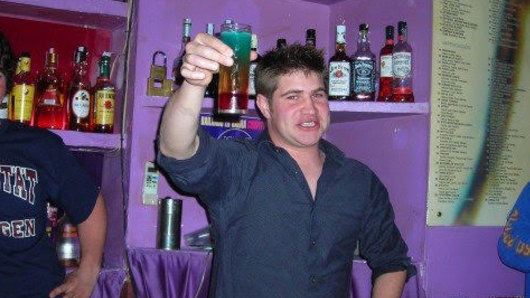
In 2006, Paul Churchill found himself at the helm of Dolce Vita, a vibrant bar in Granada, Spain, where he was immersed in a world of endless parties and alcohol. At just 23, he was living what many would consider a dream, but the reality was far from sweet. Within 18 months, his life spiraled as alcohol took a firm grip, leading him down a path of self-destruction.
Churchill’s memoir, Dolce Vita, chronicles this tumultuous period, offering a raw account of his descent into alcoholism. “At 20 months in Spain, I was a full-blown functioning alcoholic,” he writes. His days began with alcohol and ended in a haze, a cycle that nearly cost him his life. A terrifying blackout incident at 27 prompted him to shut down the bar and leave Spain, marking the beginning of his long journey to sobriety.
The Road to Recovery
Churchill’s path to sobriety was anything but linear. He experienced several relapses, including a DUI and a suicide attempt, before finally taking his last drink on September 6, 2014. This pivotal moment occurred during a camping trip, where he realized the dire consequences of continuing down the same path. “I knew if I finished that beer I was going to be a goner,” he recalls.
Determined to hold himself accountable, Churchill launched the Recovery Elevator podcast. Its simple yet powerful format features weekly interviews with individuals sharing their journeys through addiction and recovery. The podcast has resonated with millions, amassing over 10 million downloads and becoming a beacon of hope for those battling similar demons.
The Impact of Recovery Elevator
Churchill’s podcast has not only helped others but also played a crucial role in his own recovery. “When I recorded that first podcast, I was burning the ships,” he says, referring to his commitment to sobriety. Through conversations with over 550 individuals, Churchill has learned that while everyone’s story is unique, a common thread is the futility of moderation for those with alcohol problems.
“Moderate drinking doesn’t work, even though the mind can think of brilliant plans and strategies,” Churchill explains.
This insight has been echoed by countless guests on his podcast, reinforcing the idea that for many, complete abstinence is the only viable path to healing.
Understanding Alcohol Dependency
The question of whether one has a drinking problem is often answered by the mere act of questioning it. “If you have wondered if you have a drinking problem, then you’ve already answered the question,” Churchill asserts. This straightforward approach challenges individuals to confront their relationship with alcohol honestly.
For those who suspect a loved one might have an issue, Churchill advises initiating an open and caring dialogue. “The worst thing you can do is not have the conversation,” he emphasizes. Breaking through denial is the first step towards recovery, and honest conversations can be the catalyst for change.
A Broader Movement Towards Sobriety
In recent years, there has been a surge in literature and discussions around sobriety, with authors like Jill Stark and Catherine Gray leading the charge. Their works highlight the unexpected joys and clarity that come with a sober life, a theme that resonates throughout Churchill’s podcast and book.
Churchill’s message is clear: sobriety offers a path to “presence, energy, and peace,” qualities that many seek through various means but can achieve by simply abstaining from alcohol. His journey underscores the importance of community and support in overcoming addiction.
For those contemplating sobriety, Churchill advises starting with an honest conversation about one’s drinking habits and their impact. “It can be to anyone,” he says, stressing the importance of breaking the isolation that alcohol often creates.
Churchill’s story is a testament to the power of vulnerability and the strength found in community. His work continues to inspire and support those on their own paths to recovery, proving that even the darkest chapters can lead to profound transformation.
Resources: Lifeline 131 114; Beyond Blue 1300 224 636
Dolce Vita: Ditch The Booze and Step Into The Good Life is available now. Find Recovery Elevator online for more support and stories of recovery.