



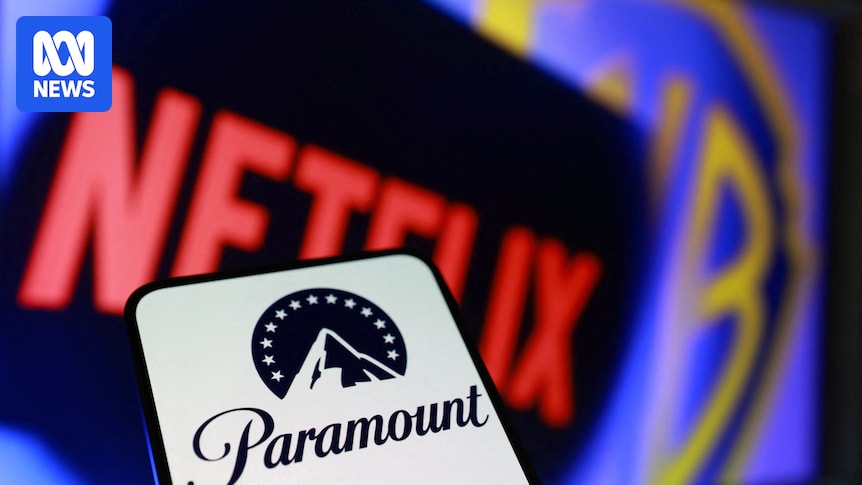
Paramount has launched a hostile bid to acquire Warner Bros Discovery, intensifying a fierce bidding war with Netflix over the renowned media giant. The company has proposed an offer of $30 per share, directly challenging the $108 billion deal between Warner Bros Discovery (WBD) and Netflix announced just last week.
This unexpected move sets the stage for a high-stakes battle between Paramount, owned by Larry Ellison—an ally of former President Donald Trump—and the streaming titan Netflix. The acquisition of one of Hollywood’s most iconic studios is at stake.
Netflix’s announcement of its agreement to purchase Warner Bros last week sent shockwaves through the industry, eliciting strong reactions from various Hollywood insiders concerned about the future of their industry. Former President Trump commented on the situation, stating that Netflix’s acquisition could pose a problem due to the significant market share it would command in the film and TV industry.
Paramount’s Strategic Offer
David Ellison, Chairman and CEO of Paramount, expressed determination as his company made its sixth offer for Warner Bros since the bidding war began. “We’re really here to finish what we started,” he told CNBC.
Paramount’s bid encompasses all of Warner’s assets, including cable channels such as CNN, TNT, TBS, and Discovery, which Netflix has shown no interest in acquiring. The company argues that its comprehensive offer will provide shareholders with an additional $18 billion in cash and a smoother path to regulatory approval.
“We believe our offer will create a stronger Hollywood,” Mr. Ellison stated, emphasizing the potential benefits for the creative community, movie theaters, and consumers through enhanced competition.
Over the years, Warner Brothers has produced cinematic classics like Casablanca and Citizen Kane, along with more recent hits such as The Sopranos, Game of Thrones, and the Harry Potter series. The proposed merger would combine Paramount’s extensive portfolio—including Paramount Pictures, CBS, Nickelodeon, and Paramount+—with WBD’s assets, including HBO Max and significant sports rights.
Controversy and Concerns
Paramount’s offer values the entertainment giant at $108.4 billion, representing a 139 percent premium over WBD’s September stock price of $12.54, when the bidding war commenced. The company claims the merger would result in over $6 billion in cost savings while maintaining theatrical releases and increasing content spending.
However, Paramount’s bid has not been without controversy. Concerns have arisen regarding the merger’s implications, particularly given the company’s close ties to the Trump administration. The $30-per-share cash offer is backed by financing from Affinity Partners, an investment firm managed by Jared Kushner, Trump’s son-in-law, and various Middle Eastern government-run investment funds, with additional support from the Ellison family.
Analysts have noted potential antitrust scrutiny, as the merger would consolidate two major television operators. Last month, Democratic senators cautioned that such a transaction could lead to “one company controlling almost everything Americans watch on TV.” The combined entity would surpass Disney in market share, raising fears of further industry consolidation.
On Monday, Trump distanced himself from both bidding parties, stating that neither are “friends of mine,” and expressing his desire to “do what’s right.”
Netflix’s Position and Industry Reactions
Netflix’s approach to the acquisition has also drawn criticism, particularly regarding its impact on theatrical releases—a sensitive issue for Hollywood’s creative community. The streaming giant is often viewed negatively within the industry due to its reluctance to release content in theaters and its disruption of traditional practices.
Many industry veterans argue that theatrical releases are essential to cinema’s appeal and prestige, as well as crucial for maintaining a healthy Hollywood economy. Renowned director James Cameron labeled the buyout a “disaster,” while a group of prominent producers lobbied Congress to oppose the deal, according to trade magazine Variety.
In a letter to lawmakers, an anonymous group of filmmakers warned that Netflix would “effectively hold a noose around the theatrical marketplace,” further straining a Hollywood ecosystem already challenged by the shift from theaters and TV to streaming.
Following these developments, Warner Bros Discovery’s share price surged by more than 7 percent on Monday, while Netflix shares declined by over 2 percent.
Looking Ahead
The unfolding battle between Paramount and Netflix over Warner Bros Discovery highlights the ongoing transformation of the entertainment industry. As the bidding war continues, stakeholders and industry observers are closely watching how this high-profile acquisition will reshape the media landscape.
With significant implications for content creation, distribution, and competition, the outcome of this bidding war could set a precedent for future mergers and acquisitions in Hollywood. As both companies vie for control, the industry awaits the next chapter in this unfolding saga.