




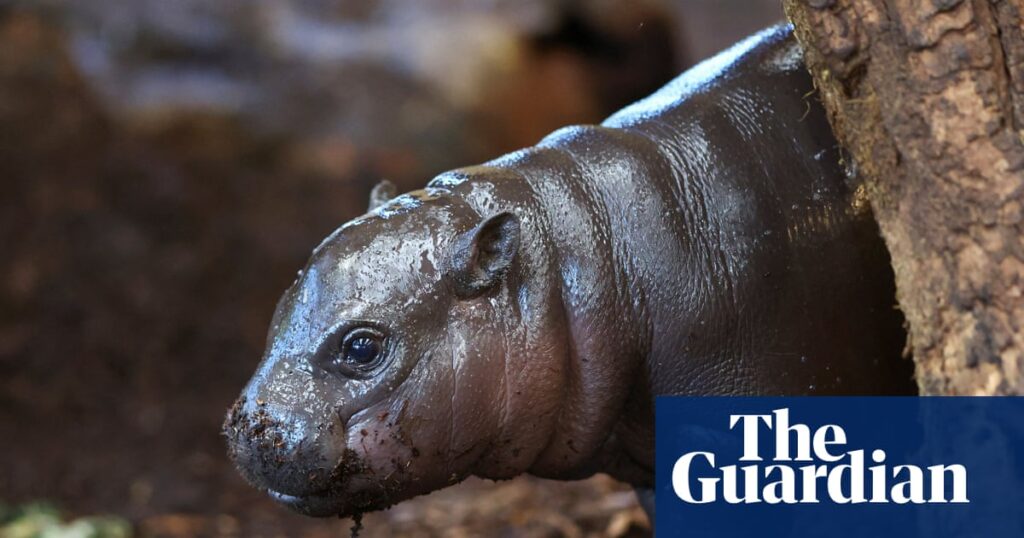
Panya, a three-week-old pygmy hippo born at Duisburg Zoo in Germany, has taken the internet by storm. With his diminutive size and irresistible cuteness, Panya has captured hearts worldwide, offering a much-needed dose of joy in challenging times.
Born at the end of last month, Panya’s tiny stature has been a source of fascination. Images of him standing next to a lettuce, highlighting their comparable size, have fueled his popularity. This viral sensation has not only captivated social media but has also sparked discussions about the conservation of pygmy hippos.
The Rise of an Internet Star
Panya’s emergence as a viral phenomenon is reminiscent of previous animal sensations. Reddit users have enthusiastically embraced Panya, with one commenter exclaiming, “Look at that little bean!! Welcome to the fun, little one! We shall post about you with reckless abandon.” This echoes the excitement surrounding Moo Deng, another pygmy hippo who gained fame after her birth in Thailand last year.
While comparisons to Moo Deng are inevitable, Panya’s unique charm has set him apart. Despite being older, Moo Deng’s appeal remains, underscoring the enduring fascination with pygmy hippos. However, Panya’s current spotlight highlights the fleeting nature of such viral fame.
Understanding Pygmy Hippos
Pygmy hippos are a rare species, with only about 2,500 individuals estimated to exist in the wild, according to the World Wildlife Fund. Native to the forests and swamps of West Africa, these animals are significantly smaller than their common hippo counterparts, making them particularly endearing.
Currently, Panya is kept in a private enclosure with his mother, away from public view. Duisburg Zoo plans to introduce him to visitors once he is older and more robust. This cautious approach aims to ensure his well-being while maintaining public interest.
The Challenges of Viral Fame
While Panya’s rise to fame is heartwarming, it also raises questions about the impact of public attention on animals. The case of Knut, the orphaned polar bear from Berlin Zoo, serves as a cautionary tale. Unveiled to massive media attention in 2007, Knut’s popularity led to increased zoo attendance but also had adverse effects on his health.
“Knut’s life in the public eye turned him into ‘a psychopath, addicted to human attention,'” a leading zoologist claimed after his untimely death.
This history reminds us of the importance of balancing public interest with the welfare of the animals involved. While it’s natural to be captivated by Panya’s charm, it’s crucial to approach his fame with a sense of responsibility.
Looking Ahead
Panya’s story is a testament to the power of nature’s wonders to bring joy and hope. As Duisburg Zoo prepares to introduce him to the public, there is an opportunity to raise awareness about the conservation needs of pygmy hippos and the challenges they face in the wild.
Ultimately, Panya’s journey from a private enclosure to a public exhibit will be closely watched by fans worldwide. His story serves as a reminder that while viral fame is fleeting, the importance of conservation and responsible animal stewardship endures.
As the internet continues to celebrate Panya, it’s essential to remember that “a baby pygmy hippo is for life, not just for Christmas.” The world may love cute animals, but their preservation requires ongoing commitment and care.