

Australia’s largest petrol station operator, Ampol, is working swiftly to secure alternative fuel shipments from the United States and Europe. Despite reports of some outlets running dry due to panic buying, the company assures that it has sufficient stock to meet demand. This comes as the escalating conflict in the Middle East disrupts traditional crude oil and refined fuel flows into Asia, a crucial source for Australia’s imports.
Ampol, which operates over 1800 service stations nationwide, confirmed on Friday that the ongoing war in the Middle East has begun to impact the supply chain. The situation is further exacerbated by China’s recent decision to suspend exports of petrol, diesel, and jet fuel, cutting off about 15% of the region’s supply.
Industry Response and Government Assurance
Matt Halliday, Ampol’s chief executive, acknowledged the industry disruption but emphasized that the company maintains a robust stockpile. “Yes, there has been some industry disruption,” Halliday stated. “But we continue to have a lot of stock.”
The federal government, along with the fuel industry, reassures the public that Australia has enough refined fuel stocks and that shipments are arriving as scheduled. Halliday noted that Ampol has approximately 45 days’ worth of fuel supply either stored onshore or en route to Australia. However, he warned that prolonged conflict could lead to significant price increases or potential shortages.
Securing Alternative Fuel Sources
In response to the supply chain challenges, Ampol is actively seeking additional sources with key suppliers to increase orders of crude oil and refined fuels from other regions. “To the extent that this runs for longer, what ends up happening is more cargoes come from further afield,” Halliday explained. “We buy refined product out of the US or Europe from time to time. My expectation is that would become a larger part of the portfolio the longer this goes.”
Following reports of some Ampol stations running dry in Sydney on Friday, Halliday attributed the issue to a “bring-forward” of demand. Customers rushing to fill up or stockpile fuel unnecessarily, rather than an actual supply shortfall, have put pressure on certain sites. He assured that these instances are typically resolved within hours. “The inventory is still there, it just might be in a slightly different location,” he said. “It’s all relatively short term.”
Impact on Fuel Prices
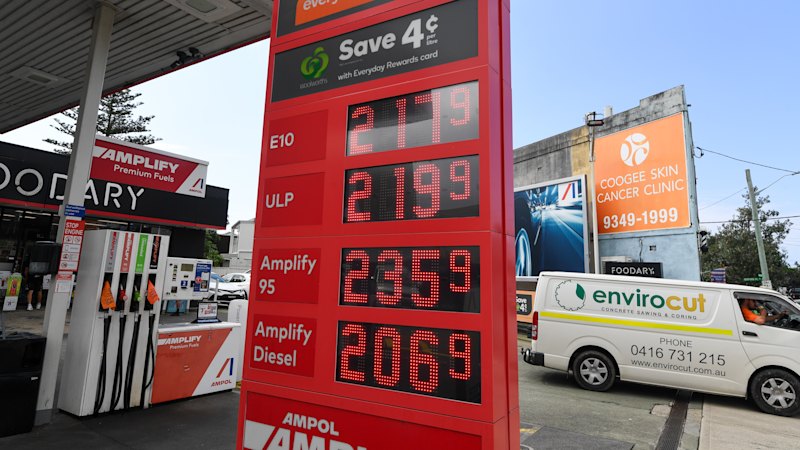
The ongoing conflict has driven petrol prices in Australia to record highs. The average price of unleaded petrol has surged to $2.19 per litre, marking a 20% increase since the conflict began, according to the Australian Institute of Petroleum.
Petrol stations across the country are selling unleaded for an average price of $2.19 a litre, an increase of 20 per cent since the conflict began.
Historical Context and Future Implications
This isn’t the first time geopolitical tensions have impacted fuel supplies. Historically, conflicts in oil-rich regions have led to global supply chain disruptions, prompting countries to diversify their sources. Experts suggest that while the current situation is challenging, it underscores the importance of resilience and adaptability in the energy sector.
Looking ahead, the industry may need to explore more sustainable and diversified energy sources to mitigate the impact of such geopolitical events. As the situation evolves, stakeholders will be closely monitoring developments in the Middle East and China’s export policies.
In the meantime, Ampol’s efforts to secure additional supplies from alternative regions could play a crucial role in stabilizing the market and ensuring consistent fuel availability for Australians.