

One Nation’s political momentum has reached unprecedented heights, with the party securing a record-high primary vote of 22% in the latest Guardian Essential poll. This surge comes amid ongoing chaos within the Coalition and rising social tensions across Australia.
Meanwhile, the Labor government’s response to the Bondi Beach terror attack has garnered widespread public support, with a majority of Australians backing measures to crack down on guns, hate speech, and protests. However, Prime Minister Anthony Albanese faces criticism, with many respondents believing he has poorly managed the aftermath of the antisemitic shooting.
Political Landscape: Shifting Alliances and Leadership Challenges
Prime Minister Albanese’s personal approval rating continues to decline, reflecting broader dissatisfaction with his handling of recent events. Opposition leader Sussan Ley is also experiencing a drop in popularity, as she confronts the possibility of a Liberal leadership spill as early as next week.
The latest Guardian Essential poll, conducted with 1,022 Australians between Tuesday and Friday last week, highlights these political dynamics. The poll followed the passage of Labor’s antisemitism and gun reforms through parliament and coincided with the latest divisions within the Coalition.
Labor’s primary vote stands at 31%, a three-point decrease from last month’s 34% and the 34.6% recorded at the May election. The Liberal-National Coalition’s primary vote is at 25%, while Pauline Hanson’s One Nation has surged to 22%. The Greens polled at 9%.
One Nation’s vote represents a five-point increase from the 17% recorded in December’s Essential poll.
One Nation’s Rising Influence
This week, Demos recorded a 24% primary vote for One Nation, while last week’s Newspoll showed a 22% primary vote, and Resolve placed the party at 18%. One Nation’s growing support, particularly in regional and rural Coalition strongholds, has contributed to unrest within the opposition. This includes the Nationals’ decision to distance themselves from the Liberals and leadership challenges from figures like Andrew Hastie and Angus Taylor.
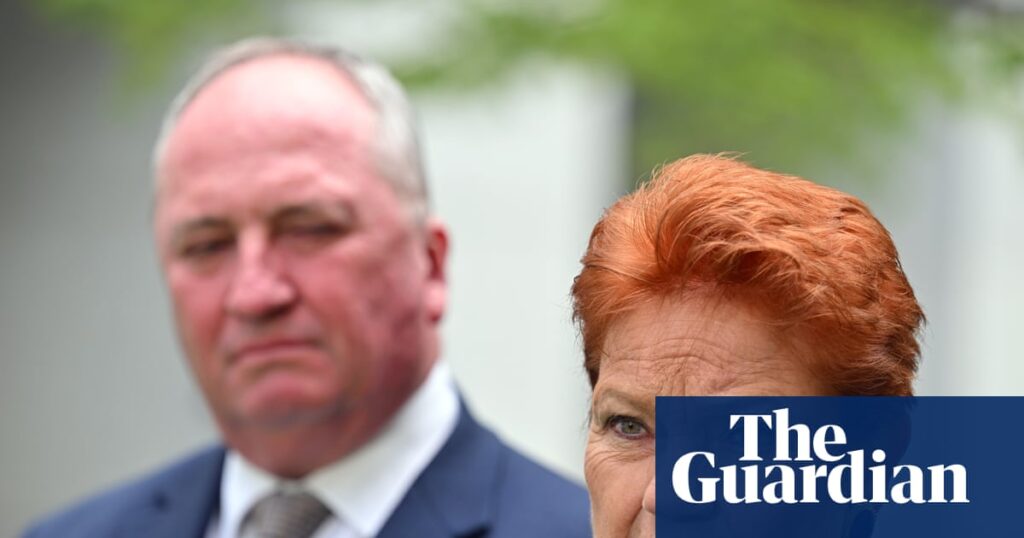
Pauline Hanson has capitalized on this momentum, recently recruiting former Nationals leader Barnaby Joyce. Some Coalition insiders anticipate further defections from Nationals members to One Nation.
Leadership Under Pressure
Sussan Ley and her allies are facing a campaign from the Liberal right faction to end her leadership. The Essential poll shows her approval rating at 30%, with a disapproval rating of 47%, down from December’s 34% approval and 43% disapproval.
Prime Minister Albanese’s approval ratings have also declined, starting the year with 39% approval and 53% disapproval, a drop from December’s 43% approval and 45% disapproval.
When asked about Albanese’s handling of the Bondi terror attack fallout, only 10% rated it as “very well,” while 26% said “reasonably well.” In contrast, 22% said “not that well,” and 34% said “not well at all.” Overall, 36% approved of his handling, while 55% disapproved.
Public Sentiment and Social Cohesion
Despite declining approval ratings for the major party leaders, Australians have shown strong support for legislative responses to the Bondi shooting. Of those polled, 73% backed banning the public display of terrorist symbols, 63% approved of stronger gun laws, 62% supported increased police powers to curb protests, and 60% endorsed new hate speech laws. A Commonwealth royal commission into antisemitism received 56% support.
However, only 35% supported extending hate speech laws to protect all religions and groups like the LGBTQ+ community and people with disabilities, a measure Labor is reportedly considering.
Social Tensions and Racism
Broader questions about social cohesion reveal that 70% of Australians perceive tension between different races and nationalities, and 69% feel people are afraid to express their beliefs for fear of being labeled racist. Only 38% believe Australia is less racist than in the past, a four-point drop from the last Essential poll in September 2025. Additionally, 35% reported that a family member had experienced racism, up five points since September, while 33% said they had personally experienced racism, also up five points.
The rise of One Nation and the shifting political landscape underscore the complexities facing Australian politics today. As leaders grapple with internal challenges and social tensions, the coming weeks may see further political realignments and policy debates.