


The latest DemosAU/Capital Brief survey, conducted between January and March, reveals a dramatic shift in the Australian political landscape. One Nation, led by Pauline Hanson, has surged to a primary vote share of 27 percent, marking a significant 10-point increase since the previous October-November poll. This rise positions them just behind Labor, which holds 29 percent, while the Coalition trails at 21 percent and The Greens at 12 percent.
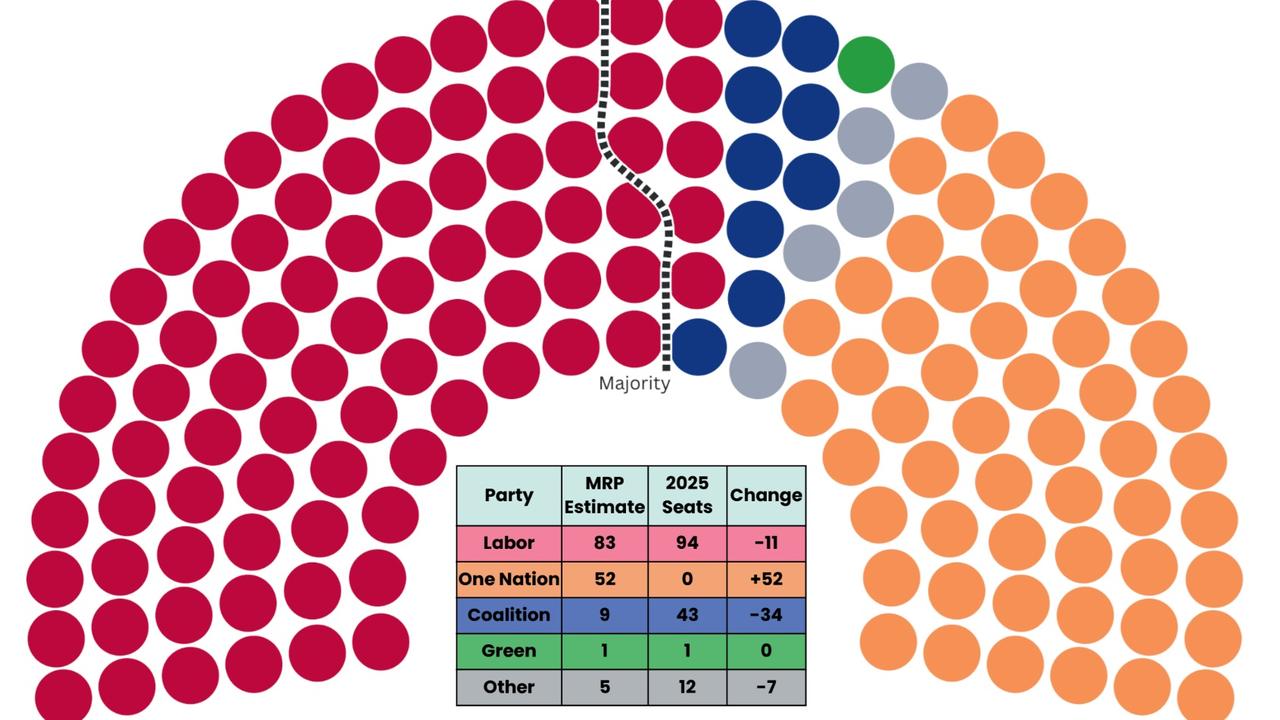
The poll, which surveyed over 8,400 voters, indicates that Labor’s primary vote has dipped by four percentage points from 33 percent late last year. Meanwhile, the Coalition has lost three points, and The Greens have seen a one-point decline. DemosAU’s analysis, utilizing a multi-level regression and poststratification (MRP) model, projects that if an election were held today, Labor would retain a reduced majority of 77-86 seats. However, One Nation could potentially win 46-55 seats, becoming the main opposition party.
Political Landscape Transformation
The implications of this poll are profound, suggesting a potential political upheaval. The Liberals are projected to secure only 9-15 seats, the Nationals a mere 0-2, The Greens 0-3, and independents 2-6. These findings underscore a significant shift in voter sentiment, with One Nation capitalizing on the Coalition’s declining support.
This development comes on the eve of the crucial South Australian election, where the Liberals face the possibility of a complete state-level defeat. Pauline Hanson, speaking to news.com.au, emphasized the tangible support her party is receiving, particularly in South Australia. “Ultimately, elections are the only polls which really matter,” she stated.
Expert Insights and Historical Context
DemosAU’s October-November MRP had already indicated a notable rise for One Nation, projecting them to win 12 federal seats. George Hasanakos, DemosAU’s director of research, highlighted the comprehensive nature of this latest poll, which shows the Coalition relegated to the crossbench if elections were imminent. “Based on this model, One Nation would become the major opposition party, capturing all of the National Party’s electorates and most of those held by the Liberals,” Hasanakos explained.
He further noted One Nation’s inroads into Labor’s urban fringe strongholds in cities like Brisbane, Sydney, and Melbourne. These areas, characterized by new residents priced out of housing elsewhere, present a battleground for Labor. “Labor is dominant in the inner to middle rings of capital cities but would have a fight on their hands in those urban fringes and in regional seats on these numbers,” Hasanakos added.
“The surge in support has certainly sent a message to the major parties and we can expect the Coalition especially to focus its efforts on winning back the voters it has lost to One Nation.” — George Hasanakos, DemosAU
Political Reactions and Future Implications
The rise of One Nation has prompted strategic shifts within the Coalition, with leadership changes to Angus Taylor for the Liberals and Matt Canavan for the Nationals. These leaders are perceived as more appealing to voters who have gravitated towards One Nation.
Prime Minister Anthony Albanese has criticized One Nation’s platform, accusing them of wanting to regress Australia to the 1950s. In a speech to the Australian Automotive Dealer Association, he remarked, “There will be some politicians, some of which have risen up recently in the polling, who essentially are appealing to, ‘Vote for us and the world will stop.’ Or worse still, we’ll go back to the Australia of the 1950s or 60s.”
One Nation’s surge is largely attributed to concerns over immigration, with recent data showing net overseas migration reaching 87,821 for the September quarter of 2025. This suggests the government is on track to exceed Treasury’s forecast of 260,000 for 2025-26.
Detailed Seat Projections
DemosAU’s MRP model provides a granular view of potential election outcomes, categorizing seats as ‘firm,’ ‘lean,’ or ‘in doubt.’ According to the model, Labor leads in 83 seats, One Nation in 52, the Coalition in nine, The Greens in one, and others in five.
- Firmly in Front: Seats such as Fairfax (QLD), Fadden (QLD), and Canning (WA) are among those where One Nation is strongly favored.
- Leaning to One Nation: Includes Gilmore (NSW), La Trobe (VIC), and Bowman (QLD).
- Too Close to Call: Marginal seats like Hawke (VIC) and Blair (QLD) are competitive, with One Nation slightly ahead.
While the model shows One Nation winning the NSW seat of Farrer, DemosAU cautions against using this as a prediction for the upcoming by-election, noting the different dynamics at play.
As the political landscape continues to evolve, the coming months will be critical in determining whether One Nation can maintain its momentum and reshape Australia’s political future.